Kothanodi (Bhaskar Hazarika) India

Kothanodi
Bhaskar Hazarika
India.  2015.  115 min

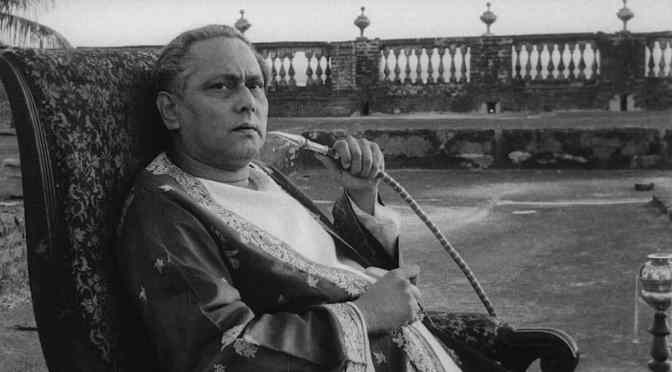
Kothanodi is based on characters and events described in Burhi Aair Sadhu (Grandma’s Tales),  a popular compendium of folk stories compiled by Assamese literary giant Lakshminath Bezbaroa. The four fables referenced in the film are Tejimola, Champawati, Ou Kuwori (The Outenga Maiden) and Tawoir Xadhu (The Story of Tawoi).

Once upon a time,  Senehi (Zerifa Wahid), a schizophrenic woman who loathes her stepdaughter, plots her murder when her husband is called away on a distant trip on business.  Her husband, Devinath (Adil Hussain), encounters a woman called Keteki (Urmila Mahanta) who has given birth to an outenga (elephant apple),  which rolls around after her.  Devinath resolves to unearth the mystery of the outenga.

Meanwhile, in another village,  a rich woman named Dhoneshwari (Seema Biswas) is getting her daughter married to a python – a wedding that has dire consequences for the girl.  As these three stories unfold, another mother, Malati (Asha Bordoloi), resolves to save her newest born from the clutches of her husband Poonai (Kopil Bora) and his uncle, who have sacrificed all three of her previous babies. In doing so,  she unearths a shocking truth.

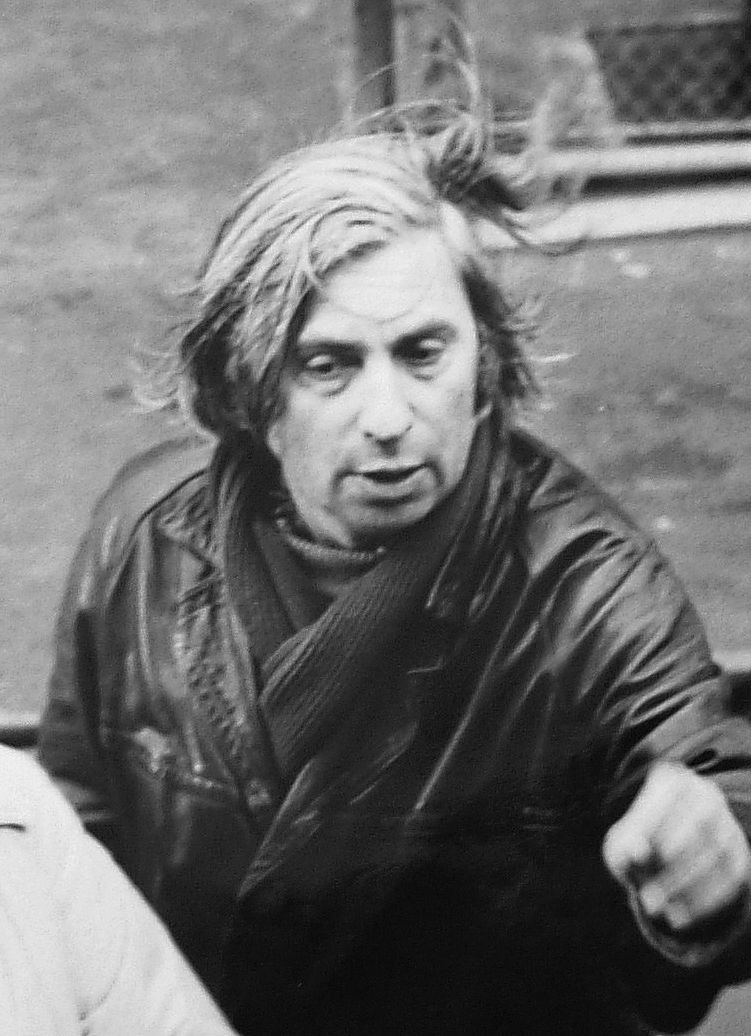
BHASKAR  HAZARIKA

Resultado de imagen de Aamis (Bhaskar Hazarika) India

Bhaskar Hazarika is from Assam, India and has over 18 years of experience working in the film, television, and internet industries. He holds an MA in Film & Drama from the University of Reading and a BA (Hons) in History from Delhi University.  He is also the founder of Metanormal, an independent film studio developing fresh content from the North East of India, as well as turnkey audiovisual assignments for clients in the government and development sectors.  Bhaskar is presently writing series’ for Indian OTT platforms and working with a major Bollywood producer on the development of his first Hindi language feature film.

Bhaskar’s debut film Kothanodi (2015) received the Asian Cinema Fund’s Post Production Grant and had its World Premiere at Busan international Film Festival. Kothanodi has received the National Film Award for Best Asamese film in 2016. Aamis, his second feature, had its World Premiere at Tribeca Film Festival 2019 in the International Narrative Competition Section.  It also won the Best Director and Best Actress awards at the 2019 Singapore South Asian International Film Festival.

DOWNLOAD PHOTOS

POSTER

Official poster of Kothanodi

CONTACT

Imagineindia International Film Festival

Aamis (Bhaskar Hazarika) Official Section.

Aamis
Bhaskar Hazarika
India.  2019.  108 min

Nirmali,  a married Paediatrician in her late 30s,  leads a peaceful but joyless domestic existence in Guwahati, Assam.  Her husband, a senior Doctor, spends most of his time doing relief work in surrounding areas, leaving her alone at home to take care of their son.  One day, she meets Sumon, a young PhD student researching food habits in northeastern India, who warms up to her in a manner she seems unaccustomed to.  Sumon’s work exposes him to the belief that there’s no kind of food that can be considered abnormal, and Nirmali is drawn to this idea.  The two quickly discover that they have a shared love for food – specifically, meat. Together, they bond over meals comprising unusual meats on platonic dates, although Sumon longs for some sort of physical contact. As Nirmali’s tastebuds grow more adventurous, their relationship takes a dark and bizarre turn.

The film stars debutantes Lima Das and Arghadeep Baruah in the lead, supported by Neetali Das, Sagar Saurabh, and Manash K Das.

Aamis received its world premiere at the Tribeca Film Festival where it was nominated in five categories in the festival’s “International Narrative” section.

BHASKAR HAZARIKA

Resultado de imagen de Aamis (Bhaskar Hazarika) India

Bhaskar Hazarika is from Assam, India and has over 18 years of experience working in the film, television, and internet industries. He holds an MA in Film & Drama from the University of Reading and a BA (Hons) in History from Delhi University.  He is also the founder of Metanormal, an independent film studio developing fresh content from the North East of India, as well as turnkey audiovisual assignments for clients in the government and development sectors.  Bhaskar is presently writing series’ for Indian OTT platforms and working with a major Bollywood producer on the development of his first Hindi language feature film.

Bhaskar’s debut film Kothanodi (2015) received the Asian Cinema Fund’s Post Production Grant and had its World Premiere at Busan international Film Festival. Kothanodi has received the National Film Award for Best Asamese film in 2016. Aamis, his second feature, had its World Premiere at Tribeca Film Festival 2019 in the International Narrative Competition Section.  It also won the Best Director and Best Actress awards at the 2019 Singapore South Asian International Film Festival.

INTERVIEW WITH THE DIRECTOR

DOWNLOAD  PHOTOS

POSTER

Resultado de imagen de Aamis (Bhaskar Hazarika) India

CONTACT

Media Luna :  festival@medialuna.biz

Song Of The Horned Owl (Manju Borah) India

Song of the Horned Owl
Manju Borah
India. 2015. 78 min

According to a myth in Bodo community,  exploited man after death transforms into a horned owl (Hudu) and comes back to his/her home and keeps calling from a tree. The film takes this myth and uses it as a metaphor to intensify the thematic development.

The film explores the social and political upheavals of the indigenous Bodo community post the Second World War.  Close to 40,000 people have lost their lives to communal violence and insurgency over the past 35 years in the northeast regions of India, many of the victims entirely innocent bystanders. Raimali (Reshma Mushahary), a young rape victim, knows this firsthand. As she lies in an abandoned house,  she recalls how separatist violence has marked her life, that of her lover and their families, contrasting its disruption with indigenous folklore and the immutability of the Assamese landscape.

Song of the Horned Owl is a 2015 Bodo language drama film directed by Manju Borah;  based on the Assamese novel Dao Hudur Gaan written by Rashmirekha Bora and adapted as screenplay by the director herself.  It was produced by Shankar Lall Goenka and stars Reshma Mushahary, Ahalya Daimary, and Nita Basumatary in the lead roles. The film was premiered at Montreal World Film Festival in 2015.

MANJU BORAH

Resultado de imagen de In The Land of Poisonous Women, manju borah, synopsis

Six times with eight National Film Awards ( Rajat Kamal) winner Manju Borah, earlier a short story writer started her film making journey in 1996 with an Assamese film ‘Sapon ‘ . ‘Baibhab’(A Scam in Verse) is her first independent film released in 1999 followed by ’Anya Ek Yatra’ 2001, ‘Akashitorar Kothare’ (A Tale Told Thousands Times) 2003, ‘Laaz’(Shame) 2004,  ‘Joymati the Saviour’ 2006, ‘Aai Kot Nai (MA) 2008, ‘Ko:Yad’ ( A Silent Way) 2012, ‘Dau Huduni Methai’( Song of the Horned Owl) 2015, ‘Sarbagunakar Srimanta Sankardeb’(an animated film) 2016 and In the Land of Poison Women 2018.  All these films either received National Film Awards at different categories or being selected in Indian Panorama at IFFI and also at various International Film Festivals inside the country or abroad.

INTERVIEW WITH MANJU BORAH

DOWNLOAD PHOTOS

POSTER

Resultado de imagen de Song of the Horned Owl (Manju Borah) India

CONTACT

Imagineindia International Film Festival

A silent way (Manju Borah) India

A Silent Way (Ko Yad)
Manju Borah
India.  2012.  90 min

The Poukam is a school dropout, who makes a living collecting driftwood from the river Brahmaputra in a boat that he inherited from his father. He faces many difficulties in life. His father collects wood from the river. The movie picturizes Poukam’s life, starting from his youth to his old age. But hardworking Poukam, was always put into trouble by his own friends, loan-givers and his son. At last, even the river betrayed him.

Ko: Yad – A Silent Way is a 2012 drama film, written, directed and produced by Manju Borah.  The movie is based on Anil Panging’s critically acclaimed novel Ko: Yad, published in the weekly Assamese Xadin. The film portrays the life of ordinary Mishing people through the protagonist, Poukam, struggle to make a living, in a small village by the Brahmaputra, in Assam.

At the 60th National Film Award for 2012, the film won the awards for Best Mishing Film, and Best Cinematography Award.

MANJU BORAH

Resultado de imagen de In The Land of Poisonous Women, manju borah, synopsis

Six times with eight National Film Awards ( Rajat Kamal) winner Manju Borah, earlier a short story writer started her film making journey in 1996 with an Assamese film ‘Sapon ‘ . ‘Baibhab’(A Scam in Verse) is her first independent film released in 1999 followed by ’Anya Ek Yatra’ 2001, ‘Akashitorar Kothare’ (A Tale Told Thousands Times) 2003, ‘Laaz’(Shame) 2004,  ‘Joymati the Saviour’ 2006, ‘Aai Kot Nai (MA) 2008, ‘Ko:Yad’ ( A Silent Way) 2012, ‘Dau Huduni Methai’( Song of the Horned Owl) 2015, ‘Sarbagunakar Srimanta Sankardeb’(an animated film) 2016 and In the Land of Poison Women 2018.  All these films either received National Film Awards at different categories or being selected in Indian Panorama at IFFI and also at various International Film Festivals inside the country or abroad.

INTERVIEW WITH MANJU BORAH

DOWNLOAD PHOTOS

POSTER

CONTACT

Imagineindia International Film Festival

In The Land of Poison Women (Manju Borah) India

In The Land of Poison Women
Manju Borah
India. 2019. 104 min

The film is a depiction of an individual’s effort to break the myth of ‘poison women’ in a remote part of Arunachal Pradesh. Thongchi has written the novel in the backdrop of Zemithang region of Tawang district.  Besides presenting a story of suspense, the novel portrays a superstitious belief prevalent among the people of that tribe. The movie won the 66th National Award for the best Pangsenpa film.

My film explores the indigenous people of North East, their political status, their struggles of their own existence: National Award winner Manju Borah.

Shedding light on these remote locations, she said, “People aren’t aware of the location where I shot my film. It is at the India-China border. There are less than 5000 people from a community living there. I truly believe that if one visits that place, one would feel nature is so vast and beautiful.”

MANJU BORAH

Resultado de imagen de In The Land of Poisonous Women, manju borah, synopsis

Six times with eight National Film Awards ( Rajat Kamal) winner Manju Borah, earlier a short story writer started her film making journey in 1996 with an Assamese film ‘Sapon ‘ . ‘Baibhab’(A Scam in Verse) is her first independent film released in 1999 followed by ’Anya Ek Yatra’ 2001, ‘Akashitorar Kothare’ (A Tale Told Thousands Times) 2003, ‘Laaz’(Shame) 2004,  ‘Joymati the Saviour’ 2006, ‘Aai Kot Nai (MA) 2008, ‘Ko:Yad’ ( A Silent Way) 2012, ‘Dau Huduni Methai’( Song of the Horned Owl) 2015, ‘Sarbagunakar Srimanta Sankardeb’(an animated film) 2016 and In the Land of Poison Women 2018.  All these films either received National Film Awards at different categories or being selected in Indian Panorama at IFFI and also at various International Film Festivals inside the country or abroad.

INTERVIEW WITH MANJU BORAH

DOWNLOAD PHOTOS

POSTER

Resultado de imagen de In The Land of Poison women, manju borah

CONTACT

Imagineindia International Film Festival

A Foreigner in my own land (Nishajyoti Sharma)

A Foreigner in my Own Land
Nishajyoti Sharma
India. 2017. 65 min

Nepalis (Gorkhas) of Assam are not foreigners or outsiders, except for few who may have migrated to Assam (India) post 1971. However, the prevalent sentiment among the Assamese masses is quite contrary to what history says and the Assam Accord of 1985 has agreed to.

Through this self-reflexive film, the filmmaker (who herself is an Asameli Nepali/Gorkha) explores the notion of identity of the community in Assam. The film encompasses the feelings of a common Asameli Nepali person regarding her/his own identity and her/his standing in the Axomiya society, the politics surrounding the ‘identity issues’ in Assam and the degree of assimilation by an Asameli Nepali to prove one’s projected notion of identity and loyalty.

About Assam Agitation and Assam Accord: The Assam Movement (1979-1985) was a popular movement in Assam, which was intended to repel ‘illegal immigrants’. The movement however affected and hurt the core of Non-Assamese communities (specifically Bengalis, Muslims and Nepalis) who wholeheartedly considered Assam as their motherland and ended up creating an irreversible divide of ‘us’ vs ‘them’. The movement finally ended in 1985 with the signing of the Assam Accord (between Centre and the Assam government) and a cut off date was decided for expelling illegal immigrants. The Clause 5.8 of the Accord said that the foreigners who came to Assam on or after March 25, 1971 shall be detected and expelled. For the Nepali immigrants, the cut-off year was 1976.

NISHAJYOTI SHARMA

NISHAJYOTI SHARMA AT THE CENTRE

DOWNLOAD PHOTOS

POSTER

CONTACT

Monteiro – Jayashankar :    contact@monteiro-jayasankar.com

Season’s Greetings of Ram Kamal Mukherjee to be premiered at Imagineindia

Filmmaker Ram Kamal Mukherjee’s second venture A Tribute to Rituparno Ghosh: Season’s Greetings will have world wide premiere on Zee 5 this winter.

After the success of Cakewalk, author turned director Ram Kamal Mukherjee’s second feature A Tribute to Rituparno Ghosh: Season’s Greetings will have world wide premiere on Zee 5, India’s leading digital platform. The 47 minute Hindi feature marks the comeback of Bollywood star Celina Jaitly Haag post marriage and motherhood. The film also stars theatre thespian Lillette Dubey and debutant Azhar Khan in the lead. This film also marks the debut of Bollywood’s first transgender actor Shree Ghatak in a pivotal role. Continue reading Season’s Greetings of Ram Kamal Mukherjee to be premiered at Imagineindia

Interview with Ram Kamal Mukherjee

Tell us what inspired you to take that step into journalism. My father, Jaydeb Mukherjee was instrumental in guiding me. He realised that I liked writing, and…

Tell us what inspired you to take that step into journalism.

My father, Jaydeb Mukherjee was instrumental in guiding me. He realised that I liked writing, and I always preferred Shakespeare more than Newton in my school days! I guess the germ was already created; it needed the right soil to bloom. Continue reading Interview with Ram Kamal Mukherjee

An interview with filmmaker Qiu Yang

He recently won the Leitz Cine Discovery Prize during Critic’s Week at Cannes. Meet the Changzhou-based filmmaker and VCA Master of Film and Television graduate Qiu Yang.

A woman gently presses her head against a bus window. The shifting neon lights from the street outside wash over her face, and somewhere in the city beyond, living or dead, is her daughter. Somewhere else in China, a young man is accused by the children of an elderly woman of pushing her on the street after taking her to a hospital, with devastating social implications for both families. On the other side of the world, a young woman leaves her stifling family life to go for a walk through a Melbourne street at night, but will never return. Continue reading An interview with filmmaker Qiu Yang