For Sama (Waad Al-Khateab, Edward Watts) Great Britain

For Sama
Waad Al-Khateab, Edward Watts
Great Britain.  2019.  100 min

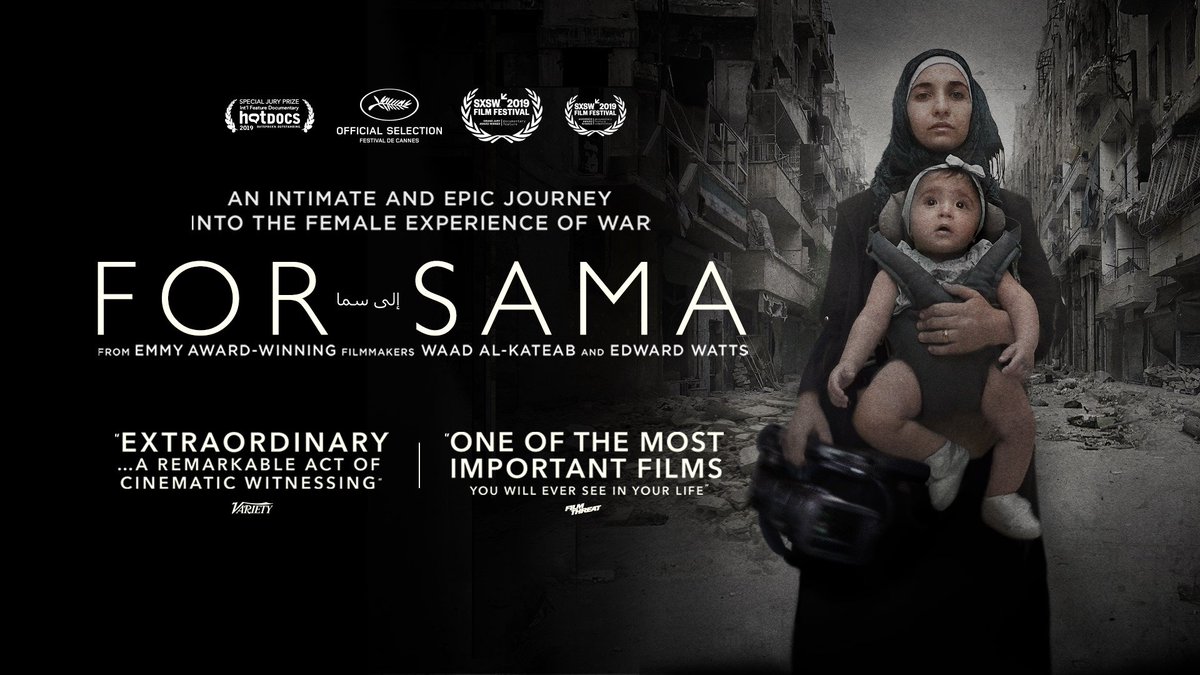
Journalist Waad al-Kateab spent five years documenting the atrocities inflicted by President Assad’s regime upon civilians in Aleppo.  A student of economics at Aleppo University when the 2011 war began, Waad took her camera to the streets and began documenting the devastation of the Syrian regime and its allies.  At the same time she found love and became a mum, marrying Hamza (one of the 32 doctors who stayed in East Aleppo) and having her first child, Sama, while airstrikes bombarded the city.

In 2016 Waad met her co-director Edward Watts, and their film, For Sama, took off. “I got involved when these great people [Waad and Hamza] left Aleppo,” Watts tells me when I sat down with the filmmakers just a few hours before the UK premiere of their film at this year’s Sheffield Doc/Fest. “No one knew about the incredible footage that she’d created while she was there. Initially it was in the region of 300 hours of footage that she managed to get out of Aleppo. And then subsequently there were more hard drives, more footage. It was somewhere between 300-500 hours, which we edited down to 94 minutes within two years.”

INTERVIEW TO THE DIRECTORS

WAAD AL KATEAB – EDWARD WATTS

Resultado de imagen de waad al-kateab

In 2009, 18-year-old Al-Kateab moved to Aleppo to study economics at the University of Aleppo.  In 2011, when the Syrian Civil War broke out, she began reporting on the war for Channel 4 News in the United Kingdom.  She elected to stay and document her life over five years in Aleppo as she falls in love with Hamza – her friend-turned-husband, a doctor – and gives birth to their first daughter, Sama (“Sky”) in 2015,  which became the basis of For Sama.  For covering the Siege of Aleppo, she won an International Emmy for her reporting, the first Syrian to do so. For Sama, directed with Edward Watts, won the Prix L’Œil d’or for best documentary at the 2019 Cannes Film Festival,  receiving a six-minute standing ovation.  At the 73rd British Academy Film Awards, For Sama became the most nominated documentary in the history of the British Academy Film Awards with four nominations, winning for Best Documentary.

After fleeing Aleppo in December 2016, Al-Kateab, her husband, and their two daughters reside in the United Kingdom.

DOWNLOAD PHOTOS

POSTER

Resultado de imagen de For Sama (Waad Al-Kateab, Edward Watts) BFI

CONTACT

Surtsey Films :    surtsey.programacion@gmail.com
Murghab (Daler Kaziev, Martin Saxer, Marlen Elders) Germany

Murghab
Daler Kaziev,  Martin Saxer,  Marlen Elders
Germany.  2019.  81 min

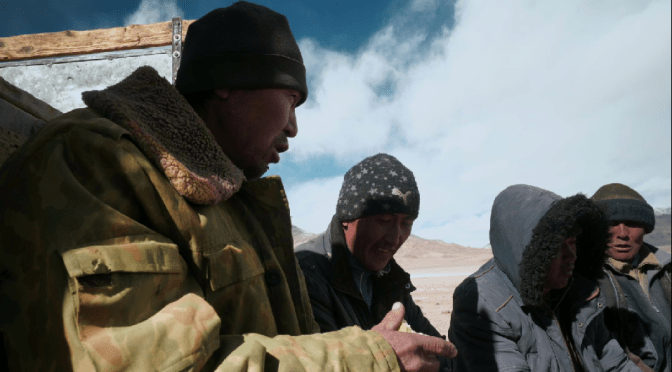
A generation ago, Murghab was well taken care of.  As the highest town of the former Soviet Union at 3600 metres above sea level and close to the sensitive borders with Afghanistan and China, the town enjoyed ample provisions from Moscow brought in via the Pamir Highway. It featured electricity around the clock, an airport with regular flights, a movie theatre, and a hospital with central heating.

Since then, Murghab and its people have weathered several storms and many of the Soviet hallmarks are crumbling away.  Yet, life goes on and, with wit and improvisational skills, the ruins of Socialism afford a plethora of new but precarious ways to make do.

The film provides a window into contemporary life in Murghab. It offers glimpses into people’s daily routines, inviting the audience on a journey to the Pamirs. It follows a group of men harvesting shrubs on the windswept high-altitude plateau, a nurse keeping regional health statistics, a passionate teacher inspiring a sense of history and purpose in her class, and a welder building stoves from the scraps of Soviet modernity. A winter film of hardship, work and hope.

MARTIN  SAXER

Resultado de imagen de Murghab Daler Kaziev, Martin Saxer, Marlen Elders

The film Murghab is the result of a close collaboration between three filmmakers, all of them with a background in anthropology. Daler, who grew up in Murghab, brought crucial knowledge and personal connections to the team; Martin contributed his experience from making two prior feature-length documentary films as well as insights from his own research in the Pamirs; and Marlen added her skills in tracing atmospheric tunes and her expertise in sound recording.

This combination made for a truly collaborative approach. Much of the content, form and structure of the film emerged while shooting in Murghab in February/March 2018 during long hours of discussions accompanied by the steady sound of a generator charging our equipment at night. While shooting, it was mostly Daler leading the conversations, while Martin focussed on camera work and Marlen on sound recording. Editing started with an intense two-week retreat in a Bavarian village in the Alps before Daler moved to the US to start an MA programme at Cornell University. Marlen and Martin took the lead during postproduction, with Daler watching rough cuts and joining the discussions remotely.

Murghab is also based on research: Daler’s BA thesis on shrub collectors and Martin’s work in the five-year project Remoteness & Connectivity: Highland Asia in the World, funded by a European Research Council Starting Grant and carried out at the Department of Social and Cultural Anthropology, University of Munich see highlandasia.net

DOWNLOAD PHOTOS

POSTER

Resultado de imagen de Murghab Daler Kaziev, Martin Saxer, Marlen Elders

CONTACT

Martin Saxer :    martin.saxer@lmu.de

7 Veils (Sepideh Farsi) France

7 Veils
Sepideh Farsi
France.  2017.  80 min

Little is known about Afghanistan, apart from a few clich.s, the word Taliban, and a war which seems never to have stopped since the Soviet Union and the turning point reached in 2001. How can one do justice to a devastated country in a state of permanent conflict, and to its deeply afflicted population?

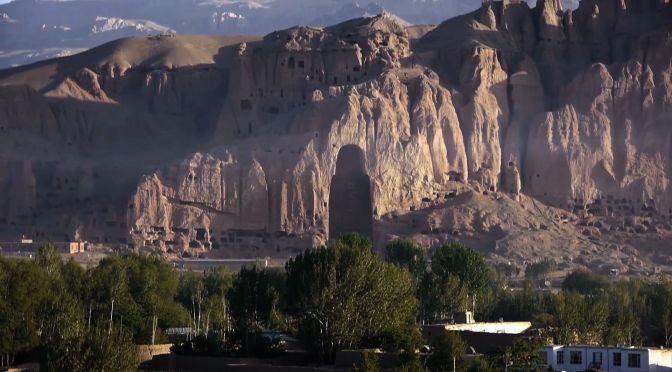
With this film, Sepideh Farsi took up again the documentary format she had started with, and using only one camera, she embraced the beautiful task of reaching the very heart of the country.  First, at the French Embassy in besieged and barricaded Kabul, where death and perils await in every building, at every street corner. Then, using her knowledge of Dari, a language close to her mother tongue, Farsi, she endeavoured to travel across the country.

Meeting people along the way, she engaged in conversations with them, in a gentle and empathic fashion. In cars, with embassy or taxi drivers; on pathways, with workers or veterans from the fight against the Soviets, or with a young woman longing for independence; in the troglodyte homes of displaced farmers near Bamiyan, or in the house of an aristocrat and former diplomat; with demonstrators.

Always paying close attention to these people’s words and presences, to their bodies and environments, Sepideh Farsi painted in successive slight touches a whole gallery of portraits, all haunted by traces of History and filled with longings. Scrap after scrap, this uncritical, delicate and subjective patchwork aims at lifting the seven veils – from the legend told as an epigraph to the film – that cover the country.

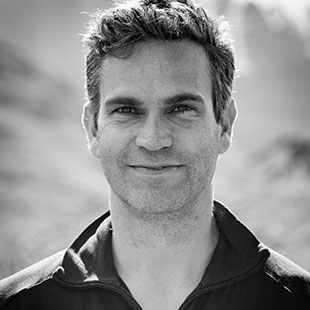
SEPIDEH  FARSI

Resultado de imagen de 7 Veils (Sepideh Farsi) France

Sepideh Farsi was born in Tehran in 1965 but left Iran in 1980 and went to Paris in 1984 to study mathematics. However, eventually she was drawn to the visual arts and initially experimented in photography before making her first short films. Her first two features Dreams Of Dust and The Gaze premiered at Rotterdam in 2006.
Farsi was a Member of the Jury of the Locarno International Film Festival in Best First Feature in 2009. She won the FIPRESCI Prize (2002), Cinéma du Réel and Traces de Vie prize (2001) for Homi D. Sethna, filmmaker and Best documentary prize in Festival dei Popoli (2007) for Harat. In December 2009, Tehran Without Permission was shown at the Dubai International Film Festival.

DOWNLOAD PHOTOS

POSTER

CONTACT

Javad Djavahery :    javad@revesdeau.com

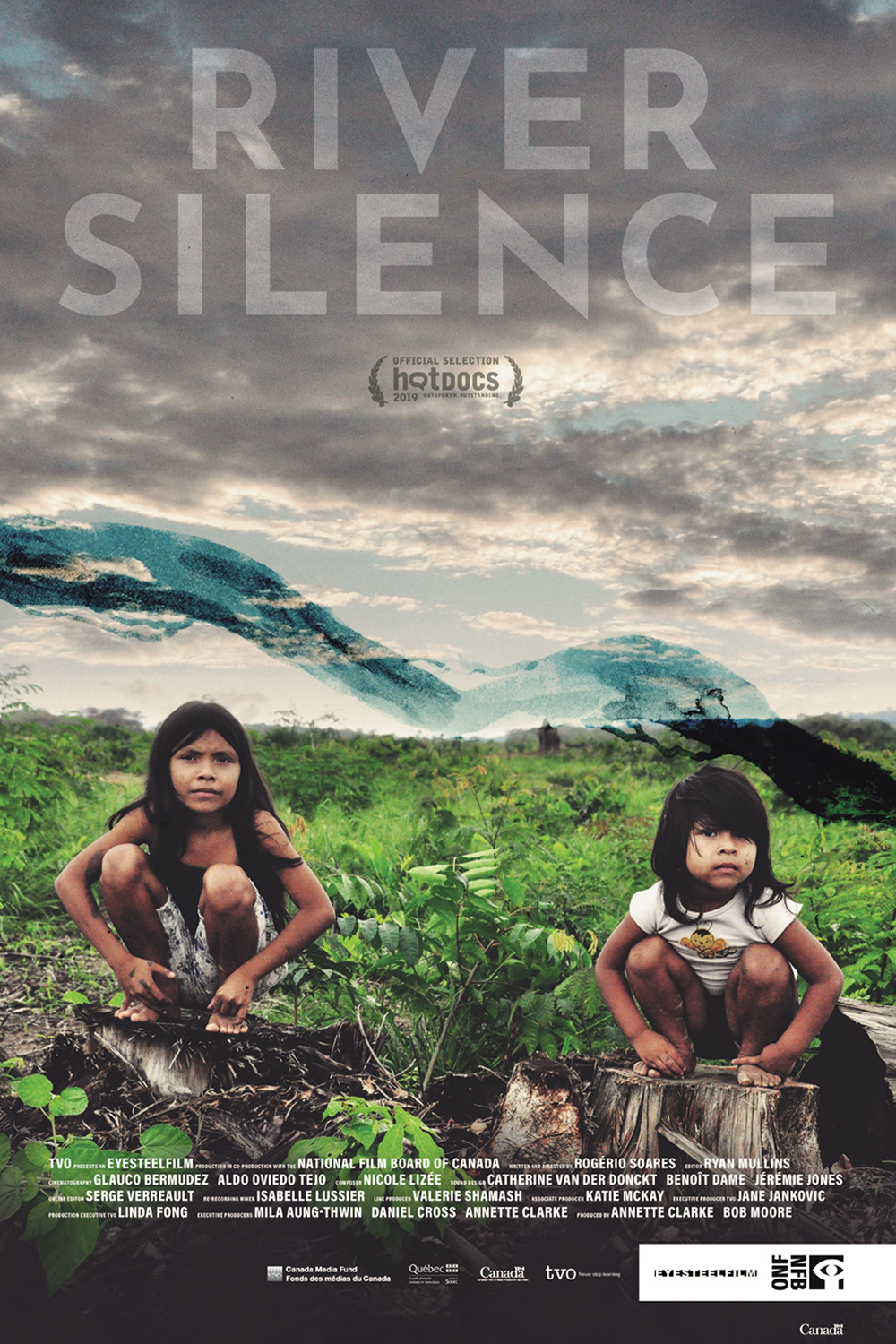
River Silence (Rogério Soares) Canada

River Silence
Rogério Soares
Canada.  2019.  90 min

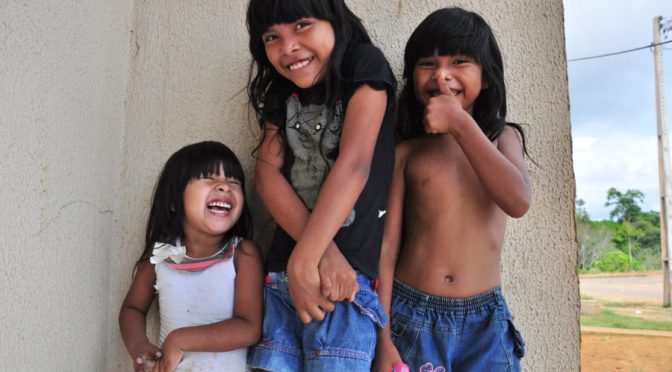
A poetic journey alongside four women, River Silence is witness to the human and environmental cost of a large-scale development in Brazil’s Amazon basin.  The Belo Monte hydroelectric dam is but one of many scheduled to be built in Brazil—and the characters we meet represent thousands of similarly displaced women, men and children.

We follow Francinette as she lovingly raises her children and grandchildren, moving to a new house in Altamira as compensation for the destruction of the modest home she had lived in for 18 years. Her resilient spirit and new surroundings are little comfort, however, when faced with her daughter’s unplanned pregnancy and ongoing substance abuse. Tamakwera, of the Parakanã nation, is also a new resident of Altamira, forced to move when life along the Xingu River became unsustainable. We see this Indigenous mother of four girls struggle to adapt to city life as she attempts to preserve her culture, language, and rituals.

ROGERIO SOARES

River Silence - BIFF 2019

For Montreal-based filmmaker Rogério Soares, the Amazon is his soul home: “it is a kind of spiritual home to me, a place that never stops feeding my imagination and shaping my values.”  He first moved to the Amazon at the age of 18 after hearing his father’s many tales of endless rivers as big as the sea.  Rogério’s deep love and understanding of the Amazon’s fragility and complexity, as well as its people, is at the heart of River Silence and the family stories he followed over three years.

He has previously directed documentaries in the region for Al-Jazeera (USA) and TV Cultura (Brazil). River Silence is Rogério’s first feature documentary.

DOWNLOAD PHOTOS

POSTER

Resultado de imagen de River Silence (Rogerio Soares) Brazil

CONTACT

Camille Jacques :    distribution@eyesteelfilm.com

Sisters of The Trees (Camila Menéndez / Lucas Peñafort) Argentina

Sisters of The Trees
Camila Menéndez / Lucas Peñafort
Argentine.  2019.  82 min

In the desert of Rajasthan (India) the birth of a girl is no longer a curse.  The families that previously got rid of their daughters for not being able to pay the dowry, today celebrate their lives by planting 111 trees.  It is the story of those women like Kala who managed to work outside the home and organize others.  Or Bhavari that barely knows how to write and she is educating her daughter Nikita to follow her dreams of becoming a doctor.

CAMILA MENÉNDEZ

Camila Menéndez graduated as a director from ERCCyV.   Since 2010 she has been a mountaineer in Mendoza and Buenos Aires, on TV channels, production companies, fiction and documentary series for TV, and feature films (La passion de Verónica Videla, 2010 – Madame Baterflai, 2012 – Los ojos llorosos, 2016.).

Resultado de imagen de Sisters of The Trees (Camila Menéndez) Argentina

LUCAS PEÑAFORT

Lucas Peñafort obtained the Diploma in Creative Documentary Studies at the Barcelona Film Observatory.  He graduated in Cinematography at the Universidad del Cine in Buenos Aires.

Films: La familia chechena 2015, Caja Cerrada 2009, Hamdan 2013, El gran canto del shamanismo 2015,  El manifesto del shamanismo 2019.

DOWNLOAD PHOTOS

POSTER

Sisters of the Trees | Films To Festivals

CONTACT

Lucas Peñafort :  lpenyafort@gmail.com
The Witness (Peter Vacso) Hungary

The Witness
Peter Vacso
Hungary. 1969. 103 min

The film features József Pelikán as a single father who previously participated in the WW2 communist movement of Hungary,  but is now working as a dike-reeve.  He meets an old friend from the underground communist movement, Zoltán Dániel, now a government official who fishes at the Danube, near the dike.  Dániel falls in the river, and Pelikán rescues him and invites him to his home. While the two reminisce old times at Pelikán’s home, the ÁVH suddenly appears. They received a “serious anonymous report” stating Pelikán committed an illegal act of slaughtering a pig for food.  Dániel tries to save him by demonstrating to the ÁVH thugs how the loyal Pelikán hid him during the purgings years before, but he unknowingly reveals the basement, where all the pork had been hidden.

Pelikán is taken to prison though later released, on “higher command”.  Comrade Virág, being unnecessarily benevolent, gives various assignments to Pelikán such as being the CEO of a swimming pool, an amusement park, and an orange research institute. Pelikán, being “ideologically under-educated”, fails magnificently in all his assignments, visiting the prison regularly, until they ultimately succeed with the orange research institute and are awarded.  As it turns out, all this was arranged to force Pelikán to be the witness in a show trial against his old friend, Zoltán Dániel, who fell out of the favour of the communist regime.  Pelikán is meticulously reshaped to fit the expected image of the archetypical “Hungarian worker, 1950” to be the perfect witness.

PÉTER  BACSÓ

Resultado de imagen de Peter Bacso,  Hungary

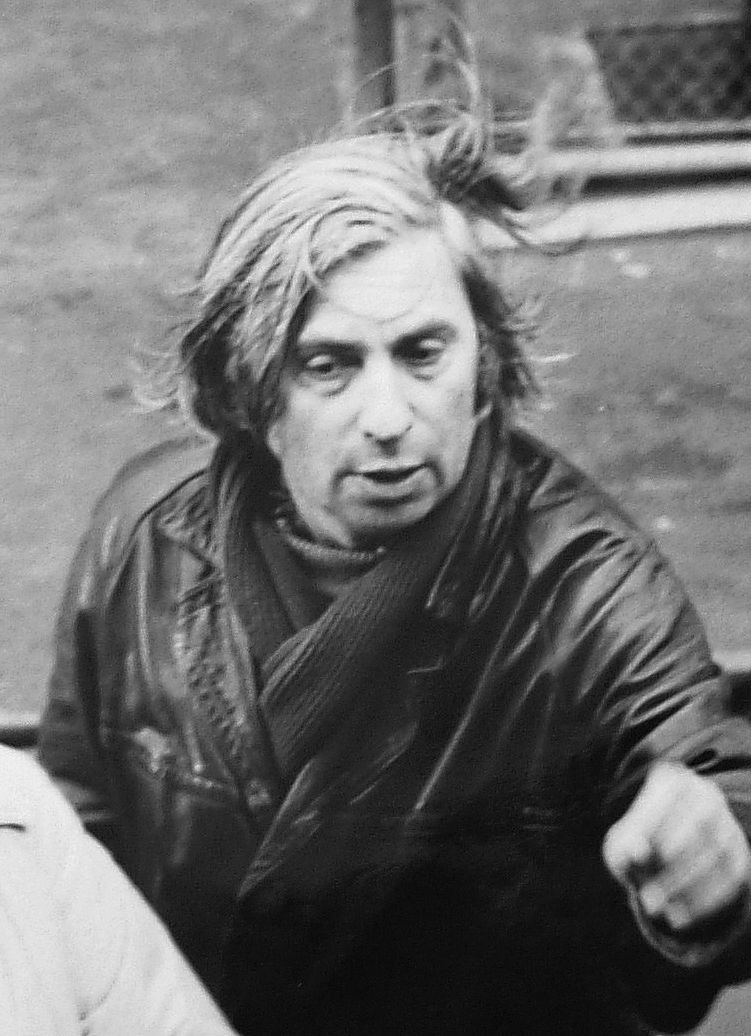
Péter Bacsó (6 January 1928 – 11 March 2009)  was a Hungarian film director and screenwriter.

After high school graduation Bacsó wanted to become an actor and later a theatre director, but ultimately decided to try filmmaking.  His first job in a film was as an assistant in Géza Radványi’s Valahol Európában (Somewhere in Europe) at the age of 19.  He continued as a script editor and screenwriter. He graduated at the Hungarian School of Theatrical- and Film Arts in 1950.  At the time he was already a familiar face in studios.

He was a successful screenwriter during the 1950s before beginning to direct films a decade later.  He made his first feature film, Nyáron egyszerű in 1963.  He made his most famous film, A tanú (The Witness) in 1969,  but it was banned at the time and wasn’t released until 1979. The film became a cult classic in Hungary; it is a political satire about the early-1950s Communist regime.

Bacsó later continued to make mostly political and satirical films, for a wider audience.  He made various genre films, trying his hand in musicals, comedies, etc. He continued filmmaking up to his later years, however his last two films were generally dismissed by critics and the public alike as badly written and low quality works.  His 2001 film Hamvadó cigarettavég (Smouldering Cigarette) was a biopic of Hungarian actress and singer Katalin Karády. His 2008 film Virtually a Virgin was entered into the 30th Moscow International Film Festival.

DOWNLOAD PHOTOS

POSTER

Resultado de imagen de The Witness (Peter Bacso) Hungary

CONTACT

Film Archive :  nagy.tamara@filmarchiv.hu

The Music Room (Satyajit Ray) India

The Music Room
Satyajit Ray
India.  1958.  100 min

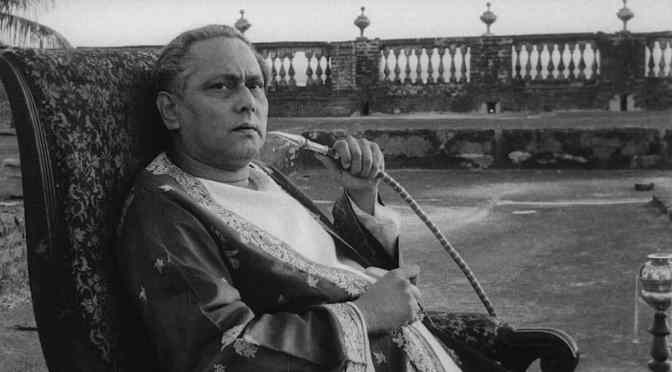
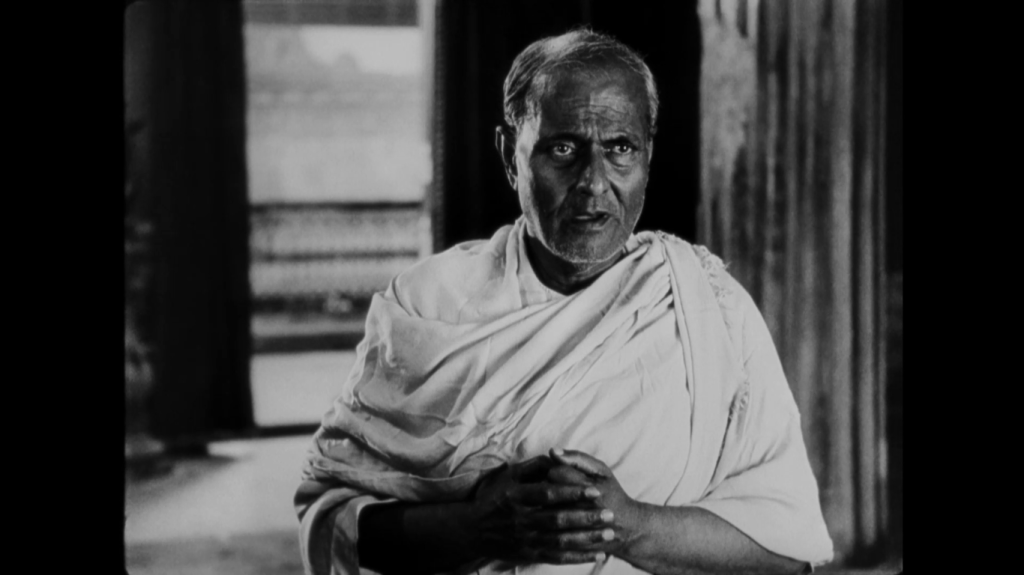
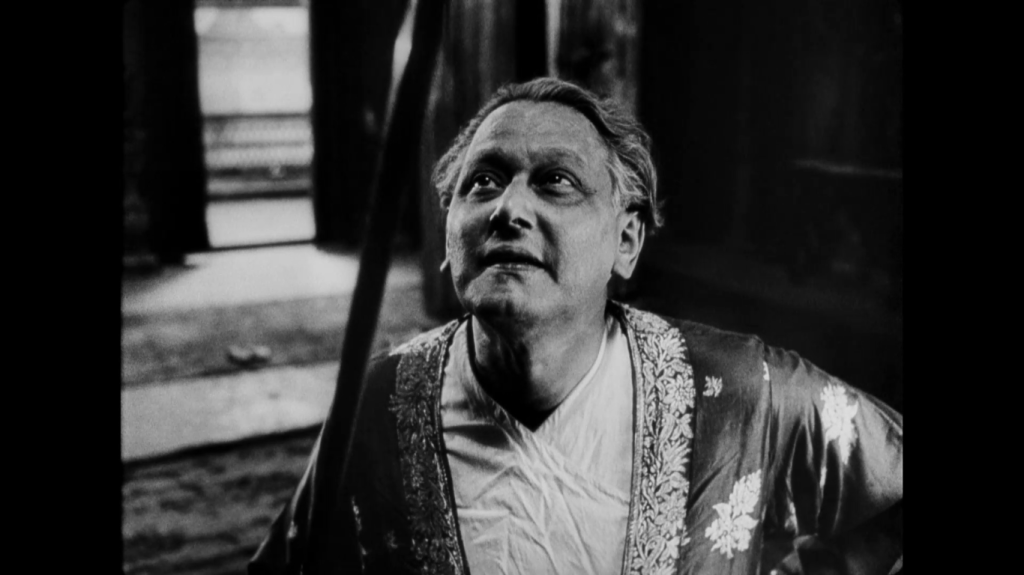
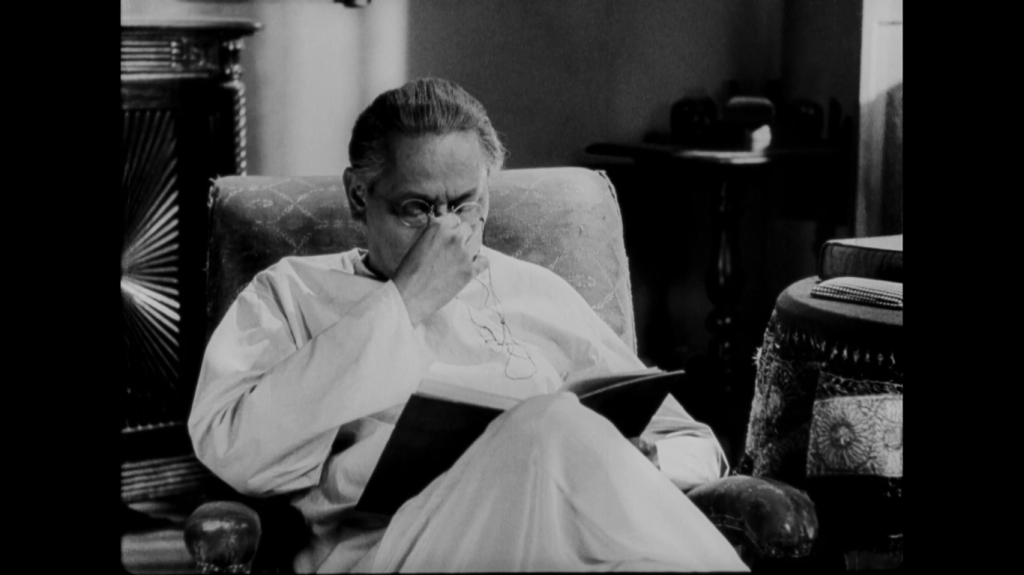
The Music Room is a 1958 Indian Bengali drama film written and directed by Satyajit Ray,  based on a popular short story by Bengali writer Tarasankar Bandyopadhyay, and starring Chhabi Biswas. It was the fourth feature film directed by Ray.  The shooting was done at Nimtita Raajbari, in Nimtita village, 10 kilometres from Murshidabad.

The Music Room depicts the end days of a decadent zamindar (landlord) in Bengal, and his efforts to uphold his family prestige even when faced with economic adversity.  The landlord, Biswambhar Roy (Chhabi Biswas), is a just but other-worldly man who loves to spend time listening to music and putting up spectacles rather than managing his properties ravaged by floods and the abolition of the zamindari system by the Indian government.  He is challenged by a commoner who has attained riches through business dealings, in putting up spectacles and organising music fests.  This is the tale of a zamindar who has nothing left but respect and sacrifices his family and wealth trying to retain it.

DOWNLOAD PHOTOS

POSTER

Resultado de imagen de jalsaghar, satyajit ray

CONTACT

Aurora Films :    aurorafilm@bharatmail.co.in

The Unvanquished (Satyajit Ray) India

The Unvanquished
Satyajit Ray
India. 1956. 113 min

The Unvanquished is a 1956 Indian Bengali drama film written and directed by Satyajit Ray (1921–1992),  and is the second part of The Apu Trilogy. It is adapted from the last one-fifth of Bibhutibhushan Bannerjee‘s novel Pather Panchali (1929) and the first one-third of its sequel Aparajito (1932).  It starts off where the previous film Pather Panchali (1955) ended, with Apu’s family moving to Varanasi, and chronicles Apu’s life from childhood to adolescence in college, right up to his mother’s death, when he is left all alone.

In 1920, Apu (Pinaki Sen Gupta) and his parents, who have left their home in rural Bengal,  have settled into an apartment in Varanasi where his father Harihar (Kanu Banerjee) works as a priest. Harihar is making headway in his new pursuits: praying, singing, and officiating among the ghats on the sacred river Ganges. Harihar catches a fever and soon dies, however, and his wife Sarbajaya (Karuna Banerjee) is forced to begin work as a maid.  With the assistance of a great-uncle, Apu and his mother return to Bengal and settle in the village Mansapota. There Apu apprentices as a priest, but pines to attend the local school which his mother is persuaded to allow. He excels at his studies, impressing a visiting dignitary, and the headmaster takes special interest in him.

DOWNLOAD PHOTOS

POSTER

Resultado de imagen de aparajito, satyajit ray

CONTACT

Aurora Films :    aurorafilm@bharatmail.co.in

My Life With Satyajit Ray (Bo Van Der Werf) Belgium

My Life With Satyajit Ray
Bo Van Der Werf
Belgium.  2006.  52 min

Photographer Nemai Gosh has spent 25 years of his life having as main subject world-renowned Indian director Satyajit Ray, and his film sets, his castings and surrounding magic and glamour. Today, he confronts for the film the peculiar fascination which still inhabits him for this artist and exceptional man,  recalling memories of Ray’s genius at work, of his capacity to conceive and decide all about every step of the film creation and production, of his temperament of perfectionism and passion, which led him to international recognition way over Bollywood standards.

Through 90,000 pictures made by the unique witness, so as while his meeting again with the director’s usual movie team, or his return on famous films shooting locations and meeting the locals who then met the master, we embrace Satyajit Ray’s personality and oeuvre, picturing as well how a page of Indian cinema’s history was written by this man.

BO VAN DER WERF

Saxophonist and composer Bo van der Werf is graduated from the Amsterdams conservatory, he leads and writes for Octurn, a contemporary jazz ensemble based in Brussels. He also plays with the Brussels jazz orchestra, leads his own smaller ensembles and plays free-lance with different groups in Europe, besides writing for Octurn, Bo also composes music for films, for dance and for contemporary classical ensembles, teaches at Antwerp’s and Leuven’s conservatories. He currently works on a doctorate research at Leuven University. ‘ My life with Satyajit Ray’ is his first film, and it was shown at many major film festivals ( Teheran film festival, Buenos Aires film festival, Bombay international film festival, festival du documentaire de Paris, Tiburon film festival California, mediawave Budapest , Kolkata film festival, … ).

DOWNLOAD PHOTOS

CONTACT

Bo Van Der Werf :    bofilipa@hotmail.com

Khutsiev. Action Starts! (Peter Shepotinnik) Russia

Khutsiev. Action Starts!
Peter Shepotinnik
Russia. 2015. 84 min

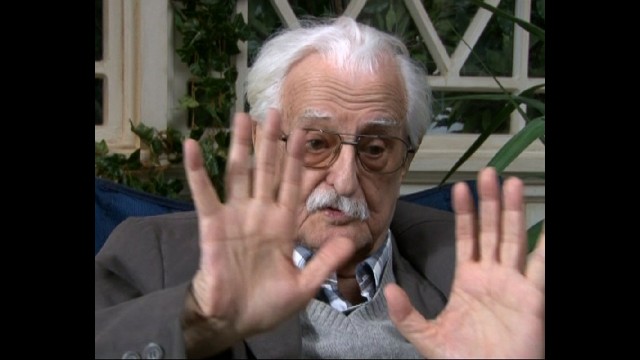
In October 2015, Marlen Khutsiev turned ninety. With no intention of retiring, he has been working on Not Yet Evening—about the relationship between Leo Tolstoy and Anton Chekhov—on and off for over ten years due to lack of funding.  Allowing the documentary crew exclusive access to his shooting process over this extended period, Khutsiev also candidly reflects on his filmmaking and the nature of creative work with Peter Shepotinnik, film critic, Kulturträger, longtime programmer for the Moscow International Film Festival and author of the TV show Kinescope. As an accomplished documentarian, Shepotinnik enjoys a close relationship with Khutsiev, whose sets are otherwise inaccessible.

PETER  SHEPOTINNIK

Resultado de imagen de Khutsiev, Action Starts (Peter Shepotinnik)

Shepotinnik Peter(Pyotr), 1956, Moscow.

In 1978 graduated from VGIK. From 1979 to 1998 – in the magazine “Art of cinema”. Author and host of the TV program “Kinescope” (from 1994 to the present day, first “TV 6 Moscow”, then – TV Channel “Russia”, TV Channel “Russia-Culture”). Author of numerous documentaries about people of art.  Member of the TEFI and NIKA academies. Winner of international and domestic TV and film festivals. Nominee for the Russian cinematographic Award “Nika” for the best documentary film. TV Channel” Russia-Culture “(2012, 2015) and the International Film festival in Honfleur (France, 2014) held retrospectives of documentary works under the general title “Collection of Peter Shepotinnik”. Among the most famous films – “Balabanov at War“, “After Tarkovsky”, “Hamdamov on Video“, ” Yuri Lyubimov. Chronicles”, ” Andrey Voznesensky. Lyrica”, “German Today is 122 to 85”, “Another Wife of Vysotsky“, ” Khutsiev. Action Starts!” Author of the novel “Stereo” (2012, preparing for publication) and the collection of articles and interviews “Allegro video”(preparing for publication).

DOWNLOAD PHOTOS

CONTACT

Peter Shepotinnik :    ptrshepotinnik77@gmail.com