Shaadi, Sex aur Parivaar (Aman Kaleem) India (PSBT)

Shaadi, Sex aur Parivaar
Aman Kaleem
India. 2015. 27 min.

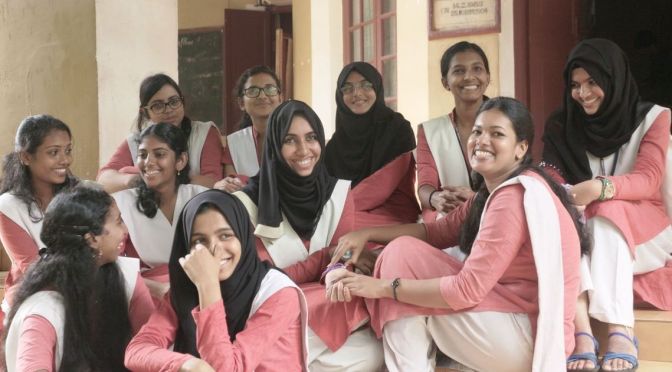
Shaadi, sex, aur Parivaar explores the institution of marriage through the lens of three indian brides. It is based on the individual decisions of women regarding marriage and how the thoughts behind these decisions change their lives. The film focuses on four of women’s thoughts regarding body image, sexuality, love and identity and how social expectations influence their freedom. Also one of the four characters in the film, Aman Kaleem, talks about cinema and how essential it comes from honesty. This documentary has been screened at the Open Cinema Festival and PSBT Forum.

Aman Kaleem

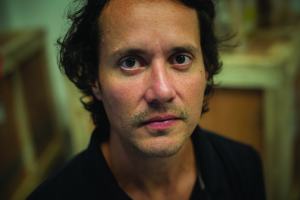
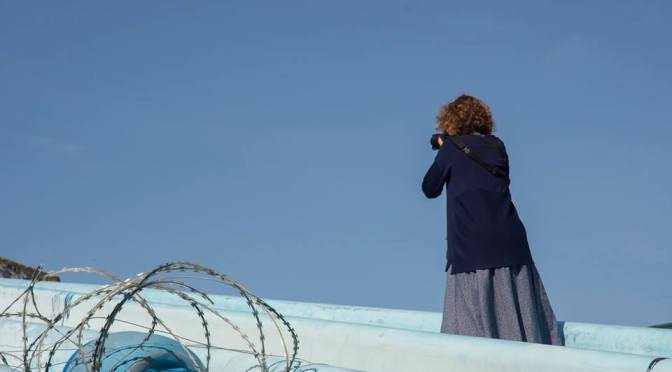
Aman Kaleem is a filmmaker based in New Delhi and graduated in Mass Communication by AJKMCRC. She loves telling stories about women and their daily dilemmas. Her characters evolve as a reflection of the women she has interacted with while growing up in ten different cities across India. Making movies about women is the way to find their own voice through collective narratives. He has actively participated in the creation of alternative discourses through his films in the regions of political conflict, Kashmir and Northeast. She has been programmer of the International Film Festival of India, the biggest and oldest festival in Asia. She has also taught at the Muslim University of Aligarh. She has been awarded the Young India Fellowship in 2013. Her latest film Eidiyaan won numerous international and national awards and Shaadi, Sex aur Parivaar is her first independent documentary.

Curumim (Marcos Prado) Brasil

Curumim
Marcos Prado
Brasil. 2016. 106 min.

Curumim, tells the last days and the last hours of Marco Archer, better known in the surf community and hang gliding by the nickname “Curumim” the first brazilian sentenced to death for drug trafficking after being captured by the thai policeman on an island outside Bali, Indonesia, and more than ten years in a maximum security prison. Why did a young man from a wealthy family decide to do something so risky? How was Curumim’s life all this time in jail knowing he could die at any moment? These and other issues are what tries to unveil Marcos Prado in this documentary.

Marcos Prado

Marcos Prado was born in 1961 in Rio de Janeiro and is a photographer and director. As a photographer, he received several national and international awards, including World Press Photo 92 and World 92, UNEP. He was chosen in 2002 as Hasselblad Maestro, has photos in the permanent collections of the Museum of Modern Art of Rio de Janeiro (MAM), the Sao Paulo Art Museum Assis Chateaubriand (MASP) and the Paulista Museum of Modern Art (MEM). He has held individual exhibitions in Brazil and around the world.
As a producer he has made the documentary “Os carvoeiros” (1999), inspired by his book of the same name and directed by Nigel Noble, and “The bus 174” (2002) by José Padilha and Felipe Lacerda. He has also directed programs for television, for Globosat, for National Geographic Television and for NBC.

He made his directorial debut with Estamira (2004), receiving the Best Documentary Award at the Rio Festival, the São Paulo Film Festival, the Karlovy Vary International Film Festival and the International Documentary Festival in Marseille, as well as prizes at Bethlehem, Miami and Nuremberg.

In 1997 he founded together with the filmmaker José Padilha, Zazen Productions, where they carried out their own projects. He produced “Tropa de Elite” by José Padilha, a film that won the Golden Bear at the Berlin Film Festival. He was also the big winner at the Live Brazilian Film Grand Prix in April 2008, taking eight awards, including best director for José Padilha and best film by the jury. In 2010, produced “Elite Template 2: The enemy is another” and after two years he directed “Artificial Paradises”.

TRAPPED IN JAPAN (VIVIENNE BARRY) Chile

Trapped in Japan
Vivienne Barry
Chile. 2015. 70 min.

This is a documentary that focuses on the experience of six chilean journalists who after a trip to Japan in 1941 were trapped in the country in the middle of World War II, a situation that transformed them into war correspondents with active participation of record during the bombings. Carlos Barry Silva, father of the director and at that time a reporter for the newspaper El Chileno, is one of the protagonists of this legendary history of national journalism.

Vivienne Barry

Vivienne Barry is director of animated film, journalist and magister in Literature by the University of Chile. After the coup d’état of 1973 she leaves the country and moves to the (then) German Democratic Republic. In the city of Dresden she learns animated films and between 1976 and 1978 she works at DEFTA Trickfilm Studio in Dresden. Her specialties include stop motion, animation of plastilines, cut papers and collages. Returning to Chile in 1980 she works in advertising animation and begins to develop her first personal works. She has an extensive experience as a teacher and workshop director in Chile, Mexico, France and Cuba. She has been a jury at international festivals such as Prix Jeunesse, Slovak Prix Danube, Harlequin in Poland and Annecy, the most important in the world of animation, among many others. She has done extensive work in animations for chilean television that have been awarded internationally with the Prix Jeunesse and in various competitions. She is currently President of ASIFA, International Animation Film Association.

When the Woods Bloom (Biju Kumar)

When the Woods Bloom
Dr. Biju Kumar
India.  2016.  105 min.
Cast:  Krishnan Balakrishnan, Prakash Bare, Indrans.

The film is based on the situation in Kerala, where the Indian Government has detained many activists who are in a speech against the government’s fascist and undemocratic activities. The film deals with the clash between the agents of authority and the oppressed in the name of law and security. A special police battalion is deployed by the government to end the Maoist threat (a forbidden left organization) in a tribal village near the forest. The police are forcibly holding a tribal primary school to set up camp. One day, police are looking for some activists in the forest near the school and the police officer who follows a person in the deep forest finds that the person arrested is a woman. He tries to leave the forest with the person arrested, but is lost in the forest. The woman knows the way out but is not willing to show him. Thus, as much as the hunter are stranded in the thicket of the forest. Power, crime, man, woman; the hunter hunted… all this makes the roles reversed and the situation changes.

BIJU  KUMAR

Known as Dr. Biju, is an Indian homoeopathic doctor turned film director and screenwriter. He is best known for films such as Saira (2005), Veettilekkulla Vazhi (2010), Akasathinte Niram (2012), Perariyathavar (2013), and Valiya Chirakulla Pakshikal (2016).
Biju has received three National Film Awards, and his films have been screened at multiple international film festivals.
Biju debuted into films as writer and director with Saira (2005). It was first part of terrorism trilogy and in 2007 premiered at the Cannes International Film Festival. His second film Raman (2008) was selected at Cairo International Film Festival (2009) in the Incredible India category. Veettilekkulla Vazhi (The Way Home; 2010) was last film of the trilogy and earned a National Film Award for best Malayalam film in 2010.
His fourth film Akasathinte Niram (Color of Sky; 2012), was premiered at 15th Shanghai International Film Festival in the International competition section. Biju’s next film, Perariyathavar (Names Unknown, 2014) received two National Film Awards in 2014 for the Best Actor and Best film on Environment conservation, and was screened at the Montreal World Film Festival (2014).
In 2015, he directed Valiya Chirakulla Pakshikal (Birds With Large Wings; 2015) which was premiered at United Nations, Geneva as a part of the United Nations Environment Programme, and received National Film Award (2015) for the Best film on Environment conservation. His 2016 film Kaadu Pookkunna Neram (When The Woods Bloom) was premiered at the Eurasia International Film Festival, Asia Pacific Screen Awards, International Film Festival of Kerala, and the Montreal World Film Festival, in 2016.
Biju has served as jury member of the International Film Festival of Kerala (2011), Fajr International Film Festival (2012), National Film Awards (2013), and the 2015 Oscar selection jury member for best foreign language film.

The Violin Player (Bauddhayan Mukherji) Official Section

The Violin Player
Bauddhayan Mukherji
India.  2016.  72 min.
Cast:   Adil Hussain, Ritwick Chakraborty, Nayani Dixit.

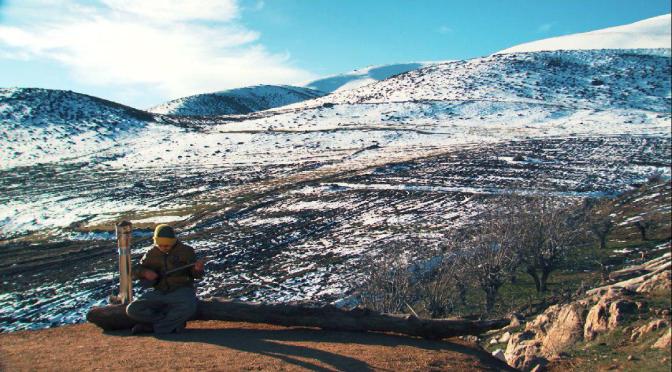
An encounter between two unnamed strangers is the focus of this quirky tale that looks at how expression and artistic beauty lead to self-discovery. The film opens following a failing violin player’s ordinary life. His wife is annoyed at him because he won’t help around the house and he’s not getting it right during music training. It’s clear that he’s seen as a failure in both his personal and professional life. But that all changes when he catches the attention of a stranger at the train station, a filmmaker who needs a score to his latest project, offering the player an opportunity he can’t refuse. Agreeing to take the job because he’s desperate for money, the violinist follows his new employer through the back alleys of the city, and onto an unexpected journey showing us how the art is able to change our lifes.

BAUDDHAYAN  MUKHERJI

Bauddhayan Mukherji (1973) is one of India’s leading advertising filmmakers, Bauddhayan, better known as Buddy, was born and raised in Calcutta. He is the son of a school teacher and a poet and was introduced to the world of music, the arts and literature at a very early age.
He studied at South Point School and, like all Bengalis, was good in the academic world, but his mind was always somewhere else. When he was only 11 years old, he received a copy of the book “Ekei Boley Shooting” written by Satyajit Ray, who changed his life forever, because at that age he decided to become a filmmaker.
Since then, Bauddhayan has followed his heart and has walked in the footsteps of his idol. After school, Bauddhayan majored in Economics at St Xavier’s College, as Satyajit Ray, who had also studied economics. And like him, he left the economy after graduation. Bauddhayan joined the Clarion College of Advertising, the same organization (then D J Keymer), where Ray had joined in his time.
Today Bauddhayan runs his own production company, Little Lamb Films and is considered a breakthrough in Indian film advertising. He has directed over 300 television commercials and won numerous international awards.
In 2010, Bauddhayan won the prestigious Silver Lion in Cannes, the oscars of the commercials. He also won two consecutive One Show awards in New York, Spikes Asia Golds in Singapore, silver in the London International Awards and many more in Goafests, Effies, Midas, Srijón Samman, RAPA, IDPA and others.
He was offered offers to direct Indian films in Bombay, but his heart is Bengali and his first film had to be Bengali. It was Bauddhayan’s way of showing his respect for his language and the one that opened the doors for him to explore and express himself. Teenkahon was born of that desire.
Although Teenkahon is Bauddhayan’s debut feature as a director, this is not the first time he has ever worked in movies. He has executive produced the Bengali film Patalghar, which began the new wave of Bengali films in early 2000.
Bauddhayan, as his idol, investigates various forms of art. He loves to write, he is the only living Bengali poet who has appeared in the penguin Indian anthology. He is also passionate about music, so Bauddhayan and his friends direct Chhutir Pathshala, a Bengali organization in Bombay that educates Bengali children who are not residents of Bengali life forms. Bauddhayan is a professional voice-over artist, an occasional actor and a singer.
With respect to The Violin Player, this is his route:
 7th Jio Mami Mumbai FF (2015) – India Gold
 20th IFFK, Kerala (2015) – International Competition
 37th Durban IFF (2016) International Competition – Best Feature film Award
 13th Stuttgart Indian FF (2016)
 12th Jecheon IMFF, South Korea (2016) – Cine Symphony
 24th Raindance Film Festival (2016) – Intl Competition – nominated for Best Screenplay and Best Actor
 40th Sao Paulo IFF (2016) – New Directors Competition
 61st Cork IFF (2016) – Panorama
 Indian FF The Hague (2016)
 India Kaleidoscope at Momi NY (2016)
 Image India Paris (2016)
 SeeYouSound Festival (2017)
 Washington DC Independent FF (2017)

The Noonday Witch (Jiri Sadek) Official Section

The Noonday Witch
Jiri Sadek
Cezch Republic.  2016.  90 min.
Cast:  Anna Geislerová, Karolina Lipowska, Zdenek Mucha.

The Noonday Witch is based on a traditional Czech tale and tells the story of a mother, Eliska, and her eight-year-old daughter, Anetka. Both move to a remote country home to start a new life together after the father’s death in strange circumstances, but Eliska insists that the girl’s father is “out on business.” The daughter discovers the truth and from that moment their relationship deteriorates. Then, the mythical creature of The Noonday Witch begins to appear and when the frightening figure approaches the pair, a terrifying question arises. Is it a real danger or is it all in the crumbling head of the mother? It is an unsettling movie that treats feelings of pain for the loss and power of self-deception.

JIRI  SADEK

Jiří Sádek (1989) studied at the secondary school affiliated to the Academy of Arts, Architecture and Design in Prague. He continued his education at the Miroslav Ondříček Film Academy in Písek, specialising in audiovisual production. His short film Don’t Speak Too Soon (Neříkej hop, 2010) was nominated for a Magnesia Award in the student film category in 2010 and won numerous accolades at domestic festivals, including the Audience Award at the Filmmakers to Watch event organised by Nova TV. His next short film Mr. Late (Pan pozdě, 2011) was also nominated for a Magnesia Award and won Best Film and Best Screenplay at the International Student Festival in Písek, for which Sádek filmed the trailer the following year. His filmography to date includes another two shorts, Cave of Dogs (Psí jeskyně, 2012) and Quantum (2013). The Noonday Witch (2016) is his feature film debut.

A Death in the Gunj (Konkona Sen Sharma) Official Section

A Death in the Gunj
Konkona Sen Sharma
India.  2016.  110 min.
Cast:   Gulshan Devaiah, Kalki Koechlin, Vikram Massey.

It’s the story of a family reunion for seven days and its interpersonal dynamics. In 1979 a wealthy family comes to their holiday home in the Anglo-Indian city of McCluskiegunj to spend a week of relaxation, games, sun and joy. There are several generations of people who live together and, inevitably, tensions and conflicts arise, the worst part of which for Shutu, a shy student whose disdain and superiority make his personality crumble. This story has no moral or philosophical purpose, but tries to show a mosaic of characters, a patch of real life.

KONKONA  SEN  SHARMA

Konkona Sen Sharma was born in New Delhi in 1979 and she’s an award winning actress from India. A death in the Gunj is her first feature film as a writer and director. She is the daughter of the award-winning filmmaker Aparna Sen and granddaughter of Chidananda Dasgupta, a film historian, critic and co-founder of the Calcutta Film Society along with Satyajit Ray. She began her career as an actress at the age of four, Konkona has performed in more than 40 hindi, bengali and english films. She has received two National Awards and several industry awards.
The film’s world premiere took place at the 21th Toronto International Film Festival and at the 21th Busan International Film Festival in 2016. It was chosen as the opening film for the 18th Mumbai Film Festival, where it was screened in October 2016 and where director Konkona Sensharma received the “MasterCard for Best Female Filmmaker India 2016”.

The Tiger Hunter (Lena Khan) Official Section

The Tiger Hunter
Lena Khan
USA.  2016.  94 min.
Cast:   Danny Pudi, Rizwan Manji, Jon Heder.

Lena Khan was inspired by the stories of her father and other immigrants when they first went to America to write this story that reflects the process of immigrants to strike the balance between their cultural traditions and the diversity of American society . It is the story of a young Indian who moves to Chicago in the seventies to become an engineer, but when his work falls, resort to a farce made with maladaptive friends to attract their love of childhood.

LENA  KHAN

Lena Khan graduated summa cum laude and received degrees in political sciences and history from the University of California, Los Angeles. Then she graduated from UCLA‘s prestigious Theater, Film and Television School and spent several years directing short films, commercials and music videos for international artists such as Maher Zain, while adding experience in major producers such as Participant Media (SYRIANA, THE HELP). Her films and videos have received more than 30 million hits on YouTube, won movie festivals, have been broadcast all over the world and seen from universities to international embassies. Lena has been featured in USA Today, Teen Vogue, The New York Times and other magazines. She won Sony Entertainment Television’s South Asian Excellence Award for her contributions to entertainment, and now she’s making movies that appeal to social issues but in an entertaining and engaging way.
For the film The Tiger Hunter, her feature film debut, she used a platform of crowfunding between the communities of South Asia and Muslims

House of others (Rusudan Glurjidze) Official Section

House of others
Rusudan Glurjidze
Georgia.  2016.  103 min.
Cast:  Salome Demuria, Ia Sukhitashvili, Olga Dihovichnaya.

House of others is an exquisite, evocative and elusive tale of abandonment and the psychological scars of war. It’s set in Georgia in the 90s, when the fall of the USSR leaves behind a bloody and devastating civil war in the autonomy of Abkhazia. In a small village in the area, two families have physically survived the conflict and as part of the victorious side the empty houses of the conquered are assigned. In an unreal space, filled with old memories and objects of others, they set out to start a new life in peace. However, they will soon realize the difficulty of their company: war continues in their daily lives because the noise of bullets still wreaks havoc inside.

RUSUDAN  GLURJIDZE

Rusudan Glurjidze was born in Georgia, Tbilisi, on July 1972. From 1989 to 1991 she has been studying French Language & Literature at the Tbilisi State University. From 1990 to 1996 she has been studying Film Directing and Scriptwriting in George Shengelaia’s class at the Georgian State Film & Theatre Institute. Rusudan’s films were successfully screened and mentioned at official selections and special programs at International Film Festivals. Her last project “House of Others” won Script Development Competition in GNFC. Also was chosen among 10 European projects selected by B’EST (The Baltic Bridge East by West) organized by EAVE and MEDIA Mundus and Open Doors Locarno IFF – 2013. Her filmography: Nocturne 1995; Oscar 1995 and House of Others, 2016.

Mother (Kadri Kousaar) Official Section

Mother
Kadri Köusaar
Estonia.  2016.  90 min.
Cast:   Tiina Malberg, Andres Tabun, Andres Noormets

Mother, which initially looks like the simple story of a crime, becomes a human tragedy that transcends the “small town” and “little people” mentality to ask timeless questions about morality, sacrifice, personal happiness, and freedom of choice. Elsa is the mother and full-time caretaker of Lauri, a teacher who has been in coma ever since he was killed under somber circumstances. Elsa welcomes visitors to Lauri, friends, students, his girlfriend, his boss and others, who come to bring him up to date with their lives and vent their problems. But as the police investigation into crime progresses, some of its closer ties are called into question. Director Kadri Kõusaar satily sails by script that slowly gathers the truth behind Lauri’s gunfight through the confessions of his visitors to the comatose protagonist. Bathed in the pastel tones of post-soviet life, Mother is a cleverly designed suspense story in a small town where almost everyone is dreaming of something bigger and some are willing to do whatever it takes to get out of there.

KADRI  KÖUSAAR

Born in Estonia in 1980 she is a director and writer, known by Magnus (2007), The Arbiter (2013) and Ema (2016), her work is recognized in international festival circuits as well as in the press professional.
His debut in the media began at age 13 with writing and drawing cartoons and comics for newspapers. Since then he has published numerous articles related to cinema, literature and music, as well as long-running novels “Ego” (2001), “Free rise” (2004) and “Alfa” (2011) in Estonia. He has also worked as a radio-DJ and TV host, and holds a university degree in Spanish language and literature.
His first feature film “Magnus” (2007), about a father trying to help his suicidal son, was the first Estonian film included in the official selection of the Cannes Film Festival (Un Certain Regard, 2007). “Magnus” toured extensively at dozens of film festivals around the world (including Rotterdam, Warsaw, Busan, Thessaloniki, Moscow “Tomorrow”, Seattle, Vancouver) and won top prizes at the Febiofest in Prague and GoEast in Wiesbaden.
Kadri’s second film “The Arbiter” premiered in the official selection “East of The West” at the Karlovy Vary Film Festival in 2013. In 2013, Kadri was also selected for the experimental CPH: DOX LAB and filmed a 30-minute feature film “Auster” in Spanish in collaboration with Argentine director Maximiliano Schonfeld. Currently Kadri is preparing his next feature film “Nordic Instinct”.