Sea is Shaking (Nikita Tuzov) Russia

Sea is Shaking
Nikita Tuzov
Russia.  2019.  46 min

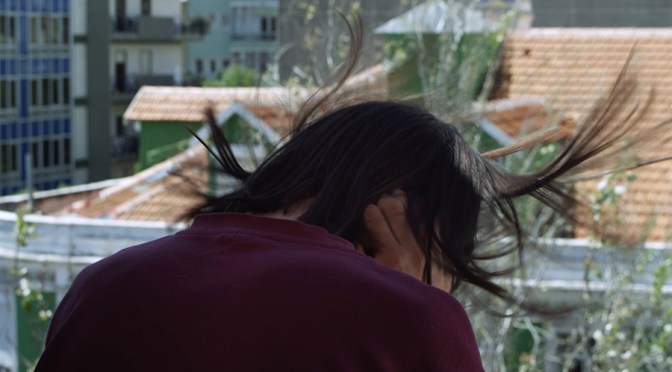
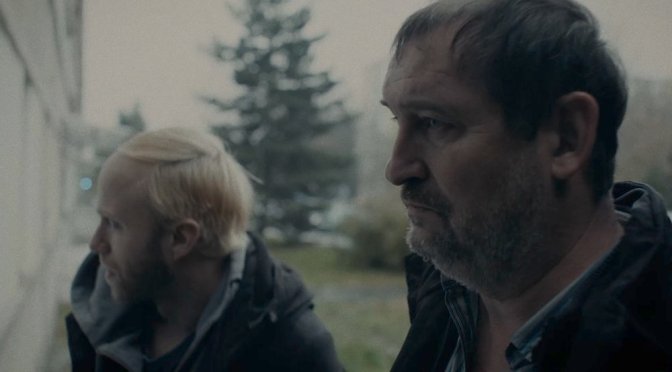
Murmansk is the city behind The Arctic Circle. It is cold, windy and brutal. It is a city where the polar night lasts at least 40 days and not much sunlight during the year. It is a city where people’s lives connected to the sea uncompromisingly. This documentary is filled with interviews of sailors’ and citizens who loves their region and never going to leave it. You will see how the fishing goes during the storm in the Barents Sea and you will meet the wonderful nature of Murmansk region.

NIKITA TUZOV

Nikita Tuzov

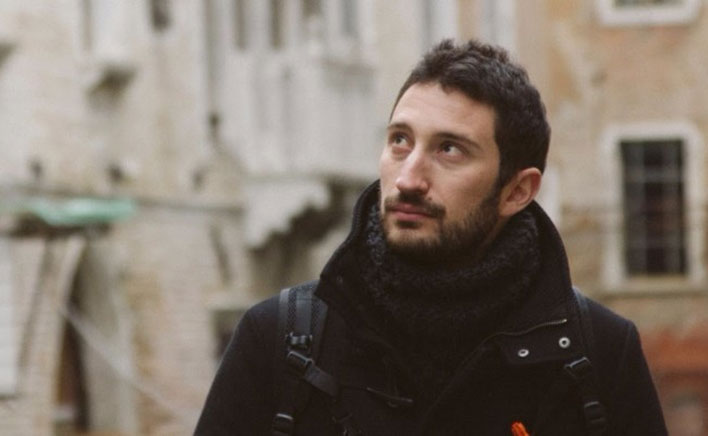
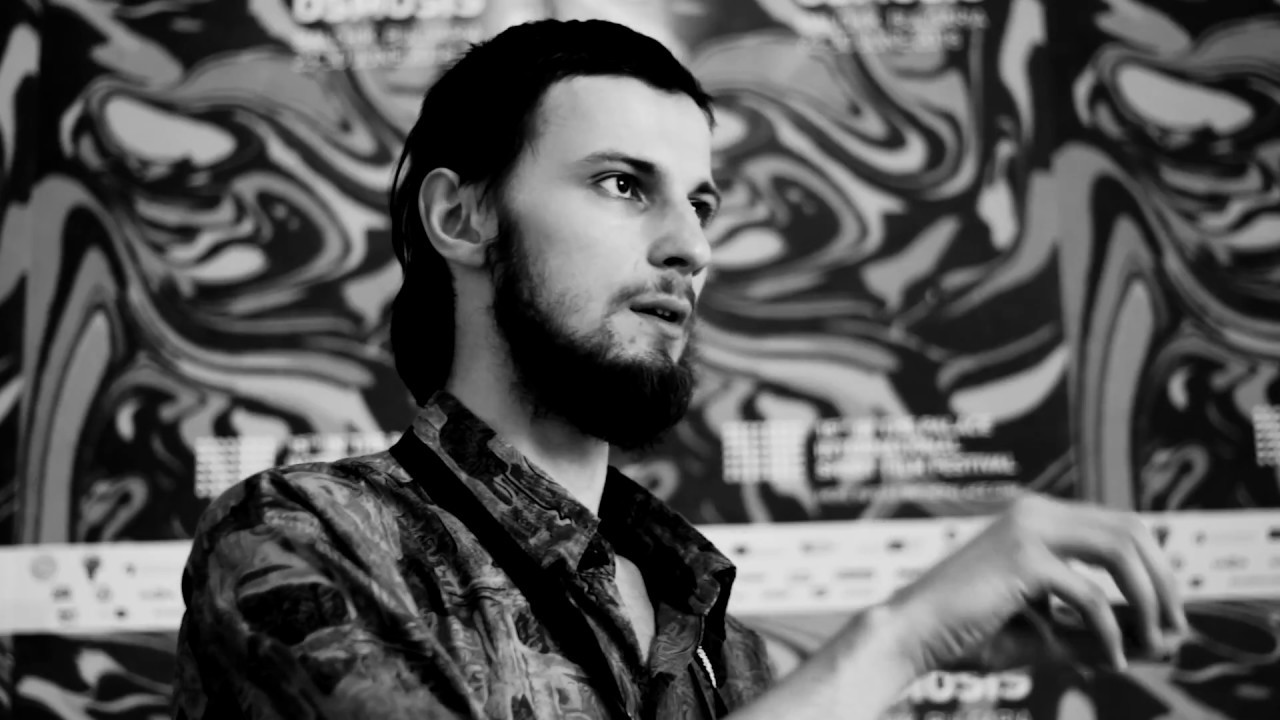
Nikita Tuzov is a businessman, lives in Murmansk, married.  The whole family is connected with the fishing industry and the changes that it is undergoing in recent years, he is very concerned. Sea Is Shaking is a debut work for Nikita.

DOWNLOAD PHOTOS

POSTER

Снимок экрана 2019-07-17 в 15.23.11

CONTACT

Ekaterina Rusakovich :    ekaterina@eastwood.agency

Kaifinama (Sumantra Ghosal) India

Kaifinama
Sumantra Ghosal
India. 2019. 90 min

Kaifinama looks at the life and art of the Urdu Progressive poet Kaifi Azmi. Kaifi Azmi was both a poet for social change as well as one of the foremost lyricists in the Hindi film industry. Not content to limit himself to fine writing, he worked ceaselessly throughout his life as a catalyst for change among the disenfranchised.  The film looks at his small-town roots, his commitment to socialism, his wide-ranging body of work and the enormous changes he brought to the life of the village where he was born. This extraordinary journey is documented through extensive interviews with him and his wife Shaukat Kaifi as well as insights from his children – Shabana and Baba Azmi – and reminiscences by his friends and colleagues.  Kaifinama thus is both the definitive film biography of Kaifi Azmi and a history of the times he illuminated with his genius.

SUMANTRA  GHOSAL

Shabana Azmi and Sumantra Ghosal at the screening of Kaifinama at NCPA. Photo courtesy: NCPA.

Sumantra Ghosal spent the better part of his life making advertising films for his companies Cinematix and Equinox.  Now, he makes documentaries. Noteworthy among his several films on the arts are the two feature-length films:  The Speaking Hand
(on the tabla maestro Zakir Hussain) and The Unseen Sequence (on the Bharatanatyam dancer Malavika Sarukkai).
In 2017, Sumantra completed The Space Between The Notes – a documentary on a concert by Zakir Hussain and Niladri Kumar. He also served as creative collaborator with Malavika Sarukkai and wrote the poems for the full-length dance project Thari – The Loom.
His most recent work is Kaifinama – a full-length documentary film to commemorate the birth centenary of the Urdu poet Kaifi Azmi.

DIRECTOR,S STATEMENT

Kaifinama entered my life as a surprise.
One day, quite out of the blue, Kaifi Azmi’s daughter -Shabana – asked me whether I would make a film to commemorate her father’s birth centenary. Having agreed without much thought given to the road ahead, I soon found myself in a quandary.
Kaifisaaab led a long and eventful life straddling many worlds and making an indelible mark in each of them.  He belonged to an era and an ethos that was unfamiliar to me. He wrote poetry in a language I couldn’t speak and which I understood with difficulty.
Ironically, I decided to start the journey by translating some of his most seminal poems into English.
That, I thought, would allow me to wrestle not just with the texts of his works but with their subtexts and their contexts as well.

TALKS WITH SUMANTRA GHOSAL and SHABANA AZMI

DOWNLOAD PHOTOS

POSTER

Kaifinama Poster

CONTACT

Sumantra Ghosal :    sumantra@cinematixfilms.com

The Geshema is Born (Malati Rao) India

The Geshema is Born
Malati Rao
India.  2019.  70 min

Tibetan Buddhist nuns have for centuries sought the audacious idea of equality within their ancient faith. Empowered by His Holiness the Dalai Lama, they now receive the highest monastic degree – the Geshe Ma or Phd degree. The film explores their journey. For the Buddha, establishing a community of nuns was a radical experiment for its time.

Over the centuries, Buddhist religious life was available to women and many historical events mention highly accomplished nuns, but the highest monastic qualifications were denied to them. His Holiness the Dalai Lama worked for decades on behalf of women in Tibetan Buddhism, to empower and enable them to finally receive the same education and the same degree as the monks. In achieving this, he impacted the potential of women across all faiths to participate fully in their faiths, drawing upon the value and usefulness of the wisdom that results from women’s unique experiences. The Film traces the journey of Namdol Phuntsok, the first woman ever to be awarded the highest degree in Tibetan philosophy – the Geshe degree, the ‘knower of virtue’.

MALATI  RAO

Malati Rao has been making documentaries for the last decade, several of which have been broadcast on public television. Handmade in India, on India’s craft traditions, and Born Behind Bars, about children growing up in prison, have been applauded and screened at several film festivals. Malati holds an MFA degree in Film and Media Arts from Temple University, USA, and an MA in Mass Communication from Jamia Millia Islamia, Delhi.

INTERVIEW TO TIBETAN NUN

DOWNLOAD PHOTOS

CONTACT

distribution@psbt.org

Sharmila Tagore (Umang Sabarwal) India

Sharmila Tagore
Umang Sabarwal
India.  2019.  55 min

Introduced to film acting at age 13 by Satyajit Ray, Sharmila Tagore evolved into one of the most iconic actors and stars of the 60s and 70s India, straddling the worlds of classical and popular cinema with grace and poise. The Film journeys through her film career and life stories, while reflecting on her choices and resolve that made her an independent and phenomenal woman.

UMANG SABARWAL

Resultado de imagen de Umang Sabarwal) India

Umang Sabarwal is an alumnus of AJK MCRC Jamia Millia Islamia. She has worked in video production, short films and films for education. She was the founder of SlutWalk arthaat Besharmi Morcha, a women’s protest in New Delhi. She wants to make non – fiction films, likes experimenting with form and is partial to stop motion animation.

DOWNLOAD PHOTOS

POSTER

CONTACT

distribution@psbt.org

Prison Diaries (Uma Chakravarti) India

Prison Diaries
Uma Chakravarti
India.  2019.  40 min

The story of the unexpected imprisonment of a number of women, for their resistance to the Emergency of 1975-77, through the life of Socialist and famous actor Snehalata Reddy.  Being the only woman political prisoner in jail, she spent eight months in solitary confinement, recording her concerns and traumatic experiences in her diary, extracts of which were later published. Released for a few weeks on parole, she died of a heart attack just before she was to return to jail.  The Film recounts her ordeal through the reminiscences of her children and close friends.

UMA CHAKRAVARTI

Uma Chakravarti is a feminist historian turned filmmaker. She has taught history to many generations of women students and been associated with the women’s movement and the movement for democratic rights.  She has co-authored Delhi Riots: Three days in the Life of a Nation and published books on Buddhism, Caste and Gender, among others. Her films are deeply rooted in history, memory and the archive. Her first film A Quiet Little Entry explored the plight of women’s lives during the National Movement, while Fragments of a Past revolves around a political activist who does not remember her own past.

INTERVIEW TO UMA CHAKRAVARTI

DOWNLOAD PHOTOS

CONTACT

distribution@psbt.org

Moti Bagh (Nirmal Chander) India

Moti Bagh
Nirmal Chander
India.  2019.  60 min

For over five decades, 83 year old Vidyadutt Sharma has nurtured Moti Bagh, his 5 acre farm in a small Himalayan village. Around him are 7000 ghost villages – a chilling testimony to large scale migration by locals in search of employment. Chronicling the changing landscape in verses of resistance, Vidyadutt Sharma and Ram Singh, his Nepali farmland, plough the fields and keep them alive, hoping to return Moti Bagh to its old glory.

NIRMAL  CHANDER

Resultado de imagen de Moti Bagh (Nirmal Chander)

Nirmal Chander is an award winning filmmaker who has been working for over two decades in the field of documentaries as producer, director, cinematographer, researcher, script writer and editor. His films All the World’s a Stage, Dreaming Taj Mahal, Sab Lila Hai, The Face Behind the Mask and Zikr Us Parivash Ka, among others, have been lauded for their humanistic approach and have travelled to many international film festivals.  Nirmal also conducts workshops on filmmaking.

DOWNLOAD PHOTOS

CONTACT

distribution@psbt.org

Mullah,s Daughter (Hassan Solhjou, Mahdieh Sadat) Great Britain

Mullah,s Daughter
Hassan Solhjou, Mahdieh Sadat
Great Britain. 2019. 72 min

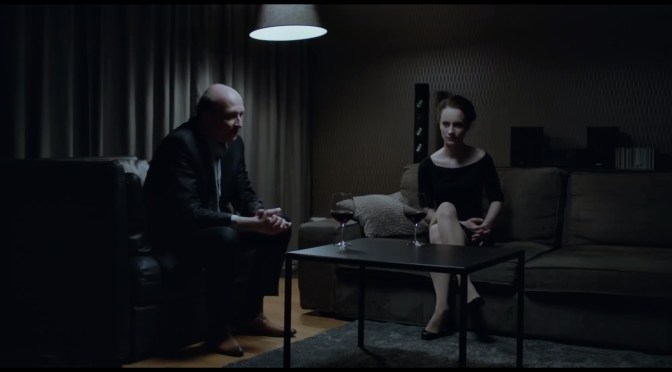
An Iranian family becomes a miniature representation of Iran, where a conservative mullah tries to control things.  But his defiant daughter has a secret plan.

An unusual and personal story about a Muslim mullah and his family in Iran – filmed by his own daughter, Mahdieh.  She makes a living as a photographer, but due to political restrictions, the government has banned her from working. Her father, the highly conservative mullah, is a radical supporter of the Iranian clergy, but is himself fighting to control his defiant children with their conflicting attitudes and religious beliefs. At the same time, Mahdieh is struggling to keep a secret: she is planning the escape from the country with her boyfriend. But as time goes by,  the family situation grows even more complicated.

HASSAN  SOLHJOO

Hassan Solhjoo

He is a senior producer at the BBC World Service, a editor and presenter of a film showcase in BBC Persian TV.  He studied cinema in Iran and UK and so far he has made more than 10 films, mainly documentaries. His films include  The Night Season (1991),  Fish Talking (2006),  In Search of a Healer (2007),  The Birds I Dreamed  (2010) and  Throw A Stone into The Water (2011).

MAHDIEH  SADAT

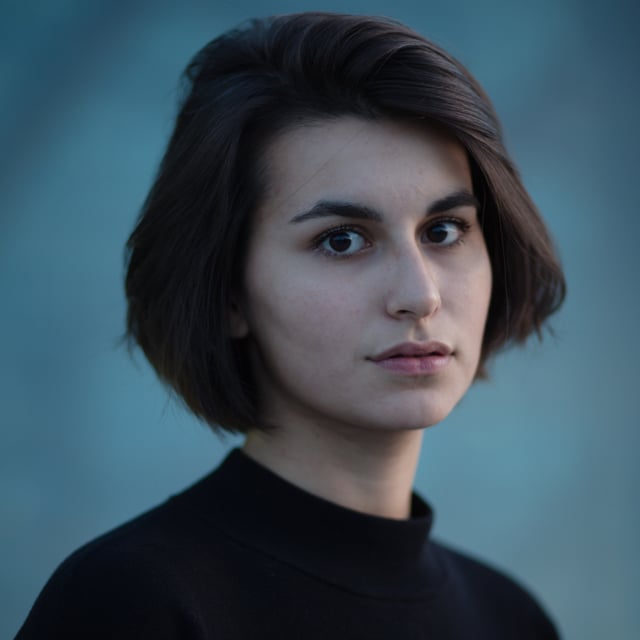
Mahdieh Sadat MIRHABIBI, born in 1982, is an Iranian Photographer living in exile. She has been banned from her job as a photographer in Iran and had to flee to Turkey. She is now based in Turkey. She has been covering stories in Iran, Syria, Iraq, Afghanistan, India through her pictures.  Mullah′s daughter  is her first film.

POSTER

DOWNLOAD PHOTOS

CONTACT

Hassan Solhjoo :  hassansolhjoo@googlemail.com

For Sama (Waad Al-Khateab, Edward Watts) Great Britain

For Sama
Waad Al-Khateab, Edward Watts
Great Britain.  2019.  100 min

Journalist Waad al-Kateab spent five years documenting the atrocities inflicted by President Assad’s regime upon civilians in Aleppo.  A student of economics at Aleppo University when the 2011 war began, Waad took her camera to the streets and began documenting the devastation of the Syrian regime and its allies.  At the same time she found love and became a mum, marrying Hamza (one of the 32 doctors who stayed in East Aleppo) and having her first child, Sama, while airstrikes bombarded the city.

In 2016 Waad met her co-director Edward Watts, and their film, For Sama, took off. “I got involved when these great people [Waad and Hamza] left Aleppo,” Watts tells me when I sat down with the filmmakers just a few hours before the UK premiere of their film at this year’s Sheffield Doc/Fest. “No one knew about the incredible footage that she’d created while she was there. Initially it was in the region of 300 hours of footage that she managed to get out of Aleppo. And then subsequently there were more hard drives, more footage. It was somewhere between 300-500 hours, which we edited down to 94 minutes within two years.”

INTERVIEW TO THE DIRECTORS

WAAD AL KATEAB – EDWARD WATTS

Resultado de imagen de waad al-kateab

In 2009, 18-year-old Al-Kateab moved to Aleppo to study economics at the University of Aleppo.  In 2011, when the Syrian Civil War broke out, she began reporting on the war for Channel 4 News in the United Kingdom.  She elected to stay and document her life over five years in Aleppo as she falls in love with Hamza – her friend-turned-husband, a doctor – and gives birth to their first daughter, Sama (“Sky”) in 2015,  which became the basis of For Sama.  For covering the Siege of Aleppo, she won an International Emmy for her reporting, the first Syrian to do so. For Sama, directed with Edward Watts, won the Prix L’Œil d’or for best documentary at the 2019 Cannes Film Festival,  receiving a six-minute standing ovation.  At the 73rd British Academy Film Awards, For Sama became the most nominated documentary in the history of the British Academy Film Awards with four nominations, winning for Best Documentary.

After fleeing Aleppo in December 2016, Al-Kateab, her husband, and their two daughters reside in the United Kingdom.

DOWNLOAD PHOTOS

POSTER

Resultado de imagen de For Sama (Waad Al-Kateab, Edward Watts) BFI

CONTACT

Surtsey Films :    surtsey.programacion@gmail.com

Murghab (Daler Kaziev, Martin Saxer, Marlen Elders) Germany

Murghab
Daler Kaziev,  Martin Saxer,  Marlen Elders
Germany.  2019.  81 min

A generation ago, Murghab was well taken care of.  As the highest town of the former Soviet Union at 3600 metres above sea level and close to the sensitive borders with Afghanistan and China, the town enjoyed ample provisions from Moscow brought in via the Pamir Highway. It featured electricity around the clock, an airport with regular flights, a movie theatre, and a hospital with central heating.

Since then, Murghab and its people have weathered several storms and many of the Soviet hallmarks are crumbling away.  Yet, life goes on and, with wit and improvisational skills, the ruins of Socialism afford a plethora of new but precarious ways to make do.

The film provides a window into contemporary life in Murghab. It offers glimpses into people’s daily routines, inviting the audience on a journey to the Pamirs. It follows a group of men harvesting shrubs on the windswept high-altitude plateau, a nurse keeping regional health statistics, a passionate teacher inspiring a sense of history and purpose in her class, and a welder building stoves from the scraps of Soviet modernity. A winter film of hardship, work and hope.

MARTIN  SAXER

Resultado de imagen de Murghab Daler Kaziev, Martin Saxer, Marlen Elders

The film Murghab is the result of a close collaboration between three filmmakers, all of them with a background in anthropology. Daler, who grew up in Murghab, brought crucial knowledge and personal connections to the team; Martin contributed his experience from making two prior feature-length documentary films as well as insights from his own research in the Pamirs; and Marlen added her skills in tracing atmospheric tunes and her expertise in sound recording.

This combination made for a truly collaborative approach. Much of the content, form and structure of the film emerged while shooting in Murghab in February/March 2018 during long hours of discussions accompanied by the steady sound of a generator charging our equipment at night. While shooting, it was mostly Daler leading the conversations, while Martin focussed on camera work and Marlen on sound recording. Editing started with an intense two-week retreat in a Bavarian village in the Alps before Daler moved to the US to start an MA programme at Cornell University. Marlen and Martin took the lead during postproduction, with Daler watching rough cuts and joining the discussions remotely.

Murghab is also based on research: Daler’s BA thesis on shrub collectors and Martin’s work in the five-year project Remoteness & Connectivity: Highland Asia in the World, funded by a European Research Council Starting Grant and carried out at the Department of Social and Cultural Anthropology, University of Munich see highlandasia.net

DOWNLOAD PHOTOS

POSTER

Resultado de imagen de Murghab Daler Kaziev, Martin Saxer, Marlen Elders

CONTACT

Martin Saxer :    martin.saxer@lmu.de

7 Veils (Sepideh Farsi) France

7 Veils
Sepideh Farsi
France.  2017.  80 min

Little is known about Afghanistan, apart from a few clich.s, the word Taliban, and a war which seems never to have stopped since the Soviet Union and the turning point reached in 2001. How can one do justice to a devastated country in a state of permanent conflict, and to its deeply afflicted population?

With this film, Sepideh Farsi took up again the documentary format she had started with, and using only one camera, she embraced the beautiful task of reaching the very heart of the country.  First, at the French Embassy in besieged and barricaded Kabul, where death and perils await in every building, at every street corner. Then, using her knowledge of Dari, a language close to her mother tongue, Farsi, she endeavoured to travel across the country.

Meeting people along the way, she engaged in conversations with them, in a gentle and empathic fashion. In cars, with embassy or taxi drivers; on pathways, with workers or veterans from the fight against the Soviets, or with a young woman longing for independence; in the troglodyte homes of displaced farmers near Bamiyan, or in the house of an aristocrat and former diplomat; with demonstrators.

Always paying close attention to these people’s words and presences, to their bodies and environments, Sepideh Farsi painted in successive slight touches a whole gallery of portraits, all haunted by traces of History and filled with longings. Scrap after scrap, this uncritical, delicate and subjective patchwork aims at lifting the seven veils – from the legend told as an epigraph to the film – that cover the country.

SEPIDEH  FARSI

Resultado de imagen de 7 Veils (Sepideh Farsi) France

Sepideh Farsi was born in Tehran in 1965 but left Iran in 1980 and went to Paris in 1984 to study mathematics. However, eventually she was drawn to the visual arts and initially experimented in photography before making her first short films. Her first two features Dreams Of Dust and The Gaze premiered at Rotterdam in 2006.
Farsi was a Member of the Jury of the Locarno International Film Festival in Best First Feature in 2009. She won the FIPRESCI Prize (2002), Cinéma du Réel and Traces de Vie prize (2001) for Homi D. Sethna, filmmaker and Best documentary prize in Festival dei Popoli (2007) for Harat. In December 2009, Tehran Without Permission was shown at the Dubai International Film Festival.

DOWNLOAD PHOTOS

POSTER

CONTACT

Javad Djavahery :    javad@revesdeau.com