Nakom (Kelly Daniela Norris, T.W. Pittman) Ghana, USA.

Nakom
Kelly Daniela Norris, T.W. Pittman
Ghana, USA. 90 Min. 2016
Cast: Jacob Ayanaba, Grace Ayariga, Justina Kulidu

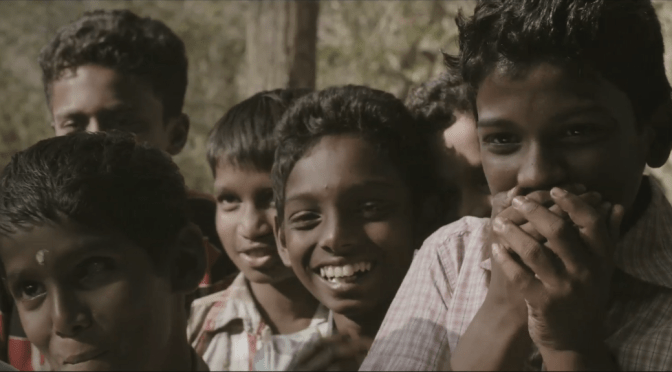
Nakom, recreates the conflict between progress and tradition. In present day Ghana, Nakom follows Iddrisu, a medical student who is required by his family after his father’s sudden death. Iddrisu buries his father and temporarily assumes the role of head of family and impoverished farm, inheriting the task of planting the crop and the debt left by the deceased patriarch that could destroy the family. Iddrisu tries to continue his studies but is increasingly frustrated with the incessant needs of those around him and the demanding work of the land. The difficult relationship with his uncle Napoleon, who is owed the considerable debt, is further complicated by the pregnancy of Napoleon’s daughter. Over the season until the harvest, Iddrisu clings to tradition, duty owes family and all sense of urgency to do what he must to secure his own future.

Kelly Daniela Norris, graduated magna cum laude from Columbia University with a degree in Film and Psychology, and taught for 3 years in the South Bronx with Teach for America. She directed the narrative short film “Sinnerman” (winner of Audience Favorite Debut at the Route 66 International Film Festival and the Black Expressions Award at Indianapolis International Film Festival), and studied screen-writing under David Milch (“Deadwood”). She shot her first feature, “Sombras de Azul” (Shades of Blue), on-location in Cuba, weaving together memory, travelogue, and narrative as a tribute to her late brother. “Sombras de Azul” premiered at the Austin Film Festival, winning the Audience Award in its category. Norris directed her 2nd feature, “Nakom”, over a period of 4 months on-location in Ghana.

T.W. Pittman is a writer and producer with Rasquaché Films, which she co-founded with filmmaker Kelly Daniela Norris. She wrote and co-directed the short film Sinnerman (2009), and produced Norris’s debut feature Sombras de Azul (2013) on location in Cuba. Pittman wrote and co-directed Nakom (2016), set in the community of subsistence farmers in northeastern Ghana where she previously served with the U.S. Peace Corps.
The Devil (K. Prada , J. Prada) Spain

The Devil
K. Prada , J. Prada
Spain. 2015. 3 min.

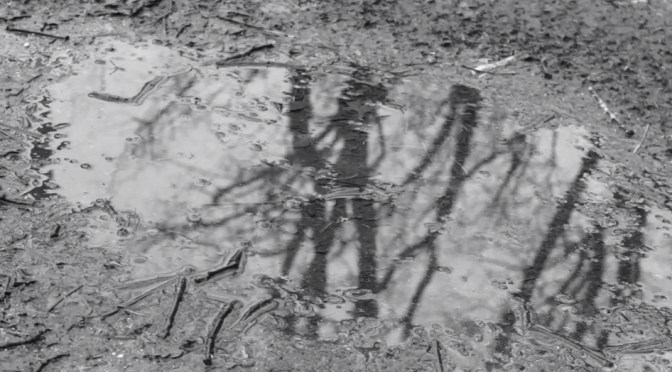
The Devil is a story about the encounter with the Devil.

K. Prada and J. Prada are two prolific short filmmakers. Although they have flirted with different genres and styles, his work shows a special interest in the fantastic. Terrifying and comical are often joined in his films. As usually occurs when we are dealing with the work of two directors who work together, it is questionable whether each of them provides a certain approach. The chances are that we never know if the same thing happens with the Prada brothers, does not seem to enter into their plans to launch alone. Alternating “cheap” productions shot in record time with professional films of impeccable work, K and J Prada have obtained more than three hundred selections and several prizes in national and international festivals. Like other directors born in the mid-1980s, the Prada have absorbed eclectic influences: from the classics essential to every movie buff, to B-series films, to TV, to comic and to home video. Perhaps to that unease to prove everything, absorbing multiple references, referred the title of the retrospective that the festival of Sitges dedicated to them: “In search of the perfect plane”. “Humans with Potatoes”, “Road Station” and “Anorexia” are some of the most recognized titles of his extensive filmography. And what they have left. The Prada are a regular presence in Notodofilmfest.

The People’s Train of Culture (Carolina Spinoza) Chile

The People’s Train of Culture
Carolina Spinoza
España/Chile. 2015. 60 min.

The Popular Train of Culture was an initiative of the government of chilean president Salvador Allende, to bring culture to people who did not have access to it. For this, in February 1971 Allende chartered a train to the south of Chile with 60 artists for 40 days, to make artistic representations in remote villages. The initiative was part of Measure 40 of its government program, whose ultimate goal was the creation of the National Institute of Arts and Culture and art schools in all provinces of the country. The history of the train tries to establish links with some aspects of the educational and cultural initiatives of the Second Republic in Spain such as the Pedagogical Missions, the Theater of the Town, the Theater of La Barraca or with other previous experiences as the Trains of Agitation of the Russian Revolution.

Carolina Spinoza was born in 1974 in Concepción, Chile. She is a journalist and anthropologist. Degree in social communication at the University of Concepción and Master’s degree in economic information at the Universidad Complutense of Madrid. Her audiovisual experience goes back to 1995, when she worked in the television information department of Universidad de Concepción. Subsequently, in 1997, she worked in the 24 hour news program of the National Television of Chile.


The Books we made (Anupama Chandra , Uma Tanuku) India

The Books we made
Anupama Chandra , Uma Tanuku
India. 2016. 68 min.

The Books we made transports you back in time to 1984, when two women began what was arguably India’s first feminist editorial, Kali for Women, which printed books written by women and for one audience that was largely female, at a time when women had no voice. The film also offers insight into the lives of interesting women, brave women; from Baby Halder’s bildungsroman to the chilling fragment of Sheena Akhtar from her book ‘Talaash’. This documentary has been part of the annual Open Frame festival.

Anupama Chandra is a film editor, director and teacher. She graduated with a degree in Film Editing from the Film and Television Institute of India, Pune, and has degrees in English Language and Literature from the Universities of Oxford and Delhi. She has worked as an editor on several films over the last 15 years. A guest faculty at Sri Aurobindo Center for Art and Culture, she ran the co-curricular monsoon semester on film at Ashoka University. She is a regular writer for the books of The Asian Age. This film is the first directorial venture.

 Uma Tanuku graduated in Business Management from the University of Madras and specialized in international trade from the Indian Institute of Foreign Trade. After over 15 years at an international trading company, she studied Film Direction at the Film and Television Institute of India. She has since worked as a line producer on several films. Her first film, Night Hawks, is an observational documentary on nocturnal labor. She was the Director of the IAWRT Asian Women’s Film Festival for 2015 and its Co-Director for three years.

Until Space Remains (Gaurav Saxena) India

Until Space Remains
Gaurav Saxena
India. 2016. 65 min.

Until Space Remains. Tibetan spiritual leader and nobel laureate the 14th Dalai Lama has been living in exile in India since the chinese occupation of Tibet in 1959, in spite of which the tibetan people have managed to preserve their identity, keeping their cause alive. The film explores the untold story of the remarkable relationship that Dalai Lama and Tibetans share with India, which began in 8th century. Until space remains traces the Dalai Lama’s incredible journey from his early years in Tibet to commemorating his 80th year in exile; a rare glimpseof his remarkable evolution as a Bodhisattva. The film is shot across the Dharamshala Himalayas (the exiled home of The Dalai Lama), the ancient buddhist ruins of Nalanda and Bodhgaya in Bihar and New Deli, besides incorporating rare archival footage from 1930s-1940s from inside Tibet and of The Dalai Lama.

Gaurav Saxena

Gaurav Saxena realized his passion for directing early on when he trained at the National School of Drama’s Theater in education company and directed plays. He graduated from Delhi College of Arts, Delhi University after which he trained in television production and direction with Studio 18 and subsequently worked for various TV production companies in Delhi and Mumbai as director. He directed primetime fiction series and non-fiction shows across all TV networks. Further film programs in the USA, including screenwriting at UCLA, folowed, after which he worked as a screenwriter, director and producer on independent film projects in India, Germany and USA. He independently produced and directed Tibetan short film Rangzen that had its world premiere at the 64th Berlinale and won best short and best of festival al Raindance, qualifying for the 2015 Oscars entry. Gaurav has recently completed a feature length commisioned documentary film on the Dalai Lama.

Shaadi, Sex aur Parivaar (Aman Kaleem) India (PSBT)

Shaadi, Sex aur Parivaar
Aman Kaleem
India. 2015. 27 min.

Shaadi, sex, aur Parivaar explores the institution of marriage through the lens of three indian brides. It is based on the individual decisions of women regarding marriage and how the thoughts behind these decisions change their lives. The film focuses on four of women’s thoughts regarding body image, sexuality, love and identity and how social expectations influence their freedom. Also one of the four characters in the film, Aman Kaleem, talks about cinema and how essential it comes from honesty. This documentary has been screened at the Open Cinema Festival and PSBT Forum.

Aman Kaleem

Aman Kaleem is a filmmaker based in New Delhi and graduated in Mass Communication by AJKMCRC. She loves telling stories about women and their daily dilemmas. Her characters evolve as a reflection of the women she has interacted with while growing up in ten different cities across India. Making movies about women is the way to find their own voice through collective narratives. He has actively participated in the creation of alternative discourses through his films in the regions of political conflict, Kashmir and Northeast. She has been programmer of the International Film Festival of India, the biggest and oldest festival in Asia. She has also taught at the Muslim University of Aligarh. She has been awarded the Young India Fellowship in 2013. Her latest film Eidiyaan won numerous international and national awards and Shaadi, Sex aur Parivaar is her first independent documentary.

Curumim (Marcos Prado) Brasil

Curumim
Marcos Prado
Brasil. 2016. 106 min.

Curumim, tells the last days and the last hours of Marco Archer, better known in the surf community and hang gliding by the nickname “Curumim” the first brazilian sentenced to death for drug trafficking after being captured by the thai policeman on an island outside Bali, Indonesia, and more than ten years in a maximum security prison. Why did a young man from a wealthy family decide to do something so risky? How was Curumim’s life all this time in jail knowing he could die at any moment? These and other issues are what tries to unveil Marcos Prado in this documentary.

Marcos Prado

Marcos Prado was born in 1961 in Rio de Janeiro and is a photographer and director. As a photographer, he received several national and international awards, including World Press Photo 92 and World 92, UNEP. He was chosen in 2002 as Hasselblad Maestro, has photos in the permanent collections of the Museum of Modern Art of Rio de Janeiro (MAM), the Sao Paulo Art Museum Assis Chateaubriand (MASP) and the Paulista Museum of Modern Art (MEM). He has held individual exhibitions in Brazil and around the world.
As a producer he has made the documentary “Os carvoeiros” (1999), inspired by his book of the same name and directed by Nigel Noble, and “The bus 174” (2002) by José Padilha and Felipe Lacerda. He has also directed programs for television, for Globosat, for National Geographic Television and for NBC.

He made his directorial debut with Estamira (2004), receiving the Best Documentary Award at the Rio Festival, the São Paulo Film Festival, the Karlovy Vary International Film Festival and the International Documentary Festival in Marseille, as well as prizes at Bethlehem, Miami and Nuremberg.

In 1997 he founded together with the filmmaker José Padilha, Zazen Productions, where they carried out their own projects. He produced “Tropa de Elite” by José Padilha, a film that won the Golden Bear at the Berlin Film Festival. He was also the big winner at the Live Brazilian Film Grand Prix in April 2008, taking eight awards, including best director for José Padilha and best film by the jury. In 2010, produced “Elite Template 2: The enemy is another” and after two years he directed “Artificial Paradises”.

TRAPPED IN JAPAN (VIVIENNE BARRY) Chile

Trapped in Japan
Vivienne Barry
Chile. 2015. 70 min.

This is a documentary that focuses on the experience of six chilean journalists who after a trip to Japan in 1941 were trapped in the country in the middle of World War II, a situation that transformed them into war correspondents with active participation of record during the bombings. Carlos Barry Silva, father of the director and at that time a reporter for the newspaper El Chileno, is one of the protagonists of this legendary history of national journalism.

Vivienne Barry

Vivienne Barry is director of animated film, journalist and magister in Literature by the University of Chile. After the coup d’état of 1973 she leaves the country and moves to the (then) German Democratic Republic. In the city of Dresden she learns animated films and between 1976 and 1978 she works at DEFTA Trickfilm Studio in Dresden. Her specialties include stop motion, animation of plastilines, cut papers and collages. Returning to Chile in 1980 she works in advertising animation and begins to develop her first personal works. She has an extensive experience as a teacher and workshop director in Chile, Mexico, France and Cuba. She has been a jury at international festivals such as Prix Jeunesse, Slovak Prix Danube, Harlequin in Poland and Annecy, the most important in the world of animation, among many others. She has done extensive work in animations for chilean television that have been awarded internationally with the Prix Jeunesse and in various competitions. She is currently President of ASIFA, International Animation Film Association.

When the Woods Bloom (Biju Kumar)

When the Woods Bloom
Dr. Biju Kumar
India.  2016.  105 min.
Cast:  Krishnan Balakrishnan, Prakash Bare, Indrans.

The film is based on the situation in Kerala, where the Indian Government has detained many activists who are in a speech against the government’s fascist and undemocratic activities. The film deals with the clash between the agents of authority and the oppressed in the name of law and security. A special police battalion is deployed by the government to end the Maoist threat (a forbidden left organization) in a tribal village near the forest. The police are forcibly holding a tribal primary school to set up camp. One day, police are looking for some activists in the forest near the school and the police officer who follows a person in the deep forest finds that the person arrested is a woman. He tries to leave the forest with the person arrested, but is lost in the forest. The woman knows the way out but is not willing to show him. Thus, as much as the hunter are stranded in the thicket of the forest. Power, crime, man, woman; the hunter hunted… all this makes the roles reversed and the situation changes.

BIJU  KUMAR

Known as Dr. Biju, is an Indian homoeopathic doctor turned film director and screenwriter. He is best known for films such as Saira (2005), Veettilekkulla Vazhi (2010), Akasathinte Niram (2012), Perariyathavar (2013), and Valiya Chirakulla Pakshikal (2016).
Biju has received three National Film Awards, and his films have been screened at multiple international film festivals.
Biju debuted into films as writer and director with Saira (2005). It was first part of terrorism trilogy and in 2007 premiered at the Cannes International Film Festival. His second film Raman (2008) was selected at Cairo International Film Festival (2009) in the Incredible India category. Veettilekkulla Vazhi (The Way Home; 2010) was last film of the trilogy and earned a National Film Award for best Malayalam film in 2010.
His fourth film Akasathinte Niram (Color of Sky; 2012), was premiered at 15th Shanghai International Film Festival in the International competition section. Biju’s next film, Perariyathavar (Names Unknown, 2014) received two National Film Awards in 2014 for the Best Actor and Best film on Environment conservation, and was screened at the Montreal World Film Festival (2014).
In 2015, he directed Valiya Chirakulla Pakshikal (Birds With Large Wings; 2015) which was premiered at United Nations, Geneva as a part of the United Nations Environment Programme, and received National Film Award (2015) for the Best film on Environment conservation. His 2016 film Kaadu Pookkunna Neram (When The Woods Bloom) was premiered at the Eurasia International Film Festival, Asia Pacific Screen Awards, International Film Festival of Kerala, and the Montreal World Film Festival, in 2016.
Biju has served as jury member of the International Film Festival of Kerala (2011), Fajr International Film Festival (2012), National Film Awards (2013), and the 2015 Oscar selection jury member for best foreign language film.

The Violin Player (Bauddhayan Mukherji) Official Section

The Violin Player
Bauddhayan Mukherji
India.  2016.  72 min.
Cast:   Adil Hussain, Ritwick Chakraborty, Nayani Dixit.

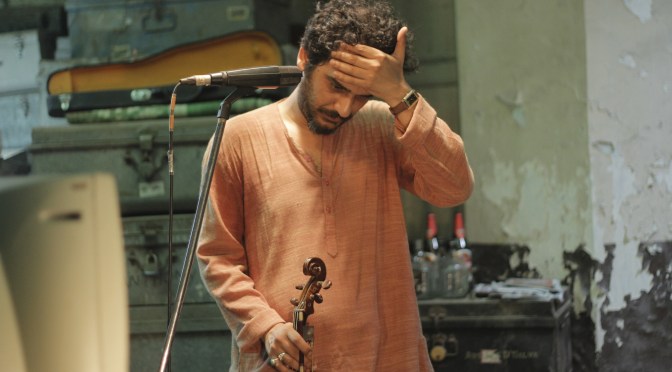
An encounter between two unnamed strangers is the focus of this quirky tale that looks at how expression and artistic beauty lead to self-discovery. The film opens following a failing violin player’s ordinary life. His wife is annoyed at him because he won’t help around the house and he’s not getting it right during music training. It’s clear that he’s seen as a failure in both his personal and professional life. But that all changes when he catches the attention of a stranger at the train station, a filmmaker who needs a score to his latest project, offering the player an opportunity he can’t refuse. Agreeing to take the job because he’s desperate for money, the violinist follows his new employer through the back alleys of the city, and onto an unexpected journey showing us how the art is able to change our lifes.

BAUDDHAYAN  MUKHERJI

Bauddhayan Mukherji (1973) is one of India’s leading advertising filmmakers, Bauddhayan, better known as Buddy, was born and raised in Calcutta. He is the son of a school teacher and a poet and was introduced to the world of music, the arts and literature at a very early age.
He studied at South Point School and, like all Bengalis, was good in the academic world, but his mind was always somewhere else. When he was only 11 years old, he received a copy of the book “Ekei Boley Shooting” written by Satyajit Ray, who changed his life forever, because at that age he decided to become a filmmaker.
Since then, Bauddhayan has followed his heart and has walked in the footsteps of his idol. After school, Bauddhayan majored in Economics at St Xavier’s College, as Satyajit Ray, who had also studied economics. And like him, he left the economy after graduation. Bauddhayan joined the Clarion College of Advertising, the same organization (then D J Keymer), where Ray had joined in his time.
Today Bauddhayan runs his own production company, Little Lamb Films and is considered a breakthrough in Indian film advertising. He has directed over 300 television commercials and won numerous international awards.
In 2010, Bauddhayan won the prestigious Silver Lion in Cannes, the oscars of the commercials. He also won two consecutive One Show awards in New York, Spikes Asia Golds in Singapore, silver in the London International Awards and many more in Goafests, Effies, Midas, Srijón Samman, RAPA, IDPA and others.
He was offered offers to direct Indian films in Bombay, but his heart is Bengali and his first film had to be Bengali. It was Bauddhayan’s way of showing his respect for his language and the one that opened the doors for him to explore and express himself. Teenkahon was born of that desire.
Although Teenkahon is Bauddhayan’s debut feature as a director, this is not the first time he has ever worked in movies. He has executive produced the Bengali film Patalghar, which began the new wave of Bengali films in early 2000.
Bauddhayan, as his idol, investigates various forms of art. He loves to write, he is the only living Bengali poet who has appeared in the penguin Indian anthology. He is also passionate about music, so Bauddhayan and his friends direct Chhutir Pathshala, a Bengali organization in Bombay that educates Bengali children who are not residents of Bengali life forms. Bauddhayan is a professional voice-over artist, an occasional actor and a singer.
With respect to The Violin Player, this is his route:
 7th Jio Mami Mumbai FF (2015) – India Gold
 20th IFFK, Kerala (2015) – International Competition
 37th Durban IFF (2016) International Competition – Best Feature film Award
 13th Stuttgart Indian FF (2016)
 12th Jecheon IMFF, South Korea (2016) – Cine Symphony
 24th Raindance Film Festival (2016) – Intl Competition – nominated for Best Screenplay and Best Actor
 40th Sao Paulo IFF (2016) – New Directors Competition
 61st Cork IFF (2016) – Panorama
 Indian FF The Hague (2016)
 India Kaleidoscope at Momi NY (2016)
 Image India Paris (2016)
 SeeYouSound Festival (2017)
 Washington DC Independent FF (2017)