Scattered (Nikhilesh Matoo) India. Imagineindia 2018

Scattered
Nikhilesh Matoo
India. 2017. 12 min.

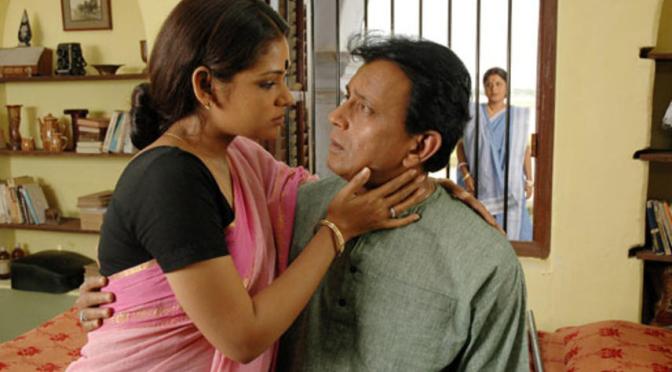
Neel, a 30 year old man visits his ancestral house in downtown srinagar which his family left after growing threats to his community when militancy was at its peak and the majority was ready for their liberation from India. During this visit he meets the present occupants of that house and an old acquaintance of his family. The conversations he has with some of the characters speaks of the trouble that both communities have faced. The protagonist who came with the sole purpose of paying a visit to his house observes the difficulties with which this family gets by in their daily affairs. On this particular day, a cricket match between India and Pakistan results in Pakistan’s victory and the people of that area celebrating. Under these circumstances, the protagonist decides to stay back the night in his house. These present day scenes are interspersed with some flashbacks and dream sequences from the time when Neel was a 5 year old boy and his community was facing the threats.

The Albino,s Trees (Masakazu Kaneko) Japan. Imagineindia 2018

The Albino,s Trees
Masakazu Kaneko
Japan. 2016. 86 min

Yuku is a hunter who works for animal damage control programmes in the mountains of central Japan. In order to afford the medical bills for the treatment of his mother’s illness, he accepts a lucrative contract to kill a rare, white deer that lives in the forest by a remote village, and whose presence is thought to undermine tourism in the region by the neighbouring town’s bureaucrats. As he ventures into the village, however, he discovers that the animal is venerated as a god by the local community, which lives in a state of semi-isolation from the rest of society. While assessing his ethical responsibilities in undertaking such a task, he gets closer to inhabitants of the village, facing their conflicting emotions as to whether they should keep living as “outsiders”.

DIRECTOR’S STATEMENT

Being human inevitably implies the killing of other living things. Yet we often lack the real sense of what killing means, and our awareness of it is usually limited to some numbers on a paper. Indeed, especially for those like me who have been growing up in a metropolis, there’s the tendency to overlook the fact that our everyday life entails the sacrifice of other lives, and we are too often driven by egoism in trying to protect ourselves and those close to us at the expense of others. In this movie, by focusing on the struggle of a man over the life and death of an animal, I tried to express not only the constantly problematic relationship between people and nature, but the importance of thinking about others as well.

MASAKAZU  KANEKO

Kaneko was born in 1978 in Tokyo.
He graduated from Aoyama Gakuin University, School of International Politics, in Economics & Communication. During university, he started to make film essays on 8mm and 16mm film.
After graduating from university, he went to The Film School of Tokyo and studied under Takahisa Zeze, the director of “Heaven’s Story”, which won the FIPRESCI Prize at the 61st Berlin International Film Festival.
His proposal was selected by the school for a scholarship towards his graduation project.
The result was his debut film “Sumire Ningyo”, which was officially screened at Japan-Filmfest Hamburg in Germany.

Since then, while working as a director and cameraman for educational movies and commercials, he has directed 6 short films.

In 2016, he completed his second feature film “The Albino’s Trees”. This film was screened at Beijing International Film Festival 2016 (China) as an international premiere. After that several international film festivals have chosen this, for example India, Ireland, Portugal, Sweden, Germany, Taiwan. And so far this film has won 10 awards around the world including the Best Feature Film Award by Figueira Film Art 2017 (Portugal).

CONTACT

Masakazu Kaneko

kinone01@wa2.so-net.ne.jp

Sound of Silence (Bijukumar) India. Imagineindia 2018

Sound of Silence
Biju Kumar
India. 2017. 89 min.

Set in a beautiful Himalayan valley, it’s a journey of a neglected and abandoned mute boy, who loses his mother at birth and is furiously neglected by his father. When his father goes behind bars, the boy stares at a lonely and deserted life ahead. His relationship with an elderly Buddhist monk helps him to detach from his voiceless suffering and to explore the bond that each creation shares with nature. With nowhere to go, he joins a Budhist monastery even as he fights an inner battle of unrequited love.

Set in a beautiful Himalayan valley, it’s a journey of a neglected mute boy, who loses his mother at birth and is neglected by his father. His relationship with an elderly Buddhist monk helps him to detach from his voiceless suffering and to explore the bond with nature.

BIJUKUMAR DAMODARAN

Dr.Biju also known as BijukumarDamodaran, is a Director who has won multiple national and international awards. He won India’s national film awards three times. He is a Homoeopathic Medical Doctor by profession and a self-taught filmmaker. He debuted with Saira (2005). It was the opening film in the section Cinema of the World at the Cannes Film Festival 2007 .the film also selected to Indian Panorama. VeettilekkullaVazhi (The Way Home)(2010), his third film received India’s National film award for the best Malayalam regional film. AkashathinteNiram (Color of the Sky) his fourth feature was world premiered at Shanghai Film Festival 2012 in official competition. The film also selected to Indian Panorama. Perariyathavar (Names Unknown) (2013), his fifth film won two of India’s national film awards for the year 2013, for the Best actor and for the best film on Environment preservation. The film world premiered at Montreal Film festival in 2014 and later screened at more than 30 international film festivals. The film won best actor award at Fajr Film Festival Tehran Iran 2015 and best cinematography at Kazan international film festival Russia 2015 . His sixth film Valiya Chirakulla Pakshikal (Birds With Large Wings) (2015) received India’s national film award for best environment film and has been selected to Indian Panorama at International film festival of India 2015 and was nominated to the competition for UNESCO award. The film specially invited to screening at United Nations, Geneva in association with United Nations Environment Program (UNEP) on November 10th 2015.His seventh film Kaadu Pookkunna Neram (2016) premiered at Montreal film festival . The film received India’s National film award for best sound design and has been selected to Indian Panorama at international film festival of India 2016. The film screened at more than 20 international film festivals. Dr.Biju’s films have been sent to several film festivals and have won many awards. He also served as jury member for India’s National film awards 2012, India’s Oscar selection jury member 2015, 30th Fajr International film festival, Tehran, Iran 2012 and International Film Festival of Kerala 2011.

Walking with the wind (Praveen Morchhale) India. Imagineindia 2018

Walking with the wind
Praveen Morchhale
India. 2017. 79 min

10 year old Tsering lives in the difficult terrain of the Himalayas. One day he accidentally breaks his friend’s school chair. When he decides to bring the chair back to his village, the 7 kilometres long journey back home in mountainous landscape on a donkey, becomes even more arduous than usual. Chair is the metaphor for the awakening journey, quest for inner truth and reality, which people aspire to find in the adult world.

PRAVEEN MORCHHALE

Director Praveen Morchhale is an emerging noteworthy filmmaker from India making films based on his own original scripts that use children in pivotal, non-controversial roles. His films certainly cannot be classified as children’s films as these works, while tugging at the hearts of adult viewers, are essentially humanistic and philosophical in content that is relevant for viewers of all ages. His films are different in many ways from the average contemporary Indian cinema. The titles of his two films Barefoot to Goa (2013) and Walking with the Wind (2017) are in English, while the films are not in that language. Spoken words are minimal though important, while visuals and documentary-like performances dominate. Family values are underscored indirectly in both films. Both films exude positive thoughts, providing viewers with a breath of fresh air, not unlike the early works of the Iranian filmmakers Abbas Kiarostami and Amir Naderi. Director Morchhale, who has been influenced by the former’s works, dedicates the film to him as he passed away while the film was in production. Kiarostami’s evocative short film The Bread and Alley (1970) has a similar treatment of a different story.

While Morchhale’s first film compared and contrasted contemporary urban and rural western India, his latest film is entirely shot in a rural setting of Ladakh, in the northern Indian state of Kashmir, with principal actors playing their real-life roles. Italy’s filmmaking maestro Ermanno Olmi achieved a similar effect in the brilliant Golden Palm winning The Tree of Wooden Clogs (1978). Morchhale spent time over two seasons with the community some 80kms from Leh, while developing the tale and roping in the inhabitants to join the film as non –professional actors in roles close to their own in real life.

Cesteando (Plácido Romero) Spain

Cesteando
Plácido Romero.
España. 2016. 59 min

In this world of records and ostentatious figures, Toño do Val can boast of having the best collection of baskets in the world. Because Toño, besides being a farmer, is “cesteiro” and in the small village of Castro de Leboreiro where he lives, the baskets are not an object of worship, but a daily utensil, now of ethnographic value, as well as other trades and objects. of Galicia, were weaving the warp of a people, and the face of a race that already walks to the condition of museum objective.

A documentary that, according to its author, aims to be an “honest reflection” on the loss of a culture and the abandonment of Galician rural “, without neglecting, explains the creative and ingenious personality of the cesteiro, the man who decided to go countercurrent choosing to step on the ground and not asphalt and in times of the virtual and the digital let them be their baskets, the truth that touches their fingers daily.

PLÁCIDO  ROMERO

Plácido Romero Bernardo, was born in Verín in 1952, where he lived childhood and youth. He worked as a History teacher in several secondary schools. In the nineties of the last century he participated in the working groups for the introduction into the didactic practice of the history of audiovisual media. Several of his works obtained prizes and recognition in school competitions. Later, and when he was no longer a professor, he continued to collaborate in institutes with the activities of Plastic and Visual Education departments, in the production of videos that reflected the innovations in that field.

CONTACT

Aser Álvarez

raiaseca@gmail.com

Alberto Luchini Solano (Jury) Imagineindia 2018

Alberto Luchini (Madrid, 1968) is Editor-in-Chief of the Metropolis magazine and web metropolis.com, as well as director of the Metropolis Eating and Drinking Guide in Madrid.

For more than 25 years, he has been a film critic. He has been an organizer and / or jury at various festivals.

He is a member of the European Film Academy and in 2014 he received the National Gastronomy Award for the Best Journalistic Work.

Azucena de la Fuente (Jury) Imagineindia 2018

Azucena De La Fuente is an actress and director, known for Muerte en Granada (1996), Al salir de clase (1997) and Aquí no hay viva (2003).

Shee worked with Andy García in ‘Muerte en Granada’ (1996). A year later, she gave life to Marisol Garrido in one of the emblematic series of spanish television, ‘Al salir de clase’. That to name just two of the works of one of the co-founders of the General Union of Actors.

Now, after passing through the production of TVE ‘Medical Center’, is about to pack to return to the Mecca of cinema for the project Brothers of justice.

Counterfeit Kunkoo (Reema Sengupta) India. Imagineindia 2018

Counterfeit Kunkoo
Reema Sengupta
India. 2017. 14 min

Reema Sengupta’s film is India’s only short film entry at Sundance Film Festival in 15 years.

Counterfeit Kunkoo is unpretentious and realistic to its core. The film is about a separated single woman looking for accommodation in Mumbai and minces no words (or visuals) in underlining the desperation of her situation. With a satirical bent, the film showcases how women in India, even today, are expected to be accompanied by a man for finding a roof over their head. Says director Reema Sengupta, who wrote the film a few years back when her father asked her mother to find her own place after 24 years of marriage: “The idea was to address housing discrimination and the shift of attitude towards a woman after she decides to separate from an abusive marriage. I didn’t know how to channelise the deep sense of anger and helplessness I was feeling. So I chose to write a film about it.”

Javier Aguirresarobe (Jury) Imagineindia 2018

Obtained the diploma in Optics, initiated studies of Journalism. Later he entered the Official School of Cinema, where he coincided with Imanol Uribe, Ángel Luis Fernández and Julio Madurga, among others. He graduated in 1973.

His first feature was What does a girl like you in a place like this? by Fernando Colomo (1978). In his beginnings he worked a lot with Imanol Uribe and Montxo Armendáriz, which gave him great popular recognition in the Basque Country.

His consecration at the national level came from the hand of Alejandro Amenábar, with whom he collaborated in Los otros and Mar adentro. With Sea inside Oscar winner for the best foreign film of 2005, he won his sixth Goya award as director of photography. His professional career is plagued with multiple awards. This year also a compilation music video by Joaquín Sabina entitled Punto … y seguido.

In 2006 he made the film The Ghosts of Goya by Miloš Forman.

In 2007 he worked with Woody Allen in the movie Vicky Cristina Barcelona.

In 2009 he worked with John Hillcoat in the film The Road, based on the Pulitzer Prize novel by Cormac McCarthy.

In 2009 he worked as cinematographer with Chris Weitz on New Moon and with David Slade on Eclipse.

In 2013 he worked with Woody Allen in the movie Blue Jasmine.

Since 2007 he has been a member of Jakiunde, Academy of Sciences, Arts and Letters of the Basque Country.

Arturo Cardelús (Jury) Imagineindia 2018

Cardelús was born in Madrid, Spain in 1981. He studied at the Superior Conservatory of Music (Salamanca, Spain), Royal Academy of Music (London), Franz Liszt Academy of Music (Budapest), and Berklee University of Music (Boston).

In 2013, Cardelús attracted national attention for his composition Con Aire de Tango, which was commissioned by members of the Berlin Philharmonic after they saw a video of his work on YouTube / YouTube. Other pieces by Cardelús have been presented in venues such as the Auditorio Nacional de Madrid.

In 2012, Cardelús made music for the movie The Paperboy. In 2015, he made music for the Italian film Chiamatemi Francesco. Cardelús has also worked on independent Spanish and American films.

In 2016, Cardelús was elected Associate of the Royal Academy of Music (ARAM). In 2017, Cardelús made music for En un Heartbeat, a film that received universal praise for its animation, progressive message and emotional resonance.

Cardelús lives and works in Los Angeles.