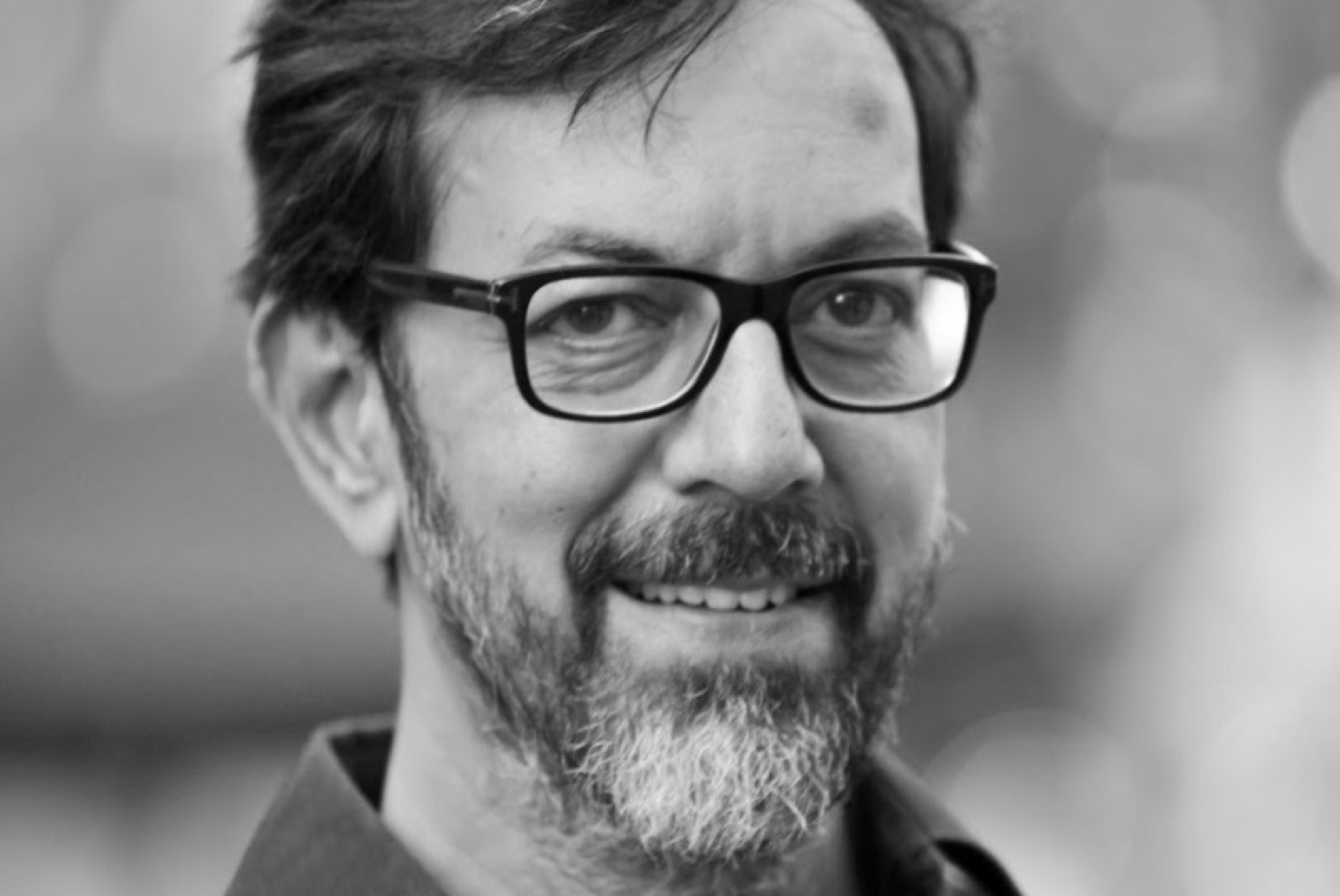
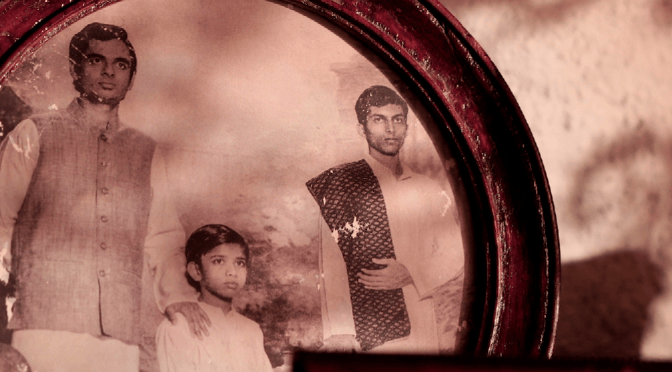
Tell us what inspired you to take that step into journalism. My father, Jaydeb Mukherjee was instrumental in guiding me. He realised that I liked writing, and…
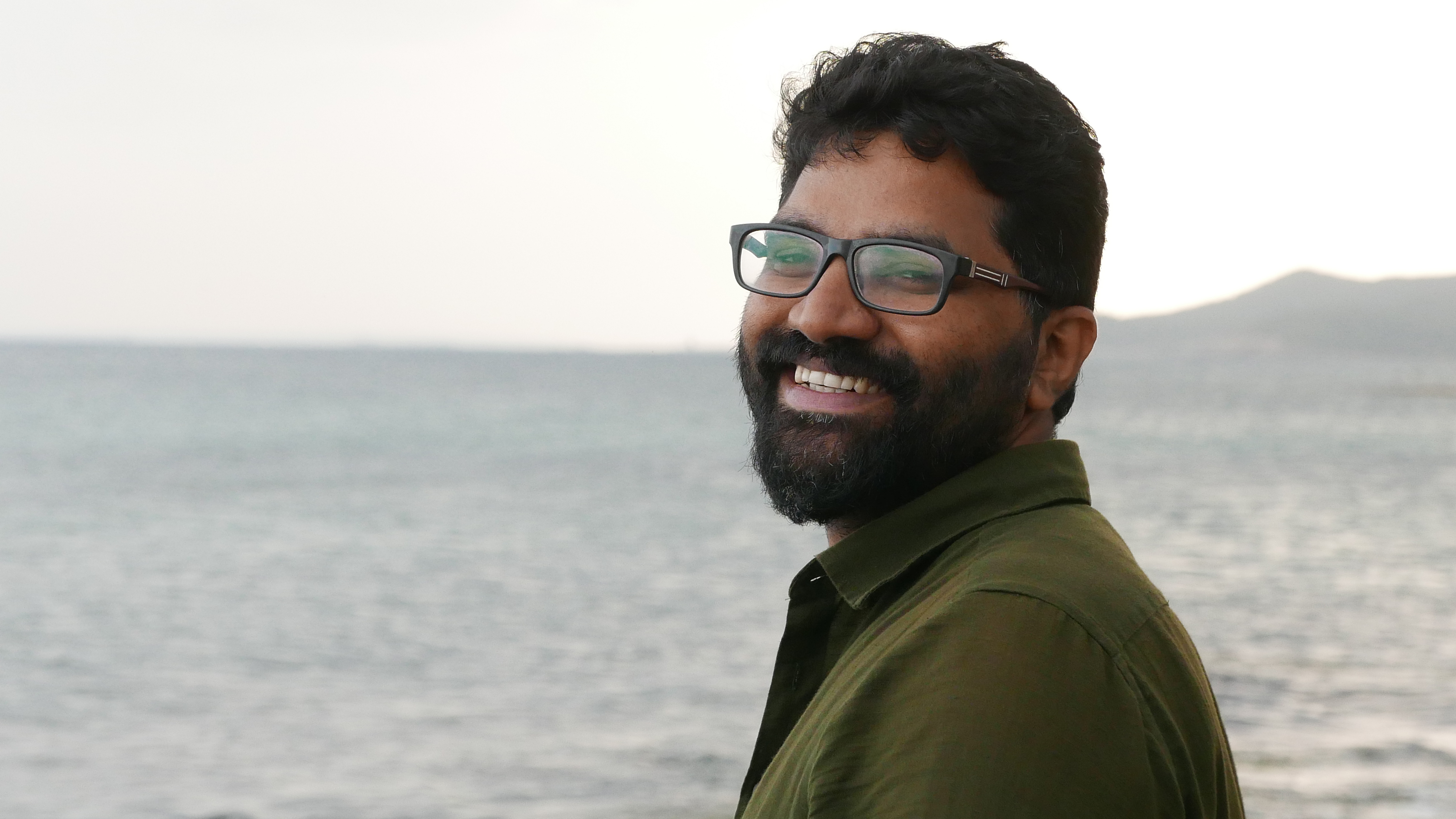
Tell us what inspired you to take that step into journalism.
My father, Jaydeb Mukherjee was instrumental in guiding me. He realised that I liked writing, and I always preferred Shakespeare more than Newton in my school days! I guess the germ was already created; it needed the right soil to bloom. Continue reading Interview with Ram Kamal Mukherjee→
He recently won the Leitz Cine Discovery Prize during Critic’s Week at Cannes. Meet the Changzhou-based filmmaker and VCA Master of Film and Television graduate Qiu Yang.
A woman gently presses her head against a bus window. The shifting neon lights from the street outside wash over her face, and somewhere in the city beyond, living or dead, is her daughter. Somewhere else in China, a young man is accused by the children of an elderly woman of pushing her on the street after taking her to a hospital, with devastating social implications for both families. On the other side of the world, a young woman leaves her stifling family life to go for a walk through a Melbourne street at night, but will never return. Continue reading An interview with filmmaker Qiu Yang→
Precious takes the traditional story of a teenager dealing drugs to improve his lot in life and gives it new life. Taking in ideas of teenage pride alongside ideas of escape and entrapment, Precious is a bravura piece of work that is already the recipient of numerous awards, including Best Student Film at the Sarajevo Film Festival in 2018. Continue reading Irfan Avdic, director of Precious. Interview→
Mehdi Rahmani will be Jury Member at the 19th edition of Imagineindia International Film Festival to take place in Madrid on 17 – 31 May 2020.
The Iranian director and producer was born in 1979. He graduated with a bachelor’s degree from Iranian Cinema and Broadcasting university-Tehran as a director and made 18 short films and documentaries. Continue reading Mehdi Rahmani, Jury member at Imagineindia 2020→
She was the Jury President at the 19th edition at Imagineindia in 2020.
Born on October 17, 1970 in Tehran, Iran, in 2006 she was appointed UNICEF National Ambassador in Iran.
She was taking acting courses when she was cast for the role of Helen in The Men of Angelos, which earned her national recognition. She later appeared in films such as Mummy III and RainMan, for which she was nominated for the Fajr Crystal Simorgh International Film Festival. She then appeared in dramas such as Saint Mary and Crimson Soil and the films Hell, Purgatory, Heaven, There are things you don’t know, Alzheimer’s and the private life of Mr. and Mrs. M .. She won a Crystal Simorgh for Best Actress in a supporting role for Twenty In 2015, winner of the Award for Best Actress International Imagineindia Film Festival.
Keramati won the Best Actress Award at Imagineindia for her performance in “Ghosts” by acclaimed Iranian filmmaker Dariush Mehrjui.
After the earthquake of Bam City which occurred on 26 December 2003, she approached philanthropy and charity work and on 30 December she was one of the artists partaking in a charity meeting for quake-stricken people of Bam. From 2013, releasing prisoners-sentenced-to-nemesis, have become one of the charity work she does and she has put some efforts in collecting blood money and getting the next of kin’s satisfaction. In this respect Shahab Moradi has been one of her companions. She is also a women’s rights activist.
Young Indian cinematographer Modhura Palit EICA (Eastern India Cinematographers Association), IWCC (Indian Women Cinematographers Collective) will receive the 2nd Angénieux “special encouragement” award on May 24th, 2019 during the “Pierre Angénieux ExcelLens in Cinematography” ceremony at the Cannes Film Festival. This recognition will allow Modhura the opportunity to use the most sophisticated Angénieux lenses on an upcoming project. She told us more about herself and her vision of cinematography.
In October 1990, in Tokyo, while Kurosawa was still filming his penultimate film, Rhapsody in August (Hachi-gatsu no kyōshikyoku, 1991), writer and director met to discuss the differences between literary and cinematographic language, and the difficulties of the adaptation of the first to the second. On the occasion of the central topic of Rhapsody in August, they addressed the physical, spiritual and historical consequences of the Nagasaki nuclear bombing in 1945 and the reaction of the perpetrator, the United States: the establishment of a machinery of oblivion in Japan, under its auspices, in place of acceptance of his crime and publicly apologize; they also delved into the conditions of happiness, the limits of man, and, of course, the implications of this in art. It is a friendly duel between two of the sharpest and most passionate minds of his time, showing a deep concern to leave, through his work, a positive legacy for humanity. This is a part of the interview. Continue reading Interview of G.García Márquez to Akira Kurosawa→
May has a very special connotation in the Bengali psyche. It is in this very month when two of Bengal’s brightest stars of the cultural sky were born – Rabindranath Tagore and Satyajit Ray. It is on a rainy day in the end of the same month two years back when Bengal lost its most versatile film-maker of contemporary times. It was a romantic rainy day in 2013 unlike the sweltering summer this year and I was driving to my office when the news of Rituparno Ghosh’s untimely death hit me quite hard, like many others. Two years later and the initial shock evaporated by now what does Rituparno Ghosh’s cinema mean to me? Continue reading Rituparno Ghosh – The ‘Enfant Terrible’ of Indian Cinema→
To make a short film stripped of stars, technical razzmatazz, much of a story, and even dialogue, would be a challenge for any filmmaker. Manoj Michigan, who has been making feature films in Bengali with strikingly out-of-the-box subjects has just made I Reborn, a 20-minute film that explains the cycle of life through a warm story of a young Dom whose name we do not come to know. Continue reading Interview with Manoj Michigan→
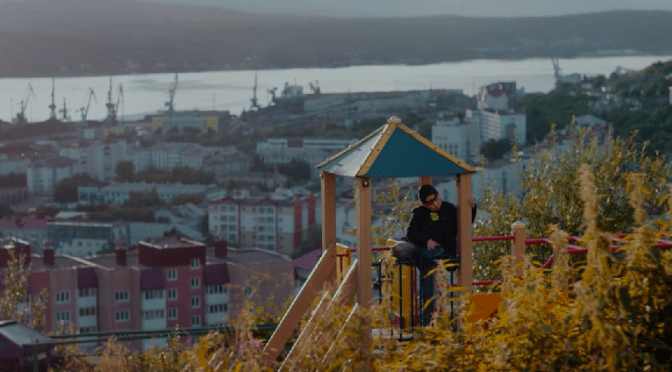
Bad Bad Winter
Olga Korotko
Kazakhstan, 84 min, 2018
A daughter of an Astana businessman, Dinara, comes to the city of her childhood to sell her grandmother’s house. Suddenly, former classmates come to visit her, and a friendly meeting grows into something else when they tell her that recently they committed a murder and now they need money to ‘get clean.’ Dinara’s refusal
provokes classmates to act more harshly and tougher and very soon
they arrive from being former classmates to being just a group of
people from different social strata. Between them, there is a conflict based on differences of view, worldviews and way of life.
Each side has its truth, but the whole situation, in the end, leads to another crime – crueler than that from which it all began.
OLGA KOROTKO
Olga Korotko started to study filmmaking with Darezhan Omirbayev’s filmmaking course where she shot her first few shorts.
In 2011 she was selected for the Asian Film Academy project
(Busan International Film Festival) where she shot a short film
THE LAST 5 MINUTES with other students. Right after AFA,
she shot a short film DOVE ON THE ROOF produced by Kazakhfilm
film studio. In 2014 -2015 she was studying filmmaking in New York Film Academy. In 2016 she was selected for Berlinale Talents Campus, the same year she got a Master Degree in Filmmaking in
the Academy of Arts named after Zhurgenov in Kazakhstan.
In 2018 she finished her first feature film BAD BAD WINTER.