Category Archives: Sin categoría

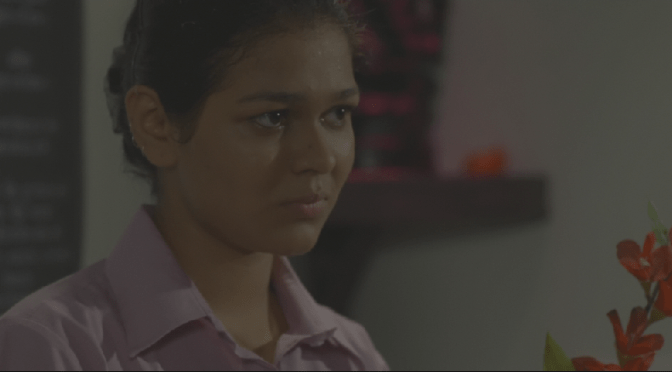
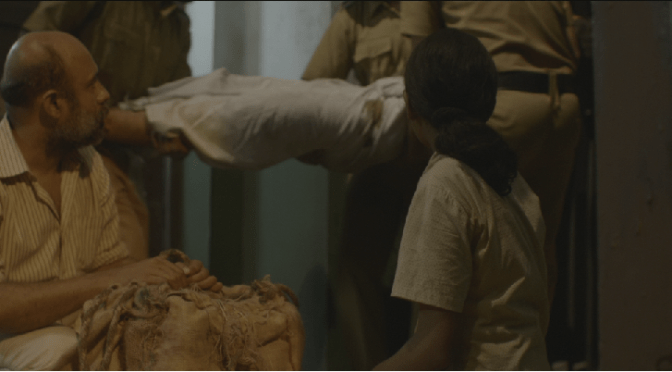
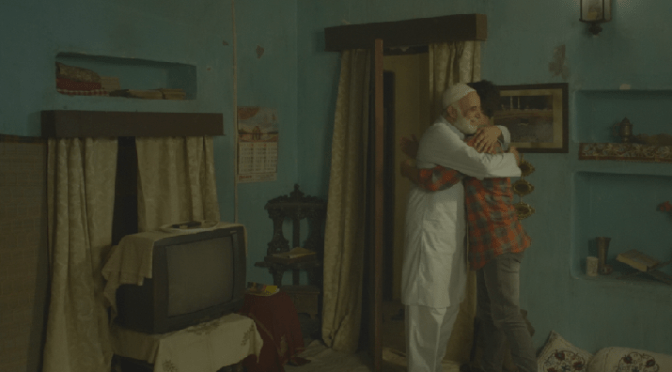
Mother (Tarun Jain) India. Imagineindia 2018

Mother
Tarun Jain
India. 2016. 30 min

The film explores how trying circumstances often lead to great
transformation. When the loss of his father, mounting financial troubles and the thought of arranging his daughter’s marriage wear him down, the last straw for him is losing his mother. In the face of
adversity Balaram truly begins to think.

TARUN JAIN

Tarun Jain’s short film Aakhir (At Last), has been screened at over 42 international film festivals. Amma Meri is his second short film as a writer, director and producer. He has been involved in fiction, documentaries, corporates films, television shows & TVC’s over the years.

Having participated in 42 International film festivals for his first short film, Amma Meri is Tarun Jain’s second film as a producer. Tarun Jain has been involved in many projects recently as a producer.

CONTACT

Tarun Jain :      tarun1_99@yahoo.com

Barsaati (Priya Naresh) Imagineindia 2018

Barsaati
Priya Naresh
India. 2017. 13 min

On a cold night, two men encounter their sleepless thoughts. Familiar fears kindle new words on their faces. The film witnesses them talking, between the noise living in buildings, and the silence of the sky.

PRIYA NARESH

Priya Naresh is a Media graduate, who is currently pursuing her Master’s in Sociology from Delhi School of Economics. Before her Masters, she worked with Rough Cut Productions which is Documentary Production house in Delhi. There, she worked on short films for organisations like Mazdoor Kisan Shakti Sanghatan, UNDP and UNICEF. She also worked extensively on a documentary on the death penalty in India which won the Asian Cinema Fund in 2015 and is now supported by the Swiss Embassy. Currently, the documentary is in its post-production stage. Barsaati is her first fiction project.

Director’s Statement

Our existence, I believe, is altered depending on the space we inhabit. Space changes our relationship with the universe and how we understand and place ourselves in it. In cities, where this relationship is strained the most, one cannot help but wonder if modernity has taken over everything that we have ever considered essential for our very being. If it has, then is there a way to reconcile with the present and still find beauty in the darkest of times?

The film raises such questions as on a cold winter night, two men sit on a park bench. Their existence lies in the silences between the said and the unsaid, like the existence of the Barsaati lies between the protection of a home and the mysterious vastness of the sky which does not provide any hiding places.

CONTACT 

Priya Naresh :  priya.nareshchandra@gmail.com


Sergio Pazos (Jury) Imagineindia 2018

He began in the 80s with the theater companies Caritel and CDG. Although he has never stopped working in Galicia, where he is especially popular for his role as Paspallás in the comedy Pratos combined, at the beginning of the 90s he began to appear in different national series. In 1996 he leaps to fame by becoming one of the reporters of the hit show Caiga que caiga, presented by El Gran Wyoming.

He has participated in different feature films, theater plays and even in the reality show La isla de los famosos.

In 2006 he collaborated in the evening magazine of Cuatro, Channel nº4, presented by Boris Izaguirre and Ana García Siñeriz and presenter of the “Gincana Tivi Show” program on Aragón Televisión.

Juan Echanove (Jury) Imagineindia 2018

He studied law and entered the School of Dramatic Arts in Madrid. In 1986 he participated in the film Time of Silence, where he became known, and as a result of that he obtained the role of Cosme in the series Turno de oficio, in which he achieved certain notoriety.

Thanks to his success, he was called to an important number of films, including Divinas palabras (1987), for which he won the Goya Award for the best male performance of the cast. In this title they followed Bajar al moro, A solas contigo or La noche más larga. In television he starred in 1991 today’s Girls, with which he got a Silver Frames.

Two years later, in 1993, he enjoyed his greatest professional success to head the cast of Madregilda (Francisco Regueiro), where he played a Francisco Franco self-conscious and weak. For this work, Juan Echanove won the Silver Concha for the best actor in the San Sebastian Film Festival, the Goya Award for the best male protagonist, the Sant Jordi Award for the best actor as well as the Ondas Award and a candidacy for the Fotogramas de Silver that lost against Javier Bardem. His intervention that same year in My brother of the soul (Mariano Barroso) was settled with another nomination to the Goya Awards.

Two years later, together with José Luis García Sánchez and Juan Luis Galiardo, he started a film series about deep Spain composed of the following titles: Sighs of Spain (1995), There is always a way to the right (1997) and Goodbye with the heart (2000). Between the filming of each film, Echanove participated in films such as La flor de mi secreto (Pedro Almodóvar, 1995), His eyes closed and the world continues to walk (Jaime Chávarri, 1997) or Los años barbaros (Fernando Colomo, 1998). In the first of them he played a journalist capable of reviving a writer whose marriage had failed. In the second, a Falangist eager to imprison some escaped prisoners, played by Ernesto Alterio and Jordi Mollá.

Andrés de la Torre (Jurado) Imagineindia 2018

Andres de la Torre is an award-winning composer, editor and sound designer.

Born and raised in Madrid, Andres started his career as a video editor in one of the leading production companies in Spain, MediaPro. His true passion, though, was always to compose music for film. His first feature as a composer, “Going Nuts” (2006), had a theatrical release and was the first film in the world to feature peanuts as the main characters. The score earned Andres national recognition with the Ateneo Coste Cero Award in 2008 for Best Soundtrack. Shortly after, Andres wrote the music for the Spanish-North American co-production “Disney: Through the Looking Glass” (2010), a score that earned him his first Jerry Goldsmith Award after 5 years of consecutive nominations.

In 2010, Andrés moved to Los Angeles to continue his education. He earned a Master’s Degree from Chapman University, CA and soon started working in film production with directors of the stature of Randal Kleiser (Grease) and Terrence Malick (The Tree of Life).

Currently, Andres teaches Sound Design to aspiring filmmakers in Los Angeles as he continues his work as a composer, editor and sound designer. His latest work include the TV drama “Dead Men: The Series” (2015), a new feature adaptation of “Don Quixote of la Mancha” (2014), produced by USC in collaboration with James Franco, and “Defrost” (2017) a Virtual Reality Series, his first time working in the new Dolby Atmos format.

Rachis (Pratik Thakare) India. Imagineindia 2018 

Rachis
Pratik Thakare
India. 2017. 11 min.

After being found to be involved in a high-profile cheating scandal concerning entrance exams, Pawan, a third year medical student, has been asked to vacate his hostel room. In the midst of all this, his estranged girlfriend, a nurse working in a small nursing home, informs him of his father being admitted in the same establishment. The owner of the nursing home is Dr. Kailash Sagar, the linchpin of the cheating scam, who has been in jail for the last 6 months and has been recently released on bail. Abandoned by the society, boycotted by his peers and forced to give up on his dreams of becoming a doctor, Pawan is driven to take help from the very person who represents all that he detests and who, according to him, snatched away all that was rightfully his.

Bhoomi (Mithun Chandran) India. Imagineindia 2018

Bhoomi
Mithun Chandran
India. 2017. 11 min.

Thirteen-year-old Bhoomi and her father, a travelling film projectionist, are on their way back from a traditional temple ceremony. Being quite late in the night, they are offered shelter and lift, by a passing police patrol jeep. The police station where they decide to spend their few hours until dawn, is abuzz with activity. Occupying the lockup are a rapist and several other petty criminals. In the due course of events, one also concludes that the presiding officer and most of his subordinates, are of an indeterminate disposition, as well. Bhoomi, is the sole girl in this very male dominated space.

Three chapters of a life in chain (Roopkatha Purakayastha) India.

Three chapters of a life in chain
Roopkatha Purakayastha
India. 2017. 11 min.

Three Chapters of a life in Chains, is divided into three chapters – Childhood. The Search. Resolution.
It revolves around a character named Bali and her friend who is searching for her. The three chapters each show the unfolding of “significant” events that occur in the life of Bali. The first chapter shows a moment from Bali’s childhood, focusing on her innocent daydreams and ambitions. The family is also seen throughout inn this chapter but not directly but through the eyes of the character of Bali. The second chapter is about a young woman and friend of the protagonist from her past college days, Shyamoli, who has come to Bali’s childhood home looking for her friend. The ground floor of the house now has been rented out and is being run as a beauty salon and Bali’s mother stays alone on the floor above, where Shyamoli finds out that Bali’s own family seem to be consciously trying to avoid dialogue about Bali altogether and this leaves Shyamoli worried about her friend, who was always slightly different from everybody else. The third chapter shows the resolution of Shyamoli’s search for her old friend, whom she discovers institutionalized in a mental asylum. Here, in captivity of her own isolation/depression as well as that, which instilled upon her by the normal/accepted ideal types of society, Bali narrates her story to her friend.

Scattered (Nikhilesh Matoo) India. Imagineindia 2018

Scattered
Nikhilesh Matoo
India. 2017. 12 min.

Neel, a 30 year old man visits his ancestral house in downtown srinagar which his family left after growing threats to his community when militancy was at its peak and the majority was ready for their liberation from India. During this visit he meets the present occupants of that house and an old acquaintance of his family. The conversations he has with some of the characters speaks of the trouble that both communities have faced. The protagonist who came with the sole purpose of paying a visit to his house observes the difficulties with which this family gets by in their daily affairs. On this particular day, a cricket match between India and Pakistan results in Pakistan’s victory and the people of that area celebrating. Under these circumstances, the protagonist decides to stay back the night in his house. These present day scenes are interspersed with some flashbacks and dream sequences from the time when Neel was a 5 year old boy and his community was facing the threats.

The Albino,s Trees (Masakazu Kaneko) Japan. Imagineindia 2018

The Albino,s Trees
Masakazu Kaneko
Japan. 2016. 86 min

Yuku is a hunter who works for animal damage control programmes in the mountains of central Japan. In order to afford the medical bills for the treatment of his mother’s illness, he accepts a lucrative contract to kill a rare, white deer that lives in the forest by a remote village, and whose presence is thought to undermine tourism in the region by the neighbouring town’s bureaucrats. As he ventures into the village, however, he discovers that the animal is venerated as a god by the local community, which lives in a state of semi-isolation from the rest of society. While assessing his ethical responsibilities in undertaking such a task, he gets closer to inhabitants of the village, facing their conflicting emotions as to whether they should keep living as “outsiders”.

DIRECTOR’S STATEMENT

Being human inevitably implies the killing of other living things. Yet we often lack the real sense of what killing means, and our awareness of it is usually limited to some numbers on a paper. Indeed, especially for those like me who have been growing up in a metropolis, there’s the tendency to overlook the fact that our everyday life entails the sacrifice of other lives, and we are too often driven by egoism in trying to protect ourselves and those close to us at the expense of others. In this movie, by focusing on the struggle of a man over the life and death of an animal, I tried to express not only the constantly problematic relationship between people and nature, but the importance of thinking about others as well.

MASAKAZU  KANEKO

Kaneko was born in 1978 in Tokyo.
He graduated from Aoyama Gakuin University, School of International Politics, in Economics & Communication. During university, he started to make film essays on 8mm and 16mm film.
After graduating from university, he went to The Film School of Tokyo and studied under Takahisa Zeze, the director of “Heaven’s Story”, which won the FIPRESCI Prize at the 61st Berlin International Film Festival.
His proposal was selected by the school for a scholarship towards his graduation project.
The result was his debut film “Sumire Ningyo”, which was officially screened at Japan-Filmfest Hamburg in Germany.

Since then, while working as a director and cameraman for educational movies and commercials, he has directed 6 short films.

In 2016, he completed his second feature film “The Albino’s Trees”. This film was screened at Beijing International Film Festival 2016 (China) as an international premiere. After that several international film festivals have chosen this, for example India, Ireland, Portugal, Sweden, Germany, Taiwan. And so far this film has won 10 awards around the world including the Best Feature Film Award by Figueira Film Art 2017 (Portugal).

CONTACT

Masakazu Kaneko

kinone01@wa2.so-net.ne.jp