Category Archives: Sin categoría

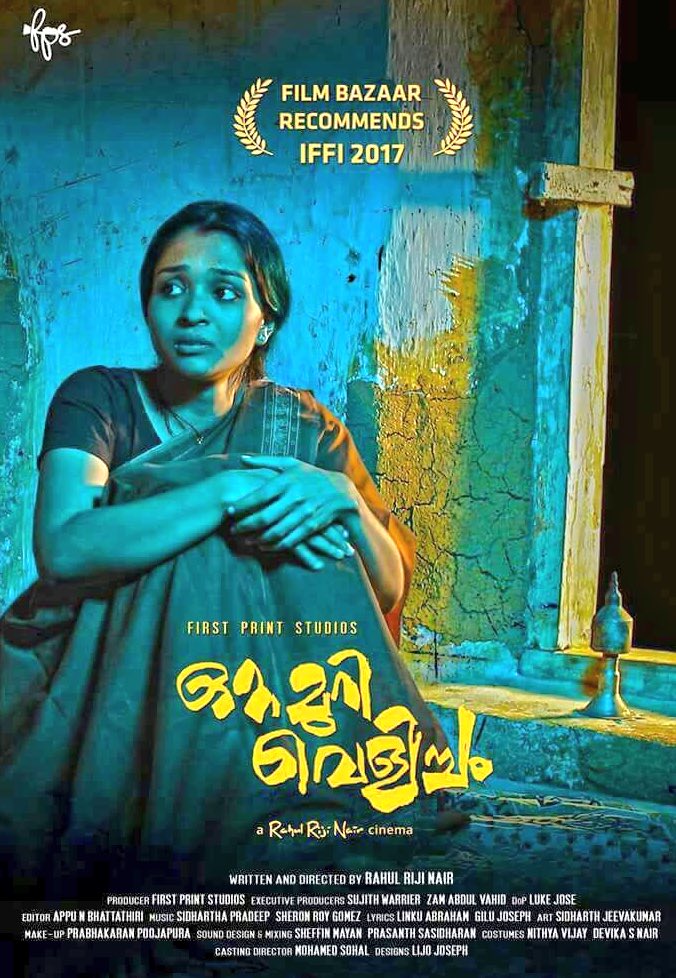
Light In The Room (Rahul Riji Nair) India

Light In The Room
Rahul Riji Nair
India. 102 min.  2017

Set against the backdrop of a hilltop village surrounded by dense forest and a decaying tea plantation, is the story of Sudha, an under privileged woman who reaches this village after her marriage with Chandran. They stay along with Chandran’s brother and aging mother in a confined single room house with a make shift separation to create space for the couple. The room has a strange light without a switch which changes its colors often. While Chandran calls the light his invention of a lifetime, it deprives Sudha of her privacy and begins to haunt her. Adding to her woes, Chandran engages in acts to physically exert his dominance over Sudha. Amidst deep trauma, Sudha realises that she doesn’t have any support and decides to fight for her survival and seeks revenge against Chandran. Will Sudha succeed in her fight for freedom forms the crux of this emotional thriller.

Rahul Riji Nair

Rahul Riji Nair is a State Award winning filmmaker, script writer and producer based out in Kerala, India. His debut feature film “Ottamuri Velicham” (Light in the Room) anchored on the theme of Marital Rape in India won 4 awards in Kerala State Film Awards 2017, including Best Feature Film of the year. The film had its World Premiere at the New York Indian Film Festival 2018 and won the prestigious German Star of India Award for Best Feature film at the Indian Film Festival of Stuttgart. The film had its India Premiere at the India Gold Competition Section of the prestigious Mumbai Film Festival.

Poster

Imagen relacionada

Contact

Rahul Riji Nair :      rahuljgd@gmail.com

Masala Chai (Marco Hüsler) Germany

Masala Chai
Marco Hülser
Germany. 63 min. 2017

Marco Hüsler

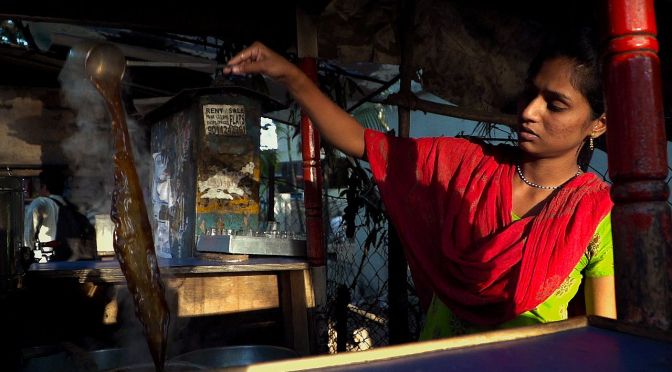
Resultado de imagen de masala chai marco hülser

Marco Hülser was born 1992 in Hamburg and gained his “Abitur” in 2011. After a voluntary service in Tamil Nadu (India), Marco studied Motion Pictures at the Hochschule Darmstadt, which he completed in 2016. During this he directed the short film “Zusammen Allein” which was nominated at several festivals. Mid-2015, he started to work on his first documentary “Masala Chai”, which got premiered in Toronto 2017. Since beginning of 2018 he is working on his first feature film and other short films.

Filmographie

2019 – Wanda & Jamal – Feature Film – Director & Editor – 100 min.

2019 – Berlin To Bombay – Documentary – Director & Editor – 60min

​2018 – Alles Gut – Short Film – Director & Editor – 7min

​2017 – Mit Dir Ohne Dich – Short Film – Director & Editor – 6min.

​2017 – Masala Chai – Documentary – Director & Editor – 63min.

​​2017 – Hinter dem Meer – Feature Film – Editor – 80 min.

​2015 – Zusammen Allein – Short Film – Director & Editor – 25 min.

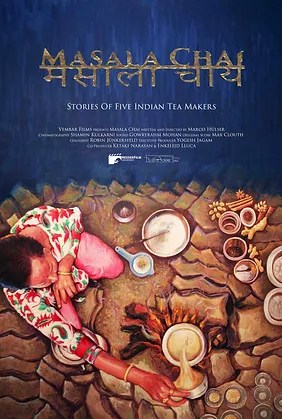
Poster

Masala Chai - Poster

CONTACT

marcohuelser@gmail.com

Photographs of a School Teacher (Mahde Hasan) Bangladesh

Photographs of a School Teacher
Mahde Hasan
Bangladesh. 2013.  7 min

She is a school teacher. She has spent a long time of her life in an edge of this city. After long time, she was gazing on her photo album and found photographs of different time of her life. Each photograph reminds her different fragmented memories and moment of her life.

MAHDE  HASAN

Based in Dhaka, Bangladesh, Mahde Hasan is a Screenwriter and Director. His short film, ‘Photographs of a School Teacher’, premiered at “IndieCork Film Festival, Ireland, 2013”. Another short, ‘I Am Time’, screened at 69th Festival del Film Locarno, 2016. Mahde Hasan placed first in the section ‘movieofmylife’ at 70th Locarno Festival, 2017. He participated in Ekadeshma Film Lab Nepal 2017, an intensive script and project development workshop organized in collaboration with Open Doors Locarno.
His film project SAND CITY is selected for Open Doors Hub at Open Doors Locarno 2018, which will be held in August during the 71st Locarno Film Festival.

CONTACT

Mahde Hasan :    misheloutsider@gmail.com


Interview with Adam Uryniak (Szamota,s Mistress)

Interview by Monica Magdalena Semzuki.

Adam Uryniak, a graduate of the Crakow School of Film and Audiovisual Communication, tells us about his various film productions and the latest film project – “Szamota’s Mistress” by Stefan Grabiński, and wonders about the state of horror film in Poland.

Firstly, tell us a little about yourself. When did your adventure with film started and why did you choose this direction?

The first video I did for fun, with friends with whom I studied film theory. We named ourselves Butcher’s Films. The initiative has grown, with each film we learned something new and eventually, most of us took up film in a professional way. In the heroic times of the Butcher’s Film, we were actors ourselves, as well as sound engineers, operators, and if necessary, even make-up artists, so we know the ins and outs of working in different dimensions, we are still supporting ourselves in a similar way. I was attracted to directing in the first place. I made a few short films, and in 2011 I directed a full-lenght film called “Zniknięcie”, based on a short story by Olga Tokarczuk.

In your words, how would you describe the film you’re working on, and why did you chose “Szamota’s Mistress” by Stefan Grabiński?

What’s most important is the mood and creative use of the iconography of a horror movie. “Szamota’s Mistress” doesn’t have to be an ordinary scary movie, I want to create ambiguous, gripping intrigue, which also contains criminal elements. I care about the visual aspects of the film. Moreover, an idea for a film grows out of this area. My scenographer showed me the story, and we wanted to adapt it to a very short movie, a candy created for mine, operator’s and stage designer’s pleasure, in order to utilize our creative forces. The story inspired me, however, to expand it significantly, and before I knew it, I had written a much bigger film script. After a few adjustments, it seemed quite natural and obvious to us, that there is no return, and we just have to do this movie. Unfortunately, the project size makes us to look for different sources of funding.

Who are the main characters of your film?

The main character is Joseph Szamota, the notary, who comes to some old palace to estimate the value of the property. There, he’s on the trail of family secrets of former inhabitants of the palace. Some strange things begin to happen around him, Szamota stops to trust his senses and suspects that he fell into madness. The main female character is Jadwiga Kalergis, a character so interesting that her ontological status is unclear. She’s an unruly niece of the count, causing him some trouble in the past, because she liked to be friends with a lot of men, also of peasant origin, and for the Count – proud Sarmatian and a great fan of hunting, it was a major discredit to his honour.

Horror films are not very popular in Poland. Why do you think this happens, and why did you chose this kind of movie?

In Poland, there are many fans of horror, both literary and film. There is a very lively fan life, vibrant clubs and conventions, there are magazines about widely understood fantasy. Interesting fact is that, however, Polish film makers pass indifferently not only by the horror, but by every film genre. To see all Polish horror films, two or three days are enough. Most of them are television productions. After 1989, horror films were made only as school etudes or as a part of independent cinema. I really like such stories, so I decided to face the genre. Another attraction was the work of Stephen Grabiński, the writer, who is venerated by Polish horror fans. He wrote many excellent stories, which are just waiting to be filmed. Unfortunately, the last time the cinema reached for it, was almost 30 years ago. “Szamota’s Mistress” was shot in 1927 for the first time. Unfortunately, this film didn’t survive to our times, and if you believe reviews of the era, it was very interesting and stood out among other Polish films. Therefore, my version of the story will be also an attempt to restore “Szamota’s Mistress” in the sphere of Polish cinema.

Tell me something about your previous films. Were you driven by similar motives?

I am making films for over 10 years, many of my first productions were more fun than serious cinema. All of it changed in 2009, when I worked on “Podglądacz”. It was the first time I worked with professional actors and I had decent equipment. I lived through a period of fascination with cinema noir, and this film is a nod to the genre, both in feature and formal terms. I have a great sentiment for “Podglądacz”, because I travelled through some festivals with him, and generally met with good response from the audience. I mentioned about “Zniknięcie” – my last film so far. Here, you can see the trailer: https://www.youtube.com/watch?v=thFnQiLtDC8. It’s a bit of a thriller, a psychological film containing some metaphysical motifs. I really like to mix genres and under the guise of, for example, thriller, smuggle other content, something more from myself. It seems to me, that this is the way to create non-obvious cinema, surprising and simply addictive, interesting in its reception.

Which directors and movies inspire you?

I like every, well narrated cinema, but I also find inspiration in films which seems to be bad, but have their own characteristics, such as Roger Corman horror films. I watch both art-house cinema and also Hollywood blockbusters. In every genre you can come across something interesting. It would be hard for me to name the directors that I admire, and which I treat as a role model. It is never like the entire work of some artist equally appeals to me – there are better and worse films. Besides, I am not a supporter of treating the director as the only author of the film. Cinema is a collective art and you can be never sure whether an item in a movie, that intensively affects us, is the brainchild of the director or someone else from the team.


Janala (Buddhadeb Dasgupta) Retrospective. Imagineindia 2018

Janala
Buddhadeb Dasgupta
India. 2009. 107 min

Childhood is the golden phase of man’s life. This movie essentially deals with the reminiscence and recollection of childhood memories. Bimal, a simple urban man plans to visit his school. On his visit, he finds out that the window pane where he used to sit around is broken, and the building was also dilapidated. He wanted to donate some funds but did not have the means to do so. So, without letting his would be wife know, he took some money and gave it to the school authority, to which his displeasure was rejected. Owing to his dishonesty, Meera gets split with Bimal. The movie projects about a man’s emotions surrounding his memory of his childhood.

Ami, Yasin Ar Amar Madhubala (B. Dasgupta) Retrospective. Imagineindia 2018

Ami, Yasin Ar Amar Madhubala
Buddhadeb Dasgupta
India. 2004. 90 min

When a Kolkata surveillance specialist and his roommate install a small camera in the home of their beautiful neighbor, they somehow become terror suspects in director Buddhadeb Dasgupta’s cutting commentary on CCTV society. Yasin (Amitav Bhattacharya) and his roommate Dilip (Prosenjit Chatterjee) are smitten with their beautiful new neighbor Rekha (Sameera Reddy). Innocent pining becomes silent obsession, however, when Dilip decides to install a surveillance camera directly over Rekha’s bed. At first Rekha remains blissfully unaware that her privacy has been invaded, but when she finally realizes she’s being spied on, her nosy neighbors are forced to go on the run. Little do Yasin and Dilip realize that across town a terrorist cell is plotting their latest attack, and now the local authorities believe that Yasin may be a key part of their diabolical plans.

Swapner Din (Buddhadeb Dasgupta) Retrospective. Imagineindia 2018

Swapner Din
Buddhadeb Dasgupta
India.  2004.  90 min

Paresh (Prosenjit Chatterjee), the protagonist in Swapner Din, cannot afford the luxury of reaching out for the unexplored. For him, travelling in an official jeep across the state is a matter of keeping alive, a business he is forced to do. He screens badly put together family planning films in villages that fall along his predetermined route, often meeting with unpleasant responses from his target audience. His faith in life is sustained by his love for his dream girl — a beautiful actress he saw crying away in a film five years ago and has been haunted by. He has never met her. She accompanies him on his daily sojourns through a sticker of her picture pasted on the projector box he carries along.

Chapal (Rajesh Sharma), the proxy-driver Paresh is saddled with, carries a stolen passport that has his picture under a different name. His dream is to reach Dubai and land a cushy job to end what he thinks is an apology for living. The pregnant and pretty Amina (Rimi Sen) is running back to her homeland Bangladesh. Her husband, an illegal immigrant, was killed in the Gujarat riots. Her dream is to give birth to her child in her own country, as a legal citizen rooted to his land.

Along the journey, the three share their food, their sleep and their dreams trying to help each other get that much closer to the fulfillment of their respective dreams. No one falls in love, no one attempts to molest Amina, not even the goons who take away the jeep at gun-point and leave them in the wilderness of nowhere, and no one comes to their rescue when their lives, along with their dreams, are threatened by the real danger of death.


Kalpurush (Buddhadeb Dasgupta) Retrospective. Imagineindia 2018

Kalpurush
Buddhadeb Dasgupta
India. 2005. 120 min

In a film adaptation loosely based on his own novel, “America, America”, the grand old man of Indian auteur cinema, Buddhadeb Dasgupta, tells the story of a family living in modern-day Calcutta – focussing in particular on the complicated relationship between father and son.
Sumanta is an office worker – a quiet, decent and, as far as his career is concerned, not particularly successful man. His marriage to Supriya is an unhappy one – just like his parents’ marriage has been. Sumanta is still trying to cope with his domineering father and is often obliged to remember his childhood. Sumanta grew up in an ostensibly happy home environment with his family by the sea. But in reality his home life was far from happy, for his father had a mistress. This was the cause of much argument between his parents and finally led to their separation.
But Sumanta’s own marital problems have quite another cause. His wife Supriya appears to be possessed by greed. Frustrated by her middle class existence, this ambitious housewife dreams of a career as a writer. To Sumanta’s great surprise, she does indeed enjoy some success with a book she writes about France – although she knows no more about the country than what she was able to glean from a video about Paris.
When Sumanta’s own career suddenly takes turn for the worse he searches for support – and hopes he will find it from his father…

Manda Meyer Upakhyan (Buddhadeb Dasgupta) Retrospective. Imagineindia 2018

Manda Meyer Upakhyan
Buddhadeb Dasgupta
India. 2002. 90 min

Based on a short story by Bengali writer Prafulla Roy, the central idea developed by director Dasgupta, tells the story of a girl, Lati (Samata Das), whose mother Rajani (Rituparna Sengupta) is a prostitute living and working in a brothel in rural India. Rajani plans to offer her daughter to an older man, a rich husband and protector to her daughter. Lati, however, wants to return to school and finish her studies. Unwilling to pay such a price for material success, she runs away to Calcutta. The discovery of this new world is described parallel to other stories of emancipation, such as that of three young prostitutes, of an aged couple going nowhere and man’s landing on the moon. In a surrealistic approach typical of the director, a clumsy cat and an intelligent donkey are also present in the film.

Ganesh (Tapas Paul) works full-time as a driver for wealthy Bengali-speaking, Natabar Paladhi (Ram Gopal Bajaj), who lives in a mansion with his wife, children and grandchildren, and runs ‘Anjali Cinema’ He has Ganesh use his vehicle as a private taxi cab. Amongst Ganesh’s customers are a woman named Bakul (June Malia), who alights near a town of Gosaipara to take up prostitution with Jamunabai; an abandoned elderly couple who are in need of hospitalization — there is none in the vicinity, and they end up secretly riding with Ganesh all the time; while Natabar uses this vehicle to travel to Gosaipara to visit a prostitute named Rajani and negotiate with her so that he can have her 14-year-old daughter, Lati, as his mistress. Things get complicated when Lati rebels against her mother so she can return to school, and a prostitute is about to get killed by her vengeful husband.

Lal Darja (Buddhadeb Dasgupta). Retrospective. Imagineindia 2018

Lal Darja
Buddhadeb Dasgupta
India. 1997. 97 min

Middle-aged Calcutta dentist Nabin Batta (Subhendu Chatterjee) confronts various psychological and physical problems: His wife Bela (Gulsan Ara Akhtar) no longer sleeps with him, and he suspects her of having an affair with a man from her past. He is experiencing a loss of sensation in his arms and legs, and he finds communication impossible with his college-age son. On his way to see a doctor, he witnesses a woman shot by a jealous husband, increasing his own anxiety about his wife. In this downward spiral,

He compared his situation with his driver Dinu who had two wives, Sukhi (Nandini Maliya) and Maloti (Indrani Haldar). Dinu’s wives were satisfied with him and they had no complaints about Dinu. Nabin tried to understand himself. Most of the time he thought about his childhood in Cherrapunji and the red coloured gate which he thought obeyed him. His mother said that the gate had a huge tolerance and Nabin compared himself with the red coloured gate. Ultimately, after departing from his wife and son, he raised his tolerance to a maximum stage and started to live alone with himself.