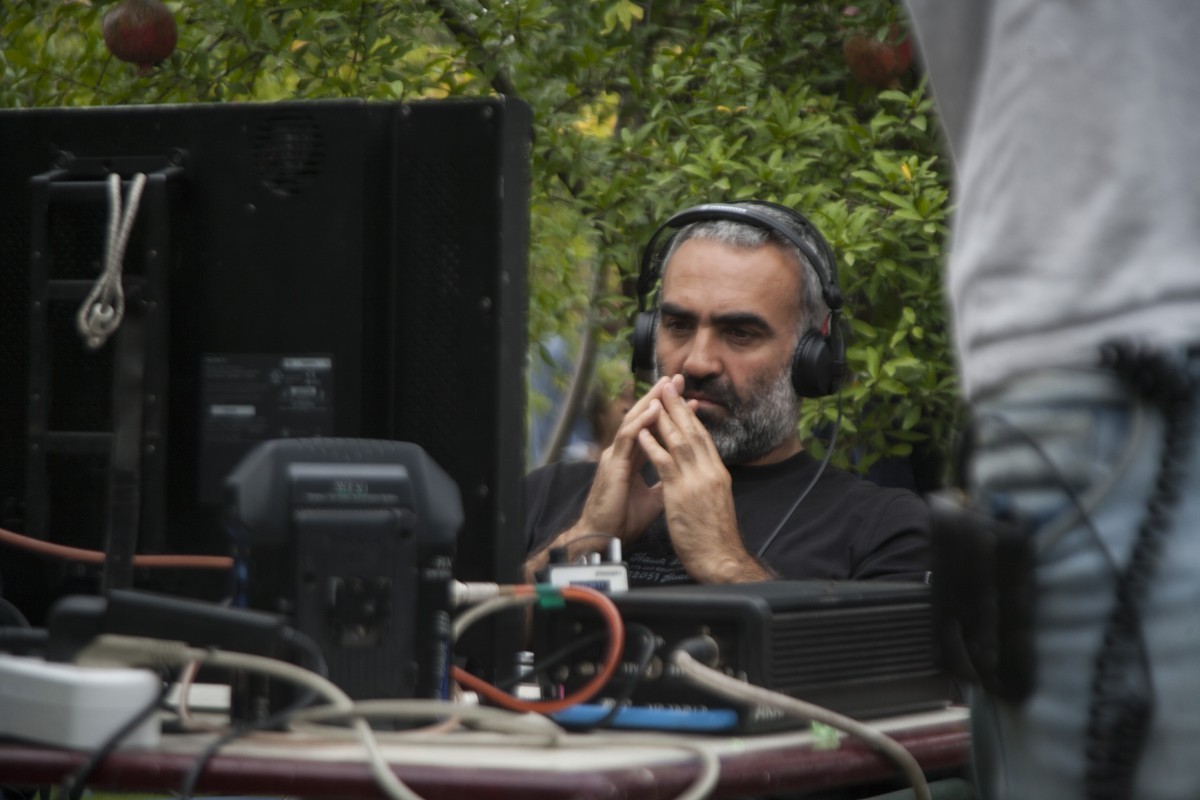
Family (Veronica Kedar) Israel. Official Section

Family
Veronica Kedar
Israel. 2017.104 min

In a perfect world, Lily would have grown up with a loving father, a caring mother, a sane sister, and a brother who wasn’t madly in love with her.… But you can’t always get what you want… and Lily finds herself in her living room, staring at four dead bodies.
Family is the perfect portrait of every family, if it’s taken in the dark.

The third feature film from writer/director/actress Veronica Kedar, Family is a dark psychological drama that follows a young woman, Lily, who goes to her therapist to confess to the crime of killing her family. Instead of meeting her therapist, she begins pouring forth her story to her daughter Talia (Baremboem), a young woman approximately the same age as Lily who suffers from her own host of problems.

VERONICA KEDAR

Veronica Kedar is an awarding winning director, screenwriter and film editor.

Her debut film “Joe + Belle” was nominated for Best Picture at the Israeli Academy Awards 2012. The film granted her the Excellence Award from the Israeli Ministry of Culture and was screened on Netflix. Veronica has directed two more feature films (‘Endtime’ & ‘Family’), two short films (‘Bunny Love’ & ‘The Woman Who Wanted To Kill Someone”) and the hit web series ‘In Tweetment’.

​Veronica is currently writing her fourth feature film.

CONTACT

Dorit Perel :    dorit@inosan.co.il

King of Peking (Sam Voutas) Australia. Official Section

King of Peking
Sam Voutas
China / Australia.  2017.  87 min

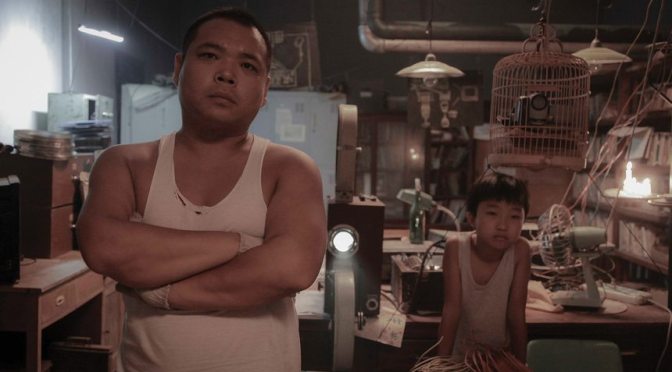
Set in the countryside of late 1990s China, the film tells the story of a father (Jun Zhao) who goes to great lengths to scrape together the cash for alimony payments, the only way his ex will allow him to maintain custody of their son. Taking advantage of the absurd comedy that tragedy can produce, the father turns to bootlegging the films of the theatre he plunges toilets in. With the help of his kid, the projectionist, turned janitor, turned counterfeiter, give cheap flicks to their community, which they devour intently.

The film sets the stage with the opening of a burgundy velvet curtain, uses the omniscient narrator voice, and includes chapters, splitting each section into delectable bites. The soundtrack, extracted from classic Hollywood flicks, gives magnificence to the humble landscape, and the color palette has a lush quality that matches the magic of cinematic projected light. The humor is relatable, and has an ease and style the likes of which can be seen in Bottle Rocket, while the relationship between father and son recalls the marvelous con artists of Paper Moon.

An homage not only to film, and film aficionados, King of Peking is also a tribute to those silly little moments in life that make it worth remembering. It speaks to the act of creation, cause and effect, choice and consequence. This is a wonderful tale showing what perseverance, love, and a lil’ ghetto rigging can do.

SAM  VOUTAS

Sam Voutas is an Australian actor and independent filmmaker. He is best known for writing and directing Red Light Revolution, China’s “first sex shop comedy” which was nominated for Best Unproduced Screenplay at the 2008 Australian Inside Film Awards, showcased at The Santa Barbara International Film Festival and won the audience award at The Terracotta Far East Film Festival. Voutas played Durdin in Lu Chuan’s acclaimed City of Life and Death, a Chinese film about The Rape of Nanjing. The film won Best Director (Lu Chuan) and Best Cinematographer (Cao Yu) Awards at the 4th Asian Film Awards in 2010. Voutas wrote and directed the documentary The Last Breadbox, featuring Beijing taxi drivers in the run-up to the 2008 Olympic Games.

Red Light Revolution was originally written in English, translated into Chinese, then that version was re-translated to reflect the Beijing slang hua. It was released in China on Tudou in 2011, with producer Melanie Ansley commenting that “We wanted to make a film that might have challenged censors, and if that was the case we were shutting ourselves off from television and cinema. I think the internet offers a place for stuff that takes a little more risk.” It won the People’s Choice Award at the Singapore International Film Festival’s Silver Screen Awards in 2011.

Voutas has spoken in interviews  about film censorship in China, saying “I’d love to keep making movies [in China], my dilemma is whether a script can be passed by the censors without having its wings clipped. My fear is that increasingly censors are the directors of films, and that directors and producers, fearing cuts, then self-censor themselves from the get-go. That’s an environment that isn’t too conducive to creativity in general. So perhaps my next film will be about censors themselves and the final cut will run exactly zero seconds long.”

CONTACT

Sam Voutas :    info@pekingpictures.com


Highway 318 (Yunxing Nie) China. Official Section

Highway 318
Yunxing Nie
China. 2017. 96 min

More than 5,000 kilometres long, highway 318 connects China with Tibet and is one of the world’s most picturesque routes. It is where Xiaojia, who is Chinese, meets Suona from Tibet one day. Each of them set off on a long journey for a different reason, but they have one thing in common: they both believe it will help them atone for mistakes from the past. Dealing with loneliness, fears and qualms of conscience, they want to find solace. Their tough journey together across endless valleys and snowy mountains will bring them closer to each other, becoming a deep inner journey and a meditation on life. Harsh, mysterious and breath-taking, highway 318 can become a road to redemption.

YUNXING  NIE

Nie Yunxing, 46years old, graduated from Beijing Film Academy and majored in cinematography.

He works as the photographer of Film Dongjiadu, Jiulixiang, Wudaguan and Xuan Zang, and
the producer and photographer of Film Letters To Hometown, Ancient Tea Route and Tibet on the  clouds.

He establishes the company named Wind Whisper Culture Communication Co.ltd in 2013.

Highway 318 is the first film production he directs and the film wins the Special Mention reward
in Free Spirit Competition Unit in 33rd Warsaw Film Festival.

CONTACT

Incomplete :    18099515@qq.com

The Cousin (Tzahi Grad) Israel. Official Section

The Cousin
Tzahi Grad
Israel.2017. 92 min

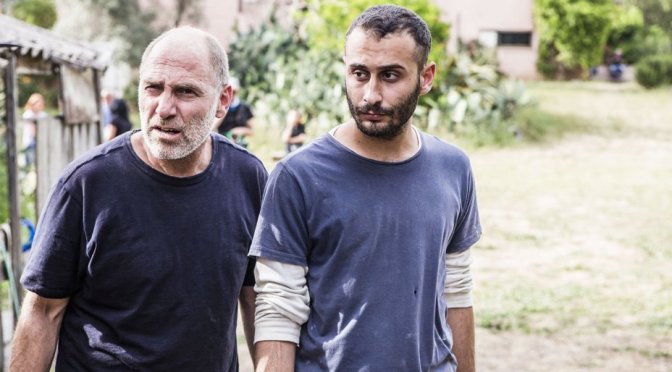
Tzahi Grad stars as Naftali, a local media presence in an Israeli village, whose belief in more open dialogue between Jews and Arabs is the foundation of a reality TV project he’s pitching. Needing renovations done on a crumbling studio on the grounds of his family home, he arranges to hire a Palestinian Muslim recommended by his gardener. The worker who climbs aboard his car at the designated pickup point is not the man with whom Naftali spoke, but claims to be his equally skilled brother, Fahed (Ala Dakka). While he’s mildly suspicious about the switch, Naftali takes him back to begin the job anyway.

It’s often said in relation to the Israeli-Palestinian conflict that Jews and Arabs are both descended from Abraham, giving them shared genetic roots. That belief supplies the title of The Cousin, Israeli actor-writer-director Tzahi Grad’s message-driven seriocomedy about good intentions that get severely tested when a crime is committed and fingers point automatically to a Palestinian laborer.

TZAHI  GRAD

Tzahi Grad was born in 1962 in Jerusalem, Israel. He is an acclaimed actor, director and writer, known for Big bad wolves (2013), Girafot (2001) and Mal gesto (2006). Was nominated for many awards in Israel for his directing, as well as acting and writing. Won an Israeli Academy Award for Best Supporting Actor in Mishehu Larutz Ito (2006). His latest film and third feature as a director is The Cousin (2017). He graduated “Nissan Nativ” Acting Studio. Participated in many plays, films and television series. Also directed a few plays for theater (fringe).

CONTACT

Nick Donnermeyer :   nick@bleibergent.com

Rukh (Atanu Mukherjee) India. Official Section

Rukh
Atanu Mukherjee
India. 2017.  106 min

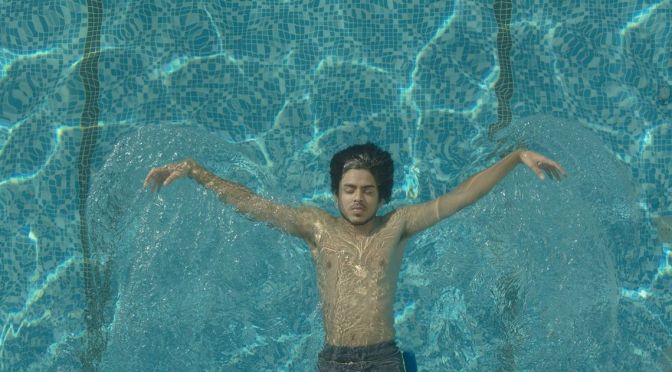
After the sudden death of his father Diwakar Mathur (Manoj Bajpayee), young Dhruv comes back from boarding school to be with his mother Nandini (Smita Tambe). As days go by, he begins to suspect that his father’s death is probably not an accident but a murder.

As far as thrillers go, ‘Rukh’ is a one-of-a kind Hindi film. It does not travel at a breakneck speed as most thrillers do, but the timing is not slow either. The film moves at a perfectly natural pace. At its heart, ‘Rukh’ is a coming-of-age film. In the beginning we see Dhruv, an aggressive young boy whose life changes when he is sent to a boarding for assaulting his schoolmate. But as another tragedy strikes, with the passing of his father in a violent road accident, Dhruv has to make certain choices which will affect how his life shapes up. Does he give in to anger and spiral out? Or does he look at things for what they truly are?

First time filmmaker Atanu Mukherjee seems to have been inspired by Akira Kurosawa’s ‘Rashomon’. He uses a similar plot device as the classic, where Dhruv gets to know about the last days of his father’s life from the point of view of several characters that have a stake in the proceedings. And the ploy doesn’t seem wasted or gimmicky either, because you get to the truth along with the protagonist.

ATANU  MUKHERJEE

Mukherjee, a graduate in editing from the Satyajit Ray Film and Television Institute, came to Mumbai from Kolkata in 2009 and began assisting film editors Namrata Rao and Suresh Pai. In between, Mukherjee made a few documentaries and short films, including My House Is Not So Far (2010) produced by the Public Service Broadcasting Trust, and Stray Dogs (2013). He also edited feature films such as Amit Kumar’s Monsoon Shootout (2014) and Amitabha Singh’s Shortcut Safaari (2014). In an interview, Mukherjee spoke about his foray into filmmaking, his inspiration for Rukh and the process of bringing it from script to screen.

CONTACT

Drishyam Films :    ritika@drishyamfilms.com

Blockage (Mohsen Gharaei) Iran. Official Section

Blockage
Mohsen Gharaei
Iran.2017. 82 min

As an enforcement official, Qassem has to combat illegal street hawking in Tehran, but he mainly uses his position to extort money from traders. Now that his boss has noticed and announced his sacking, Qassem has to look for an alternative source of income.
He knows there’s a lot of money in recycling, so he wants to buy a truck using his father-in-law’s bequest as a down-payment. His wife wants to spend the money on a house, so they won’t have to bother her sister’s family any more, but behind her back, Qassem presses on with his risky plan.

In this solo directing debut by Mohsen Gharaei, corruption and hypocrisy set the tone. “Don’t tell anyone I said that” is a regular incantation. The nerve-racking plot development is largely due to Qassem’s impulsive and hot-headed character. He’s certainly not the only one who has trouble doing the right thing – even when no one happens to be watching.

MOHSEN  GHARAEI

Mohsen GHARAEI (1984, Iran) is a graduate of Mining Engineering. In 2006, he started his film career as an assistant director, working with prestigious Iranian filmmakers such as Bahram Bayzai, Reza Mirkarimi, Majid Majidi and Mohsen Abdolvahab. Next to directing, he has worked on casting, editing and line production for various film projects. Gharaei co-directed his first feature film Don’t Be Tired! (2013) with Afshin Hashemi. Gharaei’s first independently directed feature Blockage (2017) won the award for Best Film in the New Currents section of the Busan International Film Festival.

CONTACT

Mohammed Atebbai :    info@iranianindependents.com

Newton (Amit V. Masurkar) India. Official Section

Newton
Amit V. Masurkar
India.2017. 145 min

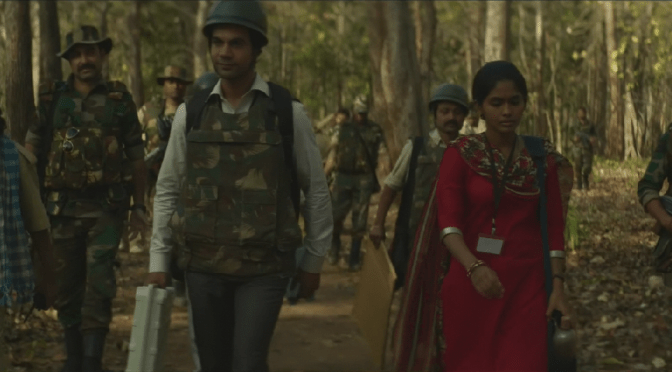
Newton is a serious-minded young civil servant who decides to prove his dedication to the democratic ideal by volunteering for a gig no one else wants — overseeing a ramshackle polling station in the middle of a rebel-infested nowhere, so that a handful of locals can participate in an election about which they know little and care less. Earlier scenes have already established him as a man of unyielding principle who is nonetheless caught between tradition and progressiveness: He rejects a marriage arranged by his doting parents once he discovers the girl is underage. But Newton will find his ethical rigidity bent to the breaking point in the jungle, with a motley crew of assistants, including irreverent old-hand Loknath and Malko, a pretty young local woman brought in to facilitate and translate for the villagers, who don’t understand Hindi.

AMIT  V.  MASURKAR

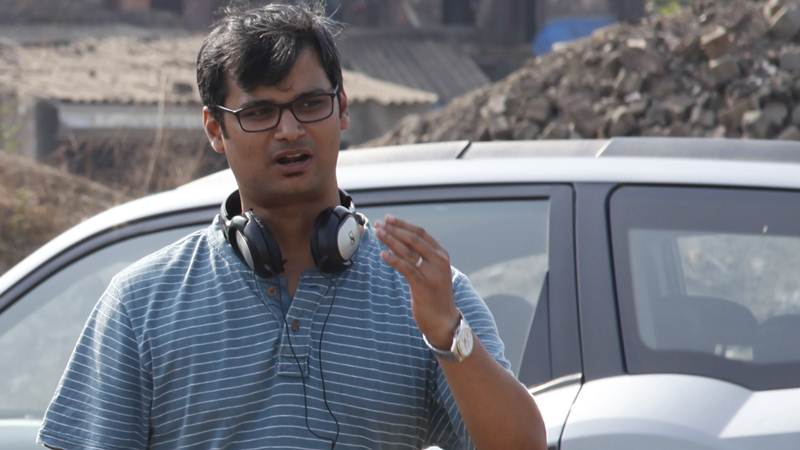
Amit V. Masurkar, director of Newton, India’s official entry for the Best Foreign Language Film at the 90th Academy Awards, was bitten by the film bug while studying engineering at the Manipal Institute of Technology. He got hooked to cinema from across the world at the illegal video parlours outside the campus. Masurkar dropped out of the course, and his film journey began.

Amit is born and brought up in Mumbai and studied in IES School, Dadar.  He dropped out of an engineering course at Manipal Institute of Technology at the age of 20 to pursue filmmaking. He later acquired a BA degree in History from Mumbai University.

CONTACT

Drishyam Films :   ritika@drishyamfilms.com

Bomba (Ralston G. Jover) Philippines. Official Section

Bomba
Ralston Gonzales Jover
Philippines. 2017.  105 min

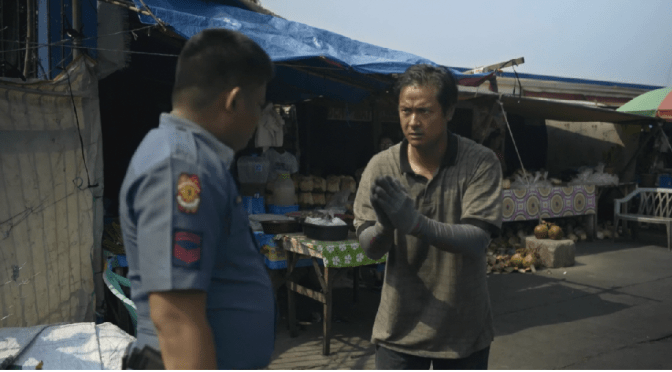
Pipo makes ends meet by taking on the toughest jobs. Life is more difficult because he’s deaf. He supports himself and his teenage lover Cyril. His irate boss is getting difficult and Ben, his childhood friend wants his daughter Cyril back. Like a bomb, Pipo’s ticking to explode, anytime soon.

RALSTON  GONZALES  JOVER

Ralston G. Jover hails from Manila, where he attended Creative Writing and Film Studies at the Mowelfund Film Institute.

His first big break came in 2006 when he wrote Kubrador (The Bet Collector), tackling the gambling menace called jueteng in the Philippines.

Then he went on to write Manoro (The Teacher), about an indigenous girl who teaches a literacy program to her tribe members in preparation for the coming national elections and, in 2007, Foster Child, which premiered at the Cannes Film Festival’s Directors’ Fortnight.

In 2009, Ralston directed his first full-length film entitled Bakal Boys (Children Metal Divers), about the social condition of poor children diving for scrap metals in Manila Bay. It went on festival tour, mostly in Europe, and won Best Film prizes in Vancouver, Turin, Barcelona and Lyon. It also gained Best Screenplay awards in Thessaloniki, Greece and the Skip-City D-Cinema Film Festivals in Japan.

CONTACT

Ralston Gonzales Jover :    ralstonjover@gmail.com

Sofichka (Kira Kovalenko) Russia. Official Section

Sofichka
Kira Kovalenko
Russia. 2016. 78 min

A realist drama about love, death, grief, betrayal, sorrow, and the importance of caring for one’s roots, Sofichka paints an authentic representation of a rural community in the 1930s Georgia. The film tells the story of Sofichka (Lana Basaria), a simple girl from a small Abkhaz village. After twenty years she returns to her home, a place that carries many memories and emotions, and which she finds untouched after such a long absence. Every corner of the house, every place she goes to, reminds her of both happy and tragic moments in her life: moving into a new house, her marriage to Rouf whom she loves dearly and the pain of losing him, the beginning of the Second World War, and exile in Siberia. Now older and raising a child that is not hers, the woman makes peace with the past, planning to spend the rest of her years in the village to which she still feels so connected.

Based on a book by one of the veterans of Soviet literature, Fazil Iskander, Sofichka tells a genuine life story, a collection of moments that had a deep impact on the main character. Sofichka reacts to each event with an impressive strength and shows kindness and understanding to the people in need. Although she lives a simple life and is surrounded by simple people, the challenges that she is faced with and overcomes are anything but. The young woman never gives up and shows profound devotion to those that have or had played a significant part in her life.

Airat Yamilov’s camera work beautifully captures the village and the life of its inhabitants, with muted, earth tone colors adding to realism of the story and the image of Georgia in the 1930s. The film has a non-linear narrative and the transitions between past and future are almost unnoticeable as they are not specified with any visual or audio cues for a flashback. At times, during the recollection of past events, we see short glimpses of old Sofichka, just to remind us that we are watching is a memory.

KIRA  KOVALENKO

After taking part in Alexander Sokurov’s directing workshop, Sofichka is Kira Kovalenko’s debut feature, a film which manages to gracefully depict harrowing moments in a young woman’s life, and to show the importance of the community in a small village. The film displays an impressive main character that although affected by the challenges and tragedies that occur, never surrenders and keeps moving forward.

For the film, the director casted both professional and non-professional actors, fact which adds another layer to the convincing representation of the rural community in this film. During an interview she mentioned that, despite expectations, “among the simple people you can find jewels”.

The film, shot on location in Abkhazia, is an example of devotion and power, of overcoming challenges, and reinforces the saying “you forgive, but you never forget”.

CONTACT

Airat Yamilov :    ayratyamilov@inbox.ru

Pomegranate Orchard (Ilgar Najaf) Azerbaijan. Official Section

Pomegranate Orchard
Ilgar Najaf
Azerbaijan. 2017. 90 min

Old and infirm, Shamil is now unable to look after the large pomegranate orchard extending beyond the modest family homestead in rural Azerbaijan. His daughter-in-law Sara and her young son Jalal are unlikely to help him care for the ancient trees in the future, so it looks as if the family may have to give up their only real source of trade. The lazy progression of sultry summer days is disrupted by the unexpected return of Shamil’s son Gabil, who fled the village without warning twelve long years ago and wasn’t heard from again. The deep emotional scars he left on his father, his wife and their son can’t be erased from one day to the next… As this private family drama unfurls, we discover the reasons for Gabil’s sudden departure only gradually, in keeping with the leisurely pace of the camera as it pans across the picturesque surroundings. However, the wrongs of the past continue to simmer uneasily beneath the veneer of this innocent landscape, and it is only a question of time before they break the surface.

ILGAR  NAJAF

Ilgar Najaf (b. 1975, Armenia, USSR), and his family were expelled from Armenia after the ethnic conflict in 1988, and he became a refugee at the age of thirteen. From 1993 to 1997 he studied film and TV direction at the Azerbaijan State University of Culture and Arts. He began as a documentarist, turning out Shacks without Shades (Kölgəsiz komalar, 2000) and There Exists an Old Man (Bir qoca var…, 2002), and he also made shorts (Theatrical Life / Teatral həyat, 2009, Silver Remi from Houston’s WorldFest). He established Buta Film in 2004. His feature film debut Buta (2011), the tale of a seven-year-old boy living with his grandma in a mountain village, depicts traditional rural life unmarked by the frenzy of the modern age. The film won awards at several festivals, among them the Houston WorldFest and the Isfahan IFF, and it was also Azerbaijan’s submission to the Academy Awards.

CONTACT

Buta film :   butafilm.info@yahoo.com

Asif Rustamov :   asif_rustamov@yahoo.com