All posts by imagineindia

How Far Should a Woman Go? (TISS) Shorts

How Far Should a Woman Go?
Shubhra Dixit, Smita Vanniyar, Anurup Khillare and Prateek Shekhar.  India.  2015.  2 min 38 seconds.

It explores the extreme measures that society expects women to take in order to protect themselves.

Acknowledgement : The PSA received the first prize at the Film Festival held during the event 16 Days of Activism Against Gender Based Violence at US Consulate of Mumbai.

Screenings: Film Festival organized by NMIMS and MAVA on Gender, Masculinity and Relationships in January, 2015 and in New Media Competition Section (PSA National) of Mumbai International Film Festival, 2016.
Co-Exist (TISS) Shorts

Co-Exist
Deepti Murali, Kritika Agarwal, Nevin Thomas, Robin Zutshi and Shuaib Shafi.  India.  2015.  3 min.

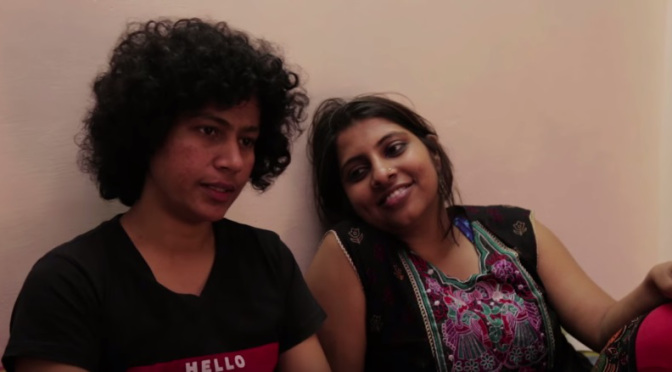
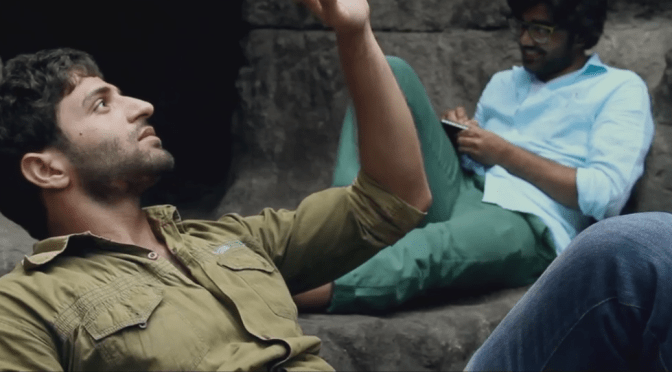
It deals with the everyday exclusions faced by the queer community in the city and with the attitude of the public and the law and order personnel towards the non heteronormative members of the society in public spaces. The PSA aims to break the silence observed over these issues and inspire the LGBTQI community to reclaim these spaces.

KAMAKSHI (Satinder Singh Bedi) Shorts

KAMAKSHI
Satinder Singh Bedi
India.  2015.  24 min.

Venue :   B Travel Brand Xperience
Date :   23 may.   17.30 h

In Hindu mythology, Kamakshi is the goddess of compassion. She fulfils all wishes and embodies serenity and peace. Sita, Rama’s wife, after suffering a long journey full of deprivations and false accusations levelled against her by her beloved husband, pleads to be swallowed up by her mother, the earth.

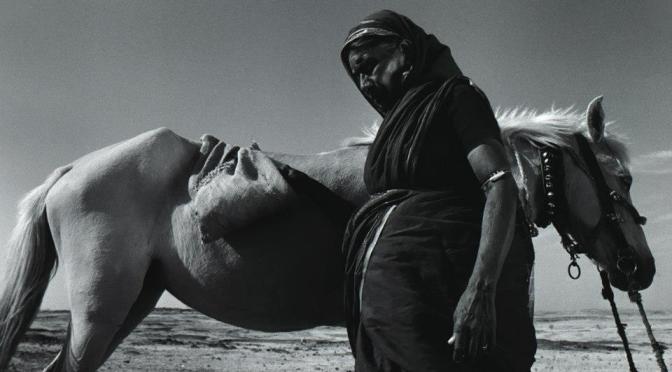
In black-and-white, we follow an old woman who digs for water in a dry and barren region. She digs and digs, and the furrows in the dry soil are mirrored in the wrinkles of her spirited face. Almost disappearing in the ditch, a girl suddenly appears at its edge. They exchange looks. The old woman distributes coins from a water-filled boat. The water carriers wield torches in the night. Associative and hallucinatory imagery is interspersed by narrative moments. Towards the end, colour takes charge of the direction and the desire for water is fulfilled at a high price.

Sewing Machine (Samiran Datta)

Sewing Machine
Samiran Datta
India.  2015.  27 min

Venue :    CC Pilar Miró
Date :   23 may.   20.00 h

Sewing machine was the first consumer durable household appliance to get multinational market. It was promoted as a liberating device for woman and was marketed as a symbol of domestic harmony. In this age of consumerism this film tries to introspect the far reaching impact of product – sewing machine, into the core of man woman relationship.

AADHA QUARTER (Sharmista Nag) Shorts

AADHA QUARTER
Sharmista Nag
India.  2015.  30 min

Venue :   CC Pilar Miró
Date :  23 may.  20.00 h

Chhintu, works as a cleaner in a dingy bar. He is compelled by the owner to caste aside his morals and induce the customers to drink more. Chhintu takes up the job with ease, using his charm to lull the customers into a sense of security , until a genuine friendship with one of the customers brings about a change of heart in Chhintu.

SO LONG… (Debdatta Sengupta) Shorts

SO LONG… 
Debdatta Sengupta
India.  2015.   22 min

Venue :    CC Pilar Miró                                                                                                      Date :   23 may.   20.00 h

A tailor has a small shop in Kolkata. His child doesn’t pay attention to his effort to get ahead in life. He has other projects. But he will be forced to follow the same path.

IN THE MOOD FOR LOVE (AAKRITI KOHLI, SANDEEP SINGH) DOCUMENTALES

In the mood for love
Aakriti Kohli,  Sandeep Singh
India.  2015.  28 min                                                                                                            PSBT

Una historia de personas que han vivido y amado.
Esta película explora las relaciones y el amor y mirando la noción de  la fraternidad, el amor, la sexualidad y la ilegalidad en relación con la comunidad de Gays y Lesbianas. Las historias son documentos de personas y compañeras en un intento de mirada íntima  y reflexión sobre sí mismos, la comunidad y el movimiento. Destacando su vida cotidiana y el trabajo, la película examina la experiencia de vivir en una ciudad, tener una relación y el concepto mismo de una familia. Finalmente la película cuestionará los poderes generales del estado en la definición, vigilancia y regulación  de la gente y el discurso popular, que rechaza los derechos de los Gays y Lesbianas como  algo trivial y sin importancia.

Caste on the Menu Card (India) Documentaries

Caste on the Menu Card
Ananyaa Gaur, Anurup Khillare, Atul Anand, Reetika Revathy Subramanian, Vaseem Chaudhary                                                                             India. 2015. 20 min

Venue :  Función Lenguaje                                                                                               Date :  20 may.  19.30h

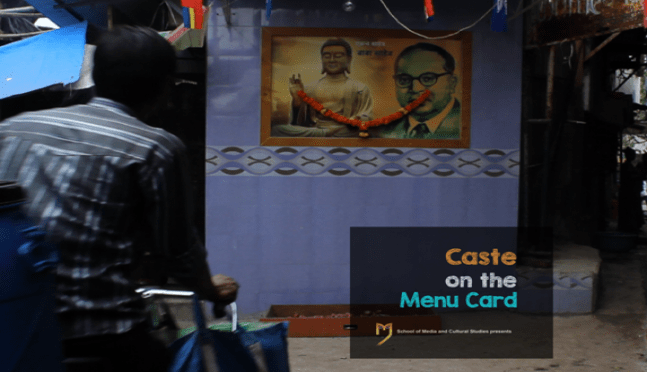
The film delves into the idea of food as a site of exclusion by focusing on beef-eating practices in Mumbai. It attempts to portray the prevalence of caste differentiations as seen in the food choices of people in the city and touches upon concerns related to livelihood, social inclusion and human rights. By tracing the mythological and historical roots of the meat-eating culture in our country, the film discusses the hierarchy maintained by Brahminical preferences and its intended subversions. This is seen in the stand taken on dealing with the political economy of the leather and meat industries. The film also follows the ruptured background of universities’ caste politics over the demand of inclusion of beef in institutions. It observes that many restaurants in Mumbai offer beef delicacies, but off the menu. Thus, the film reads ‘Caste on the Menu Card’. This film was made prior to the 2015 ban on sale of beef (including bulls and bullocks) in Maharashtra.