

Nirjan Saikate
Tapan Sinha
India. 1963. 122 min
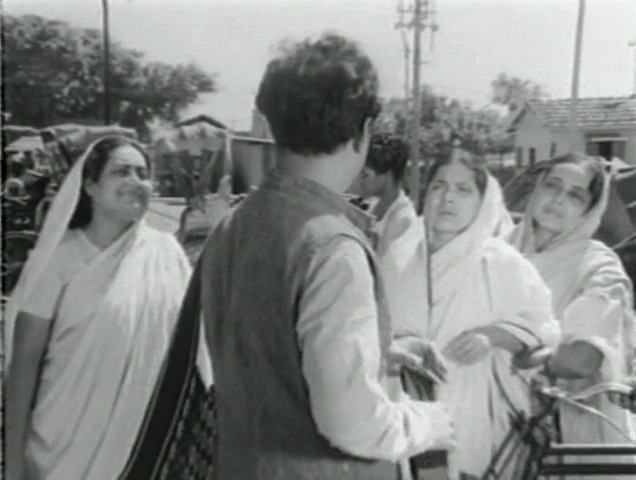
The protagonist isa writer on his way to Puri by train. In the course of the journey he gets acquainted with a group of 4 Bengali widows accompanying their niece, also going to Puri. The writer was going to just get out of his day to day Kolkata life whereas these ladies were actually going to calm down their niece who had just suffered a breakup with her lover. The rest of the story revolves around these people and their attraction and involvement with the writer. The writer is amused with them and for his part tries to calm the girl. The story guides us around the different relationships the writer develops with each of the character he meets. The movie tries to show the social taboos for widows and teaches the philosophy that life is ahead of us and not behind. There is a pretty good description of Puri, Konark and Rambha. At the time this movie was shot it was possible for Tapan Sinha to shoot inside the Konark sun temple, also the bullock cart way to Konark is an extra for the viewer.
TAPAN SINHA
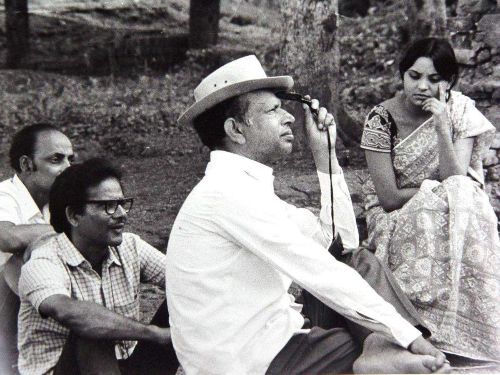
Tapan Sinha (2 October 1924 – 15 January 2009) was one of the most prominent Indian film directors of his time forming a legendary quartet with Satyajit Ray, Ritwik Ghatak and Mrinal Sen. He was primarily a Bengali filmmaker who worked both in Hindi cinema and Bengali cinema, directing films like Kabuliwala (1957), Louha-Kapat, Sagina Mahato (1970), Apanjan (1968), Kshudhita Pashan and children’s film Safed Haathi (1978) and Aaj Ka Robinhood. Sinha started his career in 1946, as a sound engineer with New Theatres film production house in Kolkata, then in 1950 left for England where he worked at Pinewood Studios for next two years, before returning home to start his six decade long career in Indian cinema, making films in Bengali, Hindi and Oriya languages, straddling genres from social realism, family drama, labor rights, to children’s fantasy films. He was one of the acclaimed filmmakers of Parallel Cinema movement of India.


 imagineindiafestival.com