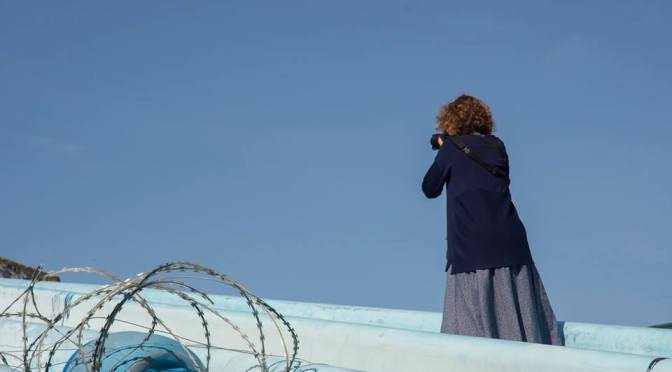
Helga Martínez Pallarés (Jury Imagineindia 2018)

Graduated in Law. Professional photographer and writer, specialized in Narrative Photography and New Journalisms by Univ. Rey Juan Carlos, Menéndez Pelayo University, and NODE CENTER Berlin.

Royal Madrid Photographic Society Directive since 2015. Community Manager of the NGO Redmamsa (Saharawi Women’s Network Madrid) since 2017.

Literature awards in 2004 (City of Jaén), 2013 (Spanish Association of Neuropsychiatry) and 2015 (ACEN). Photography exhibitions at CEV High School (2016), and Cambiodeismo, CC. Galileo (2017). Fairs “Contemporary Art” of Malaga and “We art fair” C.C. Conde Duque Madrid (2017).
Curator and author in the narrative project “Constellations” (in preparation, January 2018).

Jury Imagineindia 2018

JURY of Imagineindia 2018

Jaime Iglesias Gamboa

Lola Forner

Azucena de la Fuente

Miriam Díaz Aroca

Alberto Luchini Solano

Arturo Cardelús

Andrés de la Torre

Juan Echanove

Sergio Pazos

Javier Aguirresarobe

Alfonso Albacete

Helga Martínez Pallarés

Nerea Garmendia

Frodo García Conde


JURY of Imagineindia 2017

Augusto M. Torres

Manuel Tallafé

Víctor Benjumea

Jaime Iglesias Gamboa

Alba Ferrara

Nerea Garmendia

David Serrano

Alfonso Albacete


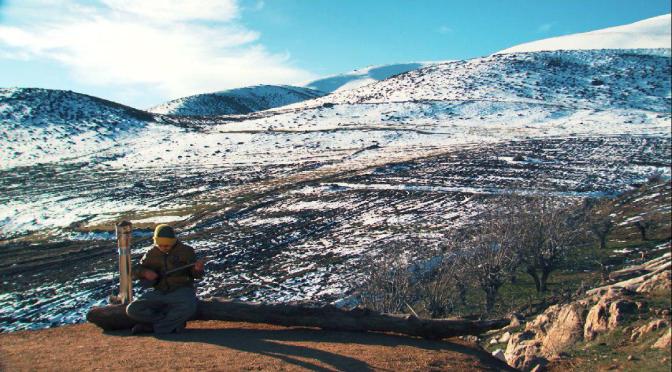
Song of hands (Hamze Zarei) Iran. Imagineindia 2018

Song of Hands
Hamze Zarei
Iran. 2017. 19 min

Song of the Hands is The story is narrated by a kid (hiwa) who is fascinated by music, and accompany other children in this passion. But under the pressure of the traditional and religious environment his father breaks his musical instrument , Hiwa is hugging the pieces of the instrument, and toward to …

HAMZE ZAREI

Hamze is born in 1986 in Iran’ Kurdish area in Kermanshah .He study Directory and Dramatic Literature in art collage in Tehran .
In his films, he tries to narrate the story of the children of his land and the rights of all human beings.

CONTACT

Hamze Zarei

zarei.hamze64@gmail.com

The Sound of Silence (Bina Paul) India. Imagineindia 2018

The Sound of Silence
Bina Paul
India. 2017. 51 min

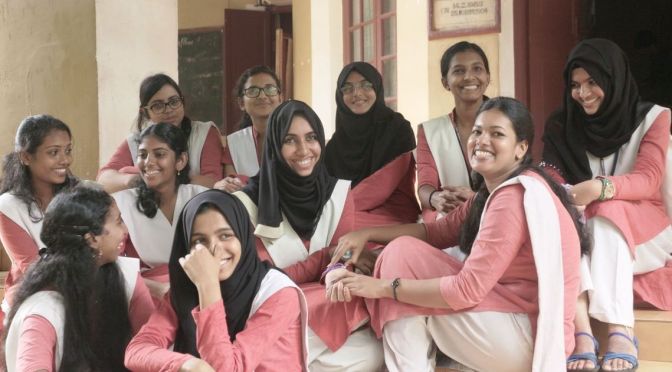
One of the most telling testimonials in The Sound of Silence, Bina Paul’s documentary on how gender issues play out in Kerala’s colleges, is by Dinu, a student in Kozhikode.

In 2015, Dinu was suspended for breaking one of the rules stipulated by his college: “Girls and boys must sit separately in a classroom.” When Dinu tried to question the rule, he and his friends were asked to leave the classroom. The situation worsened when the principal ruled that Dinu and his classmates could enter the classroom only after they brought their parents to college.

A stay order from the local court finally got Dinu back into the classroom.

“How does sitting together on a bench become a disciplinary issue?” he poignantly asks in Paul’s compelling documentary. “It was nothing but moral policing.”

Bina-paul

READ MORE

Ek Inquilab Aur Aaya (Uma Chakravarti) India. Imagineindia 2018

Ek Inquilab Aur Aaya                                                                                                          Uma Chakravarti                                                                                                                  India. 2017. 66 min

“Ek Inquilab Aur Aaya” is a documentary which explores the frustrations, ambitions and struggles of women who lived in an orthodox Islamic household in Lucknow in the first half of the 20th century. The lives of two women, Sughra Fatema and her niece Khadija Ansari, residents of the Farangi Mahal are traced. The family which resided there was at the centre of learning in Lucknow from 1695 onwards.

Despite being at the centre of scholarship in Lucknow, the family refused to break the shackles of patriarchy which existed in the corridors of the Firangi Mahal. The women had to live their lives within the strict confinement of the purdah, the practice of confining women within the household, away from the eyes of men.

Director Uma Chakravarti tells us why the story needed to be told: “Because Muslim women are being flattened into a mass with no variations in their multiple histories which was rich and distinctive as the histories of women in other communities, classes and castes; today the only way to portray a Muslim woman is to put her into a hijab and hide, literally hide, everything else about her. All we now hear is triple talaq and the need to rescue them from their miseries as if Hindu women have got emancipation! We know nothing of their political participation in movements in the past and in the present; their participation in the left movement is particularly unknown. So for me as a historian turned filmmaker this was a story that was waiting to be told.”
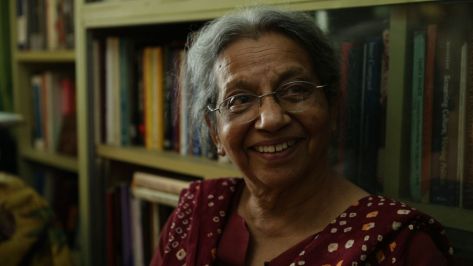
Uma Chaks

READ MORE